Unknown's avatar

About NSCZach

A writer who translates Beowulf (and other things), freelances, reads voraciously, and is always catching up on (mostly retro) adventure video games/J-RPGs.

Going from the Guard to the Herald: Book IV – Book VI

An ale house like a mead hall from Beowulf that's in Sweden.

An ale house just north of Göteborg in Sweden, but a pretty good approximation of what Heorot would look like (except for the lack of gold). Image from https://commons.wikimedia.org/wiki/File:Viking_house_Ale_Sweden.jpg

IV

Their chief answered him,
wielder of the band’s wisdom, he unlocked his word hoard:

“We are kin of the Geatish people,
we come from among Hygelac’s hearth retainers.
His people knew my father,
a noble progenitor known as Ecgtheow, –
he commanded many winters, before he went on his way,
full of years, each man of counsel
on the wide earth takes heed of his name.
We through care of the worries of your lord,
son of Halfdane, have come seeking for
the protector of your people. Your exhortation to us is great!
We have much to declare towards your people’s errand,
the freedom of the Danes, no longer shall there evil
be in this land, I believe. You know —
if it is truly as we have heard —
that against the Scyldings fights a fiend unknown to me,
a thriving ravager, that in the dark of night
threatens you with unknowable fear,
oppression, and slaughter. That I might teach Hrothgar
through the counsel of a broad mind,
how he the wise and good could overcome that fiend —
if he ever should wish to end
this ruinous trouble — relief will come after,
and his cares shall turn cool.
Else ever after shall be times of sorrow,
distress shall be only endured, all while that greatest
of houses is forced to make do, empty, in its high place.”

The guard, astride his horse, spoke to that man,
the fearless officer:

          “Everyone shall
come to know and understand your sharp skill,
words and deeds, as they shall determine.
I hear this and judge thus: that you and your warriors are true
to the Scylding lord. Come forth bearing
your weapons and armour; I will lead you.
Also, I will command my men
to guard your boat against the fiend,
relay a request to them to guard your newly tarred
ship on the shore, until it again bears
you dear men over the streaming surface
in its bound boards to the Geat’s borders;
it is my hope that such doers of good may have that fate,
to survive the battle rush in the hall.”

They went upon their way then. And as the guard promised,
the boat was bound, the capacious craft tethered with cord,
secure at anchor. Boar-shapes shone
atop the warriors’ cheek guards; ornamented gold,
glistening and firmament firm, securely they held their wearers’ life,
the pond-still thoughts of war-hearted, grim men. They all hurried onward,
going down together, until from that high hall of a home,
ornamented and gold-dappled for all to see
that it was foremost among all the human works
and buildings beneath heaven, there the ruler called for them;
the light of the people that shone over so great a land.
The coastguard took the battle-brave to the bright,
high-souled hall, that he may point out
the shortest path thither. That hero of combat turned his horse
about, spoke he these words next:

“It is time for me to go. The Almighty
Father’s grace keep you healthy
amidst your quest! I am to the sea,
to hold the shore against fiendish foes.”

V

The Geats’ way then was stone-paved, along the road
the warriors went together. War-byrnies shone,
hard, hand-linked, shining ring-mail from
skilled hands celebrated in song hung beneath plate.
Shortly they arrived at the hall in their horrible war gear,
sea-weary they set their shields,
battle-hard bucklers, against that hall’s outer wall;
they dropped onto the benches set there, mail-shirts ringing,
those war-skilled men. Spears stood,
bound in a seaman’s bunch, all together,
ashen shaft over grey; that iron-clad crew’s
weapons jostled as they rested against the hall.
Then a proud warrior asked after those men’s origins:

“Where come ye, ye of the anointed shields,
shirts of grey mail and visored helms,
this crowd of spears? I am Hrothgar’s
herald and officer. Never saw I this many men
from far away of such high spirits.
It seems to me that you for glory, not at all for exile,
yay, even for courage, have sought out Hrothgar.”

One man among them courageously answered,
the proud man of the Weders, spoke after those words,
bold beneath his helm:

          “We are Hygelac’s
table-companions; Beowulf is my name.
I will explain to the son of Halfdane,
that famed lord, my errand,
your prince, if he will grant us such audience,
allow us to greet him graciously.

Wulfgar spoke: a Wendel man,
well known for his heart-thought,
of war and of wisdom:

          “I, friend of Danes,
will inquire of our shield,
giver of rings, as thou art a petitioner,
of that famed lord, about your journey,
and then the answer I shall convey immediately,
that I may speak as it so pleases him.”

Then quickly he turned to face where Hrothgar sat,
old and hoar among the throng of his thanes.
Wulfgar then went to the one of honourable deeds, shoulder to shoulder
with the Danish lord he spoke: knew he their noble customs.
Wulfgar’s words to his friend and lord were thus:

“Here are those who came, who ventured
forth going over the sea from the Geatish lands;
their chief champion
they call Beowulf, he is the petitioner,
the one asking, my lord, if he might mix
words with you. Do not propose to deny
your reply, gracious Hrothgar.
By his war-gear I think their worth is equal
to that of esteemed warriors; indeed he seems dependable,
the one warrior who has lead them so far.”

VI

Hrothgar spoke, protector of the Scyldings:

“I knew that man when he was but a boy.
His father of old was called Ecgtheow,
he to whom Hrethel of the Geats gave
his only daughter. And now, I hear, his son
has come here, seeking favourable friendship.
Once sailors, that brought gifts
from Geatland thither as thanks,
said that this man has the might of
thirty men in his hand-grip,
is famed in war. He, Holy God,
for our support has sent him
to the West-Danes, this I believe,
against Grendel’s terror. I shall well reward
them with treasures for his courage.
Be thou in haste, go with this command,
that the peaceful host may hear it together.
Also give him word that they are welcome
in these Danish lands!”

          Then to the hall door
went Wulfgar, from within this word was called out:

“You, as commanded by word of my war-lord,
prince of the East-Danes, here have a famed family.
and you, proven brave in your coming to him
from over the sea-wave, are welcome hither.
Now you may go in wearing your armour,
under your helmets, to see Hrothgar;
yet here leave your shields unbound,
the broad boards, and deadly spears, this is a meeting for words alone.”

Arose then the hero, from amidst his many thanes,
various valiant warriors, though some remained there,
to watch the war-gear, as they were strictly ordered.
Those going in hurried together, their chief at their head,
went under Heorot’s roof. Through the hall strode the war-fierce,
under hard helmets, until they stood upon the hearth.
Beowulf spoke — on him the byrnie shone,
his corselet crafted with the smith’s skill:

“Be thou, Hrothgar, hale! I am Hygelac’s
relation and man; I have started into earning
great glory since my youth. News of Grendel
is openly known in my homeland;
it was the talk of sailors, that this hall stood,
best of buildings, idle and emptied
of each man after the evening light
becomes obscured beneath heaven’s brightness.
Then a council urged me to help,
the most esteemed, the cleverest of Geatish men,
that I thee, the ruler of Danes, Hrothgar seek,
for they all know of my strength.
They themselves saw when I cleverly overcame,
foe after foe, when I bound five,
devastated the kin of giants, and upon the sea slew
water-demons by night. Indeed I have endured dire need,
have fulfilled the Geat’s hatred — such was the hope they summoned —
it consumed those enemies. And so it shall now go against Grendel,
with this monster I will stand alone as it please,
have a singular meeting with the demon. Now, I to thee,
lord of the Bright-Danes, will make my request,
prince of the Scyldings, I will proclaim this alone:
That you do not refuse me, protector of warriors,
close friend of the people, that for which I have now come from afar,
that I might alone save for my band of warriors,
this hardy heap, cleanse Heorot.
I have also learned, by asking, that this demon
in his recklessness does not care for weapons.
I the same shall scorn, that Hygelac may be for me,
my liege-lord, blithe of heart,
that I neither sword nor the broad shield shall bear,
the linden-bound battle buckler; instead I shall grapple
against the fiend with my grasp and struggle for life,
hater against hated; in that I shall trust
in God’s judgment to take whom he will in death.
I expect that the fiend will, if he be allowed
in the hall of battle, the Geatish people
devour unafraid, as he often has,
trampling the flower of men. You need not
cover my head, but he will have me
blood-stained, if death take me.
The beast will bear away my bloodied body, thinking to taste,
without remorse will the lone-goer eat me,
staining his moor-den, so do not be long anxious
about my body’s state.
Send to Hygelac, if me battle take,
this best of battle dresses, that I bear upon my breast,
choicest of garments; that is Hraedlan’s heirloom,
the work of Wayland. For always fate shall go as it will!”

Want more Beowulf? Continue the poem here!

Off to a Rousing Start: Prologue – Book III

Scyld Scefing gets a Viking funeral in Beowulf's beginning.

A viking funeral, perhaps like Scyld Scefing’s, as painted by Frank Dicksee in 1893.

Prologue

What! We Spear-Danes have heard in days of yore
of the power of the king of a people,
how heroes accomplished valorous deeds.
Often did Scyld Scefing take away
the mead benches from troops of enemies,
terrified the Erola, afterwards those who had been first were found
to become destitute. For that Scefing experienced solace
grew up under a cloud, his honour prospered,
until each surrounding people from over
the whale road paid obeisance,
gave tribute: that was a good king!
His son was afterward born,
young in years, then did god send
consolation to the people; well did god know their distress,
What they had endured under the lord of old
for a long while; he the life-lord,
glory-lord, granted worldly-worth;
Beowulf was famous—glory widely sprang –
as Scylde’s successor, in all Scandinavian lands.
Thus a young man shall bring about good
from the largesse of his father’s stores,
so that he among men thereafter retains
willing companions when battle comes,
ensures the nation would endure; praiseful deeds shall
always increase for the family of such a man.
Scyld left off amidst this work,
full busy when he went to the Lord.
They brought him to the seashore,
those dear companions, as he had bidden them.
That man’s words ruled his companions,
those of the earthly prince long in languishing.
There at the landing place stood a ring-prowed ship
icy and eager to start, ready for that nobleman’s passage;
the dear lords lead him to
the brightly ringed wealth ship,
treasure filled it to the mast; there was plentiful loot
from foreign lands, booty, loaded into it.
Never heard I of a more splendidly adorned ship
war-ready and armoured,
blade and byrnie. Upon Scyld’s lap was lain
a multifarious fortune, among which
he was to go to far foreign lands.
By no means did they leave a lack of gifts,
treasures of the people, when that was done,
when they sent Scyld forth to his origin,
for he was one who came over the waves as a child.
Then they established a golden sign for him
high overhead, they let the waves bear him,
their gift, to the raging ocean; they were
sorrowful at heart, mourning souls. Men cannot
say for certain, hall rulers,
heroes under heaven, who that horde discovered.

I

Then was the burden on Beow, son of Scyld,
that dear king of men, for several long seasons.
He was reputed among the people, while his father departed elsewhere,
a lord of earth. Until Halfdane awoke,
a match for the father, he held, while he lived,
aged and battle experienced, the joy of the Scyldings.
In unbroken succession Halfdane woke four children in the world: a daughter I believe, then Heorogar, and Hrothgar, and Halga also;
I have heard that […] the daughter was Onela’s queen,
that war-Scylding’s beloved bedfellow.
Hrothgar was given success in war,
honour in battle, such that his kith and kin
eagerly listened, until the young one grew
into a mighty troop lord. His mind soon turned
to the glory of being called a hall lord,
of ruling a mead hall made by the work of many,
one that the children of the ages would ever ask about,
and therein to dole out all
to young and old alike, such as god gave him,
all but the people’s land and lives.
Then heard I that a work summons went widely,
to many peoples from throughout this earth,
to adorn that dwelling place. After their first meeting,
immediately amidst those assembled, it was made ready,
the greatest of all halls; the poets named it Heorot,
he whose word has widespread influence.
That boast did not lie, rings were doled out,
a continuous treasure flow. That hall rose high,
towering and wide-gabled, made to resist fierce fire,
loathe of lightning; yet it was not as such for long,
since woken sword-hate would later swallow it
after war broke out between son-in-law and father-in-law.
Then a terrible demon ushered in a time
of difficult suffering, as it would be in darkness,
he who daily heard the joy makers
loud in the hall; there hands were waved over harps,
there the poets sang clear. Told they of
knowing the long ago provenance of all people,
spoke of how the Almighty made the earth,
this beauteous world, and the water that flows about it;
set the sun and the moon victoriously above
with rays to light the ways of people,
and adorned the rolling hills
with limbs and leaves; spoke of how the Maker shaped
each variety of life, all things that have motion.
So the warriors of the hall lived in joy,
were prosperous, until that one began
committing crimes, like a fiend of hell.
It was the ghastly ghoul called Grendel,
border walker from the marshlands, he that the moors held,
whose mire was his mansion; from the land held fast by
woe-laden man-shaped sea beasts,
since the Shaper had condemned them
as kin of Cain – so the almighty Lord punished
him for that murder, when he slew Abel.
Cain was given no good from that, the Measurer cast him
far abroad, done for his evil, away from humankind.
Then the monsters all awoke,
ogres and elves and orcs,
also giants, those that waged long warfare
against God; until he gave them their reward.

II

That demon knew then what he sought, once night fell,
at the high house, he knew how the Ring-Danes
after beer-drinking would be stayed there.
Found he therein a fortune of princes
sleeping fast after the feast — they knew no sorrow,
men of the war spear. The unholy figure,
grim and greedy, was quickly enthused,
savage and severe, and at once he seized
thirty thanes; after that he went out
heading loudly home with his prey;
after the slaughter he returned to his dwelling.
Then, outside the hall at daybreak,
was Grendel’s war-strength seen by human eyes;
after that was there weeping to heaven,
a morning full of mourning. Famous warriors,
long-tested true lords, sorrowful sat,
the mighty moaned, the lost thanes saddened them,
until they found the faint, loathful footprints that
the evil-doing fiend had made. That was helpful to
track the beast’s escape, hateful and sluggish. That night
was not long alone, nigh the next night Grendel again brought
more violent death and seemed not to hesitate as before,
bringing violence and outrage; he came down heavily upon them.
Then was he easy to find roaming
about elsewhere seeking rest,
a place to recline and relax, to which he left a trail,
that token spoke truly of the object
of the hall-dwellers’ hate; they sought
refuge outside the hall once they knew that fiend was running free.
So Grendel ruled in defiance of right,
one of lesser stuff against all, until that
greatest of houses stood silent. It was so for some time,
twelve winters of anger the friends of Scyld suffered,
each became accustomed to such hardship,
rough sorrow; because of that they became speakers,
sons of the age, knowledge of them was unhidden,
those troubled deeds of old, that Grendel lashed
out against Hrothgar for a long time, the hateful
monster’s way, years filled with failures and feuding,
a perpetual siege. That kin would not treat
with any man of the Danes for even the shortest time,
deadly evil from afar, as few did hope,
nor were there any who believed that his
hand could be stayed with a bright death price;
the fierce enemy was, after all, the pursuer,
a dark death shadow over the veterans and youths,
those who tarried and planned. Night upon night
Grendel held the misty moors, men never knew
whither the fiendish monster rapidly went.
So the fiend trespassed deeply against humankind,
the horror of the lone-goer, oft-cursed,
awful in affliction; Heorot was lived in by day,
but the richly adorned hall was his by gloomy night,
though Grendel could not approach the throne,
the treasure to the Measurer, nor could he be known.
This did much to the misery of the Scyldings,
their hearts broken. Many oft sat
with the ruler to give counsel, esteemed advice,
things that the rash and the best were fixing
to do against the awful horror.
Meanwhile they made demands of cherished idols
at household shrines, with words of worship,
so that they sought help against their problems
from the soul-slaying fiend. Such was their way,
their heathenish hope; they concentrated on hell
in their hearts, they knew not the Measurer,
the deeds of the Judge, they knew not almighty God
nor knew they of the praiseful protection of heaven,
glorious God. Woe betide them that shall
cast their soul into the flames’ embrace when
embroiled in cruel enmity, cheer they never know,
never a person restored! Well be those that might
after their death day seek the Lord
and hope for the safety of God’s grace.

III

So they brooded upon the troubles of that time,
none of the wise could put them upon the right
way; that strife was too steep, loathful and long-lasting,
that which had befallen the people,
that fierce severe punishment, the wreaker of night-destruction.
One of his thanes heard of this while home with Hygelac,
one good amidst the Geats, he heard tell of Grendel’s deeds;
he was humanities’ mightiest in strength
in the days of this life,
regal and great. He was given command of a ship
and well-directed; he spoke, saying he would seek
the troubled king across the swan’s way,
that famous ruler, to show that he was the man they needed.
Then were wise warriors chosen to accompany
him on his journey, those whom to him were dear,
whetstones to wondrous deeds, each looking hale.
The good Geat people then a great warrior
had crowned, there you a brave man might find!
Some fifteen sought out the ship at shore;
to the frontier they went, following the words of the wise,
the ones versed in sea-ways. The foremost knew motion;
the ship was on the sea, the boat that sat before barrows.
The warriors roaringly rose a cry — the current carried them on,
bringing the sea against sand. The men bore
bright treasures upon their chests,
magnificent in martial-gear; they all shoved off,
men bound for an expected expedition by boat.
The ship then knew the ocean’s motion, was wind-hastened,
became foamy-necked, became seabird like,
until near the time of day they had left,
after their ship with curved prow had glided,
when those well-travelled ones saw land,
dazzling sea cliffs, steep hills,
an ample headland. Then was sailing simple,
the journey at an end. From that ship sprang
the Geats onto the sands,
their boat they bound there — they shook their mail-coats,
rattled war-gear; they thanked God then,
the one that made their ship’s going smooth.
From those dazzling cliffs the Scyldings’ shore guard saw them,
the one who held the sea-cliffs saw those
men carrying bright shields across a ship’s gangway,
bearing ready war gear; his curiosity overpowered
his thinking, the need to know what these men were.
So rode out the thane of Hrothgar
to the shore, powerfully he shook the
spear in his hand before the wave-goers,
asked in a querying tone:

           “What are ye gear-havers,
wearers of corselets, that thus laden
in a high ship come over the sea-street,
hither with the waves? I am set
as border guard, to keep this isle hold watched,
So that no loathed ones may batter this
Danish land with naval force.
Never in known memory have any
come so openly bearing shields; nor do you
seem eager to get a word of permission from this watchman,
a Dane’s consent. Never saw I a mightier man
upon this earth, than this one before me,
this man of might; is that not a retainer,
one worthy of weapons? Never would his mien betray him,
a singular sight. Now I shall know whence
you come, far-farer, before you enter this land
as a spy, before you further step into
these Danish lands. Now, you of the far-off dwelling place,
sea-farer, I would hear tell of
your singular purpose; haste is best
in saying why you are come hence.”

Want more Beowulf? Continue the poem here!

Update: The translation’s done, now what?

This is the first page from the Beowulf manuscript, in Old English.

The first page of the original Beowulf manuscript, in Old English. Image from http://bit.ly/2jdxSdW.

Last week I finally posted the last part of my Beowulf translation. So I think that this is a pretty good opportunity to get into what happens next on this blog.

More Translations?

First off, for ease of reading and as a means to improve my translation, I’m going to start posting larger bits of Beowulf here next week. In total, I’ve broken the poem down into 15 pieces, and each of these will get onto this blog before I bring them together, do some final editing, and start bringing together an ebook version of my translation.

Once that ebook is out, I’d love to do more translations. Particularly of other epic poems like The Aeneid or some of the more obscure medieval Latin epic works.

Yes, those would all be translations from Latin, and Latin isn’t exactly Old English, but I might also do some other Old English translations.

The Old English Judith, for example, is kind of like a miniature epic story, and some of the shorter poems would be interesting to tackle. But none of these are Beowulf (there is only one, after all 😉 ), so I’ll likely be starting another blog for those projects.

But getting into works other than Beowulf is a matter for the distant future. What non-poetry stuff is coming up soon?

Interviews

Earlier this year I mentioned putting together interview posts. So far I haven’t done any work on these, but I definitely want to get going on it soon.

If you’ve been inspired by Beowulf or have a lot to say about it, please reach out to me at nsczach at gmail dot com. I have a short list of people to contact for a brief Beowulf chat, but I’m interested in hearing as many stories about the impact Beowulf has had on people as I can.

Beowulf in (Pop?) Culture

Even though I’ve already covered a few topics related to Beowulf on this blog, there’s still a lot to the world of Beowulf. I’m talking adaptations, translations, even a Beowulf festival in Woodbridge Suffolk! It might not be mainstream, but there’s actually a subculture of Beowulf fans out there.

And I want to gather information about that subculture here on this blog. I want to make it less of a blog and more of a hub.

Reality

But.

My life right now is cobbled together from various projects. Fiction writing, podcasting and audio editing, streaming, this blog, and the seemingly never-ending search for gigs or work that can both keep my bank account in the black and leave me enough time to follow my passions. Needless to say, I don’t have as much time for this blog as I’d like to.

With that said, I think that it’s most realistic to continue with one post a week on this blog for the foreseeable future. But my hope is that I’ll be able to rotate between the three topics mentioned above.

Admittedly, over the next month I might lean a little heavily on poetry posts, but I’m going to try to get an interview or culture post into the mix as well.

Thanks for reading this update, and for (hopefully 😉 ) keeping up with my translation.

If you’ve got any suggestions for this blog, please feel free to share them in the comments. And feel free to give this post a like if you liked it, and follow the blog if you feel it’s follow-able.

Wiglaf: The right hero in an ever-changing world? (ll.2602-2630)

Recap
Synopsis
The Original Old English
My Translation
A Quick Interpretation
Closing

Beowulf and Wiglaf, each a hero, after the fierce fight against the dragon.

Wiglaf and Beowulf at the end of the fierce fight with the dragon. Image from https://commons.wikimedia.org/wiki/File:Stories_of_beowulf_wiglaf_and_beowulf.jpg.


Back To Top
Recap

Last week, Beowulf did what he said he would never do. He backed down.


Back To Top
Synopsis

Wiglaf, the new Geat hero, is introduced.


Back To Top
The Original Old English

Wiglaf wæs haten Weoxstanes sunu,
leoflic lindwiga, leod Scylfinga,
mæg ælfheres; geseah his mondryhten
under heregriman hat þrowian.
Gemunde ða ða are þe he him ær forgeaf,
wicstede weligne Wægmundinga,
folcrihta gehwylc, swa his fæder ahte.
Ne mihte ða forhabban; hond rond gefeng,
geolwe linde, gomel swyrd geteah,
þæt wæs mid eldum Eanmundes laf,
suna Ohteres. þam æt sæcce wearð,
wræccan wineleasum, Weohstan bana
meces ecgum, ond his magum ætbær
brunfagne helm, hringde byrnan,
eald sweord etonisc; þæt him Onela forgeaf,
his gædelinges guðgewædu,
fyrdsearo fuslic, no ymbe ða fæhðe spræc,
þeah ðe he his broðor bearn abredwade.
He frætwe geheold fela missera,
bill ond byrnan, oððæt his byre mihte
eorlscipe efnan swa his ærfæder;
geaf him ða mid Geatum guðgewæda,
æghwæs unrim, þa he of ealdre gewat,
frod on forðweg. þa wæs forma sið
geongan cempan, þæt he guðe ræs
mid his freodryhtne fremman sceolde.
Ne gemealt him se modsefa, ne his mæges laf
gewac æt wige; þæt se wyrm onfand,
syððan hie togædre gegan hæfdon.
(Beowulf ll.2602-2630)


Back To Top
My Translation

“Wiglaf was his name, son of Weohstan,
a beloved warrior, man of the Scylfings,
kinsman of Aelfhere. He saw his liege lord
under the battle mask hot and suffering.
Then he remembered that bounty which he had earlier given,
how he lived in the rich dwelling place of the Waegmundings,
a place granted to each by common right, as his father had enjoyed.
Then he could not restrain himself, by hand his shield was grasped,
a yellow shield, the ancient sword he drew,
that which was, according to men, Eanmunde’s heirloom,
the sword of the son of Ohthere. It was brought back from battle,
while Weohstan was in friendless exile, he was that man’s slayer
with the sword’s edge, and to his kinsmen he bore
a shining helm, ringed mail shirt,
and that ancient sword of giant’s craft. Onela had given it to him,
his kinsman’s war garments,
the ready war garb, no feud was there to speak of,
though he his brother’s son had killed.
He kept the adornments for many half-years,
sword and mail-shirt, until his son could
perform the same heroic deeds as his late father.
Then he also gave the Geats one of the countless number
of war garbs when he departed from life,
old and on his way forth. Then was the first time
for that young warrior to advance himself
in the onslaught of battle for his noble lord.
His spirit was not melted by what he saw, nor did
his kinsman’s heirloom fail in the conflict. This the serpent discovered
after the two Geats had come together.”
(Beowulf ll.2602-2630)


Back To Top
A Quick Interpretation

Well, it looks like Beowulf’s successor is pretty much set up.

Wiglaf enters the scene, bearing some pretty hefty gear. It’s the equipment of Onela’s nephew. So it’s from the Swedes; a bit of treasure from a successful Geat raid or battle. And this gear comes from his own dad, which makes its appeal something of a double whammy, I would think. Not only does this gear have history, but it’s something that Wiglaf inherited, adding to its reputation.

So he’s well-equipped to help Beowulf out. I guess all the other Geats Beowulf brought with him just had the small fortune required to pick a few things up from the local blacksmith. That’s got to be why they all ran off, right?

Actually, thinking of things that way, why are swords and helmets and armour with a history so valuable and confidence-bestowing?

Sure, swords and armour that have lasted for generations must be made of some tough stuff.

But if you have this ancestral sword that’s totally bad-ass and practically never fails you, when you’re slain and your sword is taken as war booty, was the sun in your eyes as your opponent came down with a slash to end you or did your sword screw up?

I guess that’s part of why there would be that belief that certain pieces of equipment had “proper” users. Beyond being form-fitted, the right swordsman with the right sword must’ve been believed to be unstoppable.

Interestingly, Beowulf puts the lie to that way of thinking, though. Beowulf’s ultimate weapon is his bare-handed physical strength. But something like the dragon can’t be beaten by brute force or wrestling holds alone. So maybe it’s less about the right piece of gear for the right user, and, in line with the Anglo-Saxon idea of the world being an ever-changing place, more about that right fit changing every few years.

Hopefully, for Beowulf’s sake, Wiglaf is the “right” wielder for the sword his dad gave him.

What’s your take on the importance of ancestral swords or on war gear plundered from fallen foes? Is it a guarantee of quality or just a cheap way to get some things that would have been prohibitively expensive?

Feel free to share your theories in the comments!


Back To Top
Closing

In the next post, Wiglaf makes a speech to stir his comrades to Beowulf’s side. You can find that post, and the rest of my translation, starting here.

Yep! Perhaps a little confusingly, this is the last of my translation posts. The entries aren’t in perfect chronological order as far as when I wrote them, unfortunately. But now the entirety of Beowulf is on this blog!

Thanks for following this project as I’ve slowly released pieces of it over the years. And in the coming weeks, look forward to more coverage of Beowulf related news and media!

A bit further down the road, look for reworked, standalone chapters of the poem as I prepare my translation for publication.

And, of course, if you enjoyed this post, please give it a like. And, if you want to keep up with my Beowulf coverage, please do follow this blog!

Back To Top

A right-thinking Beowulf? (ll.2580b-2601)

Recap
Synopsis
The Original Old English
My Translation
A Quick Interpretation
Closing

St. George slaying a dragon solo unlike mister might Beowulf.

An illumination showing a pleasantly distracted looking St. George slaying a cat-pawed dragon. No “right thinking” partner required? Image from https://commons.wikimedia.org/wiki/File:Zanino_di_Pietro_-_Saint_George_Killing_the_Dragon_-_Walters_W322215R_-_Open_Obverse.jpg.


Back To Top
Recap

Last week, Beowulf’s sword failed him and his shield proved weaker than expected.


Back To Top
Synopsis

Beowulf battles the dragon, but needs to give it some space.


Back To Top
The Original Old English

“þa wæs beorges weard
æfter heaðuswenge on hreoum mode,
wearp wælfyre; wide sprungon
hildeleoman. Hreðsigora ne gealp
goldwine Geata; guðbill geswac,
nacod æt niðe, swa hyt no sceolde,
iren ærgod. Ne wæs þæt eðe sið,
þæt se mæra maga Ecgðeowes
grundwong þone ofgyfan wolde;
sceolde ofer willan wic eardian
elles hwergen, swa sceal æghwylc mon
alætan lændagas. Næs ða long to ðon
þæt ða aglæcean hy eft gemetton.
Hyrte hyne hordweard (hreðer æðme weoll)
niwan stefne; nearo ðrowode,
fyre befongen, se ðe ær folce weold.
Nealles him on heape handgesteallan,
æðelinga bearn, ymbe gestodon
hildecystum, ac hy on holt bugon,
ealdre burgan. Hiora in anum weoll
sefa wið sorgum; sibb æfre ne mæg
wiht onwendan þam ðe wel þenceð.”
(Beowulf ll.2580b-2601)


Back To Top
My Translation

“Then was the barrow
guard, after that battle stroke, thrust into a fierceness of spirit –
it threw its deadly fire, wildly leapt
those battle lights. Of glorious victory the
gold-giving friend of the Geats could not boast then,
the war sword failed him while unsheathed in battle, as it should
not have, became known as iron formerly excellent. That was no easy
journey, when the renowned kin of Ecgtheow
knew he should give up that ground,
that he should, against his wish, inhabit a dwelling place
elsewhere, so shall each man
leave off his loaned days. Then not long was it
before the fierce warriors met each other again.
The hoard guard himself took heart – his breast began to heave
from strain – he lunged forth once again. Harsh straits were suffered,
the fires enveloped Beowulf, he who once had ruled the people.
Not any of the band of comrades were with him then.
The sons of nobility stood around merely draped in martial virtues
they fled into the woods at the sight below,
eager to save their own lives. Of them, in only one mind
surged sorrow. Kinship may never
for anything be turned away from if a man thinks rightly.”
(Beowulf ll.2580b-2601)


Back To Top
A Quick Interpretation

The fabric of Beowulf the poem is shot through with the idea of boasts and actions being bigger than mere words. Throughout the story we see Beowulf match this process of action. Boast, act, report.

But this is where we get some sure signals that the story is ending.

Beowulf can’t follow through on his boast from earlier. On lines 2524-2525 he had said “And I will not give/a foot’s length when I meet the barrow’s guard” (“Nelle ic beorges weard/forfleon fotes trem”). And now he is giving that ground. Beowulf can no longer do as he says, his actions now speak more quietly than he has need of them to.

Those he had handpicked as the best of the young Geats are also leaving him in his hour of greatest need.

Except for one.

One Geat up on that hill looks down and sees his lord in need and wants to help out. More than that, though, he is “a man [who] thinks rightly” (“þam ðe wel þenceð” (l.2601)).

Maybe that’s what Beowulf needs right now: right thinking.

After all, although his actions failed to meet his boast, that was due to his overestimating his abilities and the tools he had with him. But there is more to it than that, I think. Any incongruence between acts and words in the morality of Beowulf suggests a sourness of character. Liars say what they’ll do and then don’t do it, and they orchestrate that kind of outcome because they’re thinking of deceiving (others or themselves).

Beowulf falls prey to a bit of this with his failed follow through. Not that he was intending to go back on his boast, though the stories could have branded him as such because of that failure to follow through. So it makes sense that one with right thinking will swoop in for Beowulf’s rescue.

Was Beowulf thinking properly when he came up with his flame-resistant shield and when he said he had to fight the dragon alone? Or were these things the product of a mind convinced that the body it was attached to could still pull off such grand deeds?

Feel free to share your theories in the comments!


Back To Top
Closing

Next week, we turn away from the dragon to see what the Geats on the clifftop are up to.

If you enjoyed this post, please give it a like. And, if you want to keep up with my translations, please do follow this blog!


Back To Top

The best laid shield plans of Beowulf and dragons (ll.2559-2580a)

Recap
Synopsis
The Original Old English
My Translation
A Quick Interpretation
Closing

Beowulf is protected from dragon fire by his shield while treasure awaits.

An illustration of Beowulf fighting the dragon that appears at the end of the epic poem. Illustration in the children’s book Stories of Beowulf (H. E. Marshall). Published in New York in 1908 by E. P. Dutton & Company. Image found at https://commons.wikimedia.org/wiki/File:Beowulf_and_the_dragon.jpg.


Back To Top
Recap

Last week, Beowulf called out the dragon and heard it call back.


Back To Top
Synopsis

Beowulf attacks the dragon, and the unexpected happens.


Back To Top
The Original Old English

“Biorn under beorge bordrand onswaf
wið ðam gryregieste, Geata dryhten;
ða wæs hringbogan heorte gefysed
sæcce to seceanne. Sweord ær gebræd
god guðcyning, gomele lafe,
ecgum unslaw; æghwæðrum wæs
bealohycgendra broga fram oðrum.
Stiðmod gestod wið steapne rond
winia bealdor, ða se wyrm gebeah
snude tosomne; he on searwum bad.
Gewat ða byrnende gebogen scriðan,
to gescipe scyndan. Scyld wel gebearg
life ond lice læssan hwile
mærum þeodne þonne his myne sohte,
ðær he þy fyrste, forman dogore
wealdan moste swa him wyrd ne gescraf
hreð æt hilde. Hond up abræd
Geata dryhten, gryrefahne sloh
incgelafe, þæt sio ecg gewac
brun on bane, bat unswiðor
þonne his ðiodcyning þearfe hæfde,
bysigum gebæded.”
(Beowulf ll.2559-2580a)


Back To Top
My Translation

“The warrior below the barrow, the lord of the Geats,
swung the rim of his shield against the dreadful stranger,
then was the coiled creature with heart ignited
eager to seek battle. The good war-king
bad already drawn his his sword, the ancient heirloom,
sharp of edges, each was in horror at the intent
to harm and rain destruction evident in the other’s eyes.
He stood firmly against the towering shield,
the lord of a dear people, when the serpent coiled himself
quickly together. Beowulf waited in arms.
Then the serpent went gliding along, still coiled and burning,
hastening toward his fate. The shield well protected
Beowulf’s being and body for a lesser time
than that renowned prince required for his purpose,
that was the first time that day
that he learned he would have to prevail, though fate had not decreed
triumph for him. The lord of the Geats
swung up his hand, the one terrible in its varied colours was struck by
the mighty heirloom, yet its long-tested edge failed,
it gleamed dry, stopped by the beast’s bones, bit less strongly
just when the king of a people had need of it,
when it could have cut him free from his afflictions.”
(Beowulf ll.2559-2580a)


Back To Top
A Quick Interpretation

Well, all of Beowulf’s psyching up seems to have been for naught. He jumps in to slash the dragon, and his sword has no effect.

Worse than that, though, Beowulf’s grand plan fails him. His heavy iron shield is either heating up too much in the dragon’s fire or actually melting.

These two events are a dire turn for the poem’s hero, but are they really all that surprising? I don’t even mean because of the meta information that we have as readers. Looking at this fight with the logic of the poem in mind, it seems that it follows one of the poem’s major patterns.

Beowulf wears gear and uses weapons when he’s fighting in wars. But in two of the three one-on-one fights we hear about before this dragon fight, Beowulf triumphs when he goes in empty handed.

I mean, Grendel and Day Raven are killed thanks to Beowulf’s killer grip.

Grendel’s mother is an exception, and I’m not sure what to do with that, exactly.

I suppose her case could be dismissed since her underwater hall is kind of an inversion of the Old English Anglo-Saxon normal to begin with. A hall, to them, is a human space, but the Grendels’ hall is occupied by monsters. An Anglo-Saxon hall, generally ruled by a man, is ruled by a woman. A hall is usually warm and dry and safe, but the Grendels have their hall in a cold, damp, and dangerous cave.

So in the context of the Grendel’s hall, Beowulf’s armour deflecting Grendel’s mother’s knife makes sense. Beowulf’s using the giant’s sword to ultimately kill Grendel’s mother makes sense.

But the dragon’s lair is not the inversion of a hall. It’s just a stony area near an ancient barrow by the sea. And a barrow is definitely not a hall in any sense. So bringing gear to this fight may have been deemed necessary, but it’s not surprising that his shield doesn’t work the way he hoped it would, or that his sword fails him. This is a monster fight in an ordinary place.

It’s almost as if Beowulf, this exceptional human being, took the sensible average advice of his counselors, or his people, completely forgetting that he is not average. Such advice doesn’t quite apply to him.

Of course, Beowulf would’ve been burned alive without his shield.

But I really think that a younger Beowulf would’ve just rushed in and torn the dragon’s lower jaw off, disabling its fire breath and leaving it to bleed out as he did with Grendel. The elder Beowulf, though, seems to have lost belief in his own physical power and prowess, hence his failed reliance on these specially made or imbued, but otherwise absolutely normal, pieces of gear.

Do you think that Beowulf’s confidence has flagged in his old age and he’s just going through the motions? Or do you think that Beowulf just thinks that dragon is beyond his power so some extra gear is needed?

Feel free to share your theories in the comments!


Back To Top
Closing

Next week, the dragon launches its counterattack!

If you enjoyed this post, please give it a like. And, if you want to keep up with my translations, please do follow this blog!

You can find the next part of Beowulf here.

Back To Top

Beowulf wakes the dragon (ll.2538-2558)

Recap
Synopsis
The Original Old English
My Translation
A Quick Interpretation
Closing

Beowulf is protected from dragon fire by his shield while treasure awaits.

An illustration of Beowulf fighting the dragon that appears at the end of the epic poem. Illustration in the children’s book Stories of Beowulf (H. E. Marshall). Published in New York in 1908 by E. P. Dutton & Company. Image found at https://commons.wikimedia.org/wiki/File:Beowulf_and_the_dragon.jpg.


Back To Top
Recap

Last week, Beowulf made his final boast and said that if he had to die at the dragon’s claws, he wanted to do so alone and gloriously.


Back To Top
Synopsis

Beowulf goes down to the barrow and calls out the dragon. And the dragon calls back.


Back To Top
The Original Old English

“Aras ða bi ronde rof oretta,
heard under helme, hiorosercean bær
under stancleofu, strengo getruwode
anes mannes. Ne bið swylc earges sið!
Geseah ða be wealle se ðe worna fela,
gumcystum god, guða gedigde,
hildehlemma, þonne hnitan feðan,
stondan stanbogan, stream ut þonan
brecan of beorge. Wæs þære burnan wælm
heaðofyrum hat; ne meahte horde neah
unbyrnende ænige hwile
deop gedygan for dracan lege.
Let ða of breostum, ða he gebolgen wæs,
Wedergeata leod word ut faran,
stearcheort styrmde; stefn in becom
heaðotorht hlynnan under harne stan.
Hete wæs onhrered, hordweard oncniow
mannes reorde; næs ðær mara fyrst
freode to friclan. From ærest cwom
oruð aglæcean ut of stane,
hat hildeswat. Hruse dynede.”
(Beowulf ll.2538-2558)


Back To Top
My Translation

“Arose then behind the shield that renowned warrior,
hard under helm, bore his battle shirt
beneath the stony cliffs. He trusted in the slaughter
one man alone was capable of. That was no cowardly course of action!
Then by the wall the one who had survived
with good manly virtue a great many battles,
the crash of colliding shields and spears, when bands on foot clashed,
saw standing a stone arch, a stream out from there
burst from the barrow, and soon exploded into
a raging flume of hot deadly fire. Beowulf could not be near
the hoard for any length of time without being burned up,
he could not survive in the depths of the dragon’s flame.
Then he allowed it from his breast, released his rage,
the lord of the Weder-Geats sent the word out,
fierce-hearted he shouted, his voice came in
clean as the clang of battle as it reverberated under the grey stone.
Hatred was aroused, the hoard guardian recognized
man speech. Then there was no more time
to ask for friendship. First came the breath
of the fierce assailant from out of the stones,
a hot vapour of battle. The earth resounded with the creature’s calling.”
(Beowulf ll.2538-2558)


Back To Top
A Quick Interpretation

Beowulf’s yell is one thing. His barbaric yawp is probably a mix of sword and shield being bashed together and the loudest yell a human could muster.

But the dragon’s call? When I read about that, I can’t help but hear this:

Quite clearly Beowulf’s shout is yet another way he psyches himself up. It makes me wonder if he ever felt the fear that seems to be behind all of his boasting about fighting the dragon when he was about to face down an army of men.

Based on how quickly Hygelac took him on as one of his chief warriors, and how he described himself as being the baddest dude in the north, I doubt Beowulf ever felt fear when getting ready for warfare. But now he’s old. And now he’s fighting a monster out of the sorts of stories told to children and drinking men in the hall. Something unreal.

Though it definitely doesn’t seem that Beowulf and the Geats have any trouble believing in a dragon. It’s like a cockroach in a tidy house — a rarity, but definitely not an impossibility.

Actually, bearing the clip above in mind, the Geats’ apparent attitude towards dragons is like the apparent situation in most Godzilla movies.

One way or another, the modern world in these movies just accepts Godzilla not as an impossibility that needs to be comprehended but as some sort of rarely seen animal capable of great destruction. It’s existence is forever floating around in the back of everyone’s minds, it seems, so that when Godzilla finally appears, he doesn’t inspire disbelief, he’s just a terrifying force of nature like a typhoon or hurricane coming to land.

And so I think that along with dealing with his age, Beowulf is also wrestling with his bad luck in having to encounter this monster. His various attempts to psych himself up are his way of covering those emotions, or pushing them out of his mind so that it can be filled with nothing but the slaying of dragons. Where’s a bard with songs of Sigmund when you need one?

If you were to read or hear that a clutch of dragons had been discovered in some remote location would you be surprised or just brush it off as a kind of “of course!” fact?

Feel free to share your thoughts in the comments!


Back To Top
Closing

Next week, Beowulf makes the first move in this fight.

If you enjoyed this post, please give it a like. And, if you want to keep up with my translations, please do follow this blog!

You can find the next part of Beowulf here.

Back To Top

What Beowulf has for the dragon: taunts and worries (ll.2510-2537)

Recap
Synopsis
The Original Old English
My Translation
A Quick Interpretation
Closing

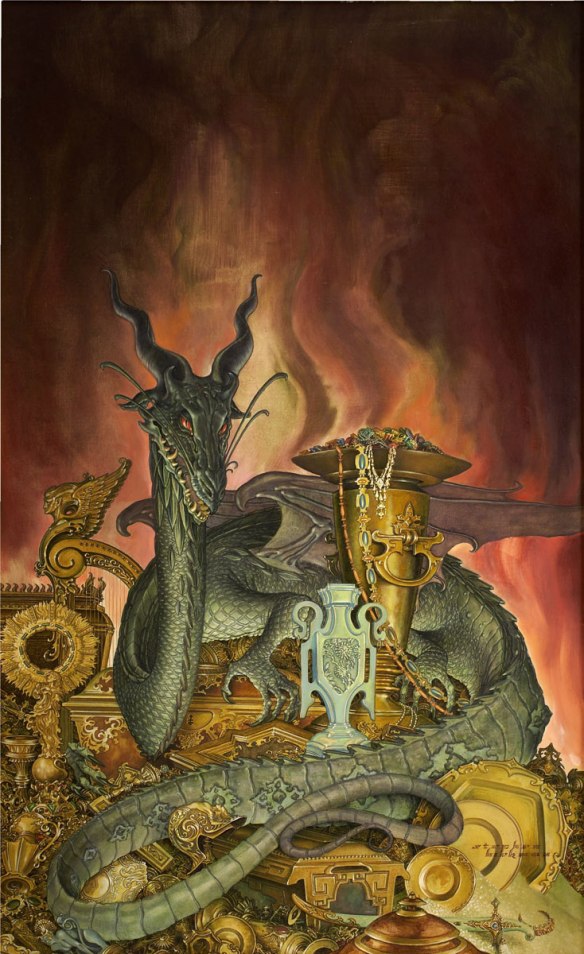
The kind of dragon perfectly at home in Beowulf as if by fate.

An Anglo-Saxon dragon, complete with treasure hoard. Image from http://brer-powerofbabel.blogspot.ca/2011_09_01_archive.html


Back To Top
Recap

Last week, Beowulf recounted how Hygelac rewarded him for his role in the war with the Swedes. And I wondered about Beowulf’s timeline.


Back To Top
Synopsis

Beowulf now boasts to boost his spirits.


Back To Top
The Original Old English

“Beowulf maðelode, beotwordum spræc
niehstan siðe: ‘Ic geneðde fela
guða on geogoðe; gyt ic wylle,
frod folces weard, fæhðe secan,
mærðu fremman, gif mec se mansceaða
of eorðsele ut geseceð.’
Gegrette ða gumena gehwylcne,
hwate helmberend, hindeman siðe,
swæse gesiðas: ‘Nolde ic sweord beran,
wæpen to wyrme, gif ic wiste hu
wið ðam aglæcean elles meahte
gylpe wiðgripan, swa ic gio wið Grendle dyde.
Ac ic ðær heaðufyres hates wene,
oreðes ond attres; forðon ic me on hafu
bord ond byrnan. Nelle ic beorges weard
forfleon fotes trem, ac unc furður sceal
weorðan æt wealle, swa unc wyrd geteoð,
metod manna gehwæs. Ic eom on mode from
þæt ic wið þone guðflogan gylp ofersitte.
Gebide ge on beorge byrnum werede,
secgas on searwum, hwæðer sel mæge
æfter wælræse wunde gedygan
uncer twega. Nis þæt eower sið
ne gemet mannes, nefne min anes,
þæt he wið aglæcean eofoðo dæle,
eorlscype efne. Ic mid elne sceall
gold gegangan, oððe guð nimeð,
feorhbealu frecne, frean eowerne!'”
(Beowulf ll.2510-2537)


Back To Top
My Translation

“Beowulf spoke after a pause, made a formal boast
for the final time. ‘In youth I
risked much in combat, yet I will once more.
Though I am now an old king of the people, I shall pursue this feud,
gain glory, if only the fiend to men
will come out from his earth-hall to face me!’
Addressed he then each warrior,
speaking true to each helm-wearer, for the last time,
every gathered dear companion: ‘I would not bear a sword,
bring the weapon to the wyrm, if I knew how
I might otherwise grapple gallantly against
that foe, as I once with Grendel did.
But there will be hot war-fires I expect,
stinking breath and venom. Thus I have on
both shield and byrnie. And I will not give
a foot’s length when I meet the barrow’s guard, but between us two
what is to happen later on the sea-wall, that is as fate.
The Measurer of Men is indeed to decide. I am firm of heart,
so that I may desist from boasting over this war-flyer.
Wait you all on the barrow, my armed men,
warriors ready in war-gear, while we see which
of we two can endure the wounds
after our deadly onslaught. This is not your fight,
nor any other man’s, but mine alone
to share my might with the foe,
indeed, to share my courage. By that courage shall
I win the gold, or, in this battle, gain the peril of a violent death,
if the latter, may your lord to swept away!’”
(Beowulf ll.2510-2537)


Back To Top
A Quick Interpretation

I can see Beowulf screaming down to the barrow as he wraps up his boast, and I can see him maybe bashing his shield and sword together as he speaks to the Geats (and the thief!) he has with him, imploring them to stay put.

What’s most surprising and gripping about this passage, though, is Beowulf’s apparent foreknowledge of what is to happen. He doesn’t get specific but his saying “but between us two/what is to happen later on the sea-wall, that is as fate” (“ac unc furður sceal/weorðan æt wealle, swa unc wyrd geteoð” (ll.2525-2526)) strikes me as a bit of insight into his own end.

And honestly, that sentiment seems to colour this whole passage.

Beowulf definitely knows how dangerous this fight will be. And he seems to bar the others from joining him because he wants to expose only himself to what will surely be a fatal encounter. I mean, he also wants to get all the glory (hello there, fatal flaw), but I definitely get the impression there are a few drops of compassion for his fellow Geats in the mix, too.

How much of his future do you think Beowulf is aware of? Is he just predicting that he’ll end up fighting the dragon on an outcropping close to the nearby sea? Or is there more insight there?

Feel free to share your theories in the comments!


Back To Top
Closing

Next week, Beowulf sets out to meet the dragon.

If you enjoyed this post, please give it a like. And, if you want to keep up with my translations, please do follow this blog!

You can find the next part of Beowulf here.

Back To Top

Beowulf’s history and timeline (ll.2490-2509)

Recap
Synopsis
The Original Old English
My Translation
A Quick Interpretation
Closing

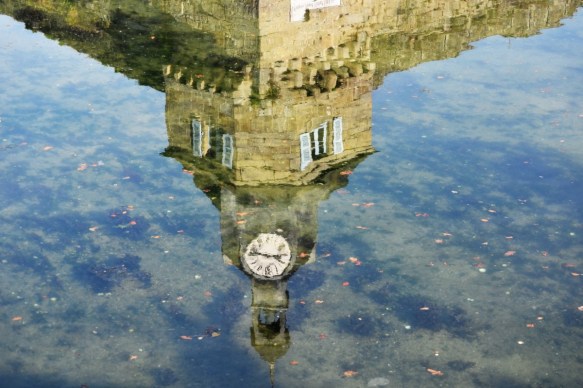
Beowulf's timeline reflects his skewed history.

A somewhat anachronistic clock set into a medieval-looking tower and reflected in the water. Image from: https://pxhere.com/en/photo/1388017.


Back To Top
Recap

Last week, Beowulf explained how Haethcyn met his end and Eofor ended the Geatish/Swedish war.


Back To Top
Synopsis

Beowulf reviews the treasures that Hygelac gave him and how he raised his reputation in countless battles.


Back To Top
The Original Old English

“‘Ic him þa maðmas, þe he me sealde,
geald æt guðe, swa me gifeðe wæs,
leohtan sweorde; he me lond forgeaf,
eard, eðelwyn. Næs him ænig þearf
þæt he to Gifðum oððe to Gardenum
oððe in Swiorice secean þurfe
wyrsan wigfrecan, weorðe gecypan.
Symle ic him on feðan beforan wolde,
ana on orde, ond swa to aldre sceall
sæcce fremman, þenden þis sweord þolað,
þæt mec ær ond sið oft gelæste.
Syððan ic for dugeðum Dæghrefne wearð
to handbonan, Huga cempan;
nalles he ða frætwe Frescyninge,
breostweorðunge, bringan moste,
ac in compe gecrong cumbles hyrde,
æþeling on elne; ne wæs ecg bona,
ac him hildegrap heortan wylmas,
banhus gebræc. Nu sceall billes ecg,
hond ond heard sweord, ymb hord wigan.'”
(Beowulf ll.2490-2509)


Back To Top
My Translation

“‘The treasures that Hygelac granted me,
were payment for my role in that war, all of which fortune allowed me,
I won it for him by flashing sword. For that he gave me land,
a place to be from, the joy of home. Thus, for Hygelac there was
no need, no reason to be required to seek someone from the gift house,
or the Spear-Danes, or the Swedes for worse war-makers, my worth was well-known.
Always would I go on foot before him,
first in the line, and so shall I do ‘til age takes me,
so shall I conduct war, as long as this sword survives,
that which has and will endure.
For this is the sword I held when I, for nobility’s sake,
became the hand-slayer of Day Raven the Frank.
No treasure at all did that warrior
bring back to the Frisian king.
No breastplate could he have carried,
for in the field he fell as standard bearer,
princely in courage. He was not slain by the sword,
but instead a hostile grip halted the surge of his heart,
broke his bone-house. Now shall the sword’s edge,
hand and hard blade, be heaved against the sentinel of the hoard.’”
(Beowulf ll.2490-2509)


Back To Top
A Quick Interpretation

First, reading this passage really confuses me about the timeline of Beowulf’s life story.

Wasn’t Hygelac lord of the Geats when he was over in Daneland, fighting the Grendels? And didn’t Beowulf go over there when he was just a teen?

If those two things are true, then Beowulf must have been something like a squire in that battle with the Swedes. He must also have been a pre-teen then. Or, at the youngest, 13. I mean, he was also supposed to be the runt of his generation, and one whom the elders of the Geats doubted.

But if all of that’s true, then how much more land did Beowulf get from Hygelac after returning from Daneland? And if he already had land and treasures before going to Daneland why would the elders of the Geats be so doubtful about him?

Along similar lines, did Beowulf fight Day Raven before going to Daneland, too? Is that where he gained the reputation for having the strength of 30 men in his hand-grip? Or when Beowulf dropped his sword to manually throttle Day Raven did the gathered crowd cheer and whoop, knowing what was coming?

Honestly, if anyone has a better grasp of Beowulf’s timeline, please do get in touch.

Setting aside concerns about when the events of Beowulf’s life happened, he seems to have had a rich life of fighting just as many non-monstrous as monstrous opponents. So I wonder why the poet decided to go down the monster route.

Perhaps it was a matter of interest.

We have so few poems and stories from the Old English-speaking Anglo-Saxons. So it wouldn’t surprise me if their world of stories was flooded with historical or political romps and Beowulf was meant to be something that broke out of that.

Or, maybe this poem was supposed to be a fusion between what then passed as history and their common mythology?

Feel free to share your theories in the comments!


Back To Top
Closing

Next week, Beowulf tries to pump himself up with a speech to the other Geats with him on the cliff.

If you enjoyed this post, please give it a like. And, if you want to keep up with my translations, please do follow this blog!

You can find the next part of Beowulf here.

Back To Top

King Hæthcyn’s brief run toward battle (ll.2472-2489)

Recap
Synopsis
The Original Old English
My Translation
A Quick Interpretation
Closing

A Viking Age battle involving, no doubt, a king like Beowulf.

Thorir Hund dressed in a reindeer-hide tunic kills King Olaf at the Battle of Stiklestad. Painting by Peter Nicolai Arbo. Click image for source.


Back To Top
Recap

Last week, Beowulf shared how Hrethel’s remaining kids (Hygelac and Hæthcyn) inherited his wealth.


Back To Top
Synopsis

This week, we learn of Hæthcyn’s all too short run as king of the Geats.


Back To Top
The Original Old English

“‘þa wæs synn ond sacu Sweona ond Geata
ofer wid wæter, wroht gemæne,
herenið hearda, syððan Hreðel swealt,
oððe him Ongenðeowes eaferan wæran
frome, fyrdhwate, freode ne woldon
ofer heafo healdan, ac ymb Hreosnabeorh
eatolne inwitscear oft gefremedon.
þæt mægwine mine gewræcan,
fæhðe ond fyrene, swa hyt gefræge wæs,
þeah ðe oðer his ealdre gebohte,
heardan ceape; Hæðcynne wearð,
Geata dryhtne, guð onsæge.
þa ic on morgne gefrægn mæg oðerne
billes ecgum on bonan stælan,
þær Ongenþeow Eofores niosað.
Guðhelm toglad, gomela Scylfing
hreas hildeblac; hond gemunde
fæhðo genoge, feorhsweng ne ofteah.'”
(Beowulf ll.2472-2489)


Back To Top
My Translation

“‘After that, between Swedes and Geats was war and enmity,
over the wide waters could be heard their cries of sorrow,
the noise of wall-hard warfare, after Hrethel perished.
From across that water came Ongeontheow’s sons,
warlike, they would not free those
they held in lamentation, they would not relent.
Near the hill of Hreosnburgh they often launched voracious
murderous attacks. My own close-kin avenged this,
feud and war-fire, as it was known,
though one of them bought it with his life,
at a hard price; Hæthcyn, Geatish lord,
was taken in the war’s assailing.
Then in the morning I heard that his kin
avenged him by the blade, laid its edge to end the slayer’s life,
where Eofor’s attack fell upon Ongeontheow.
His war-helm was split, the Swedish warlord
fell, mortally wounded, for Eofor’s hand held memory
enough of the feuding, Ongeontheow could not hold off the fatal blow.’”
(Beowulf ll.2472-2489)


Back To Top
A Quick Interpretation

King today, a war statistic tomorrow. Poor Hæthcyn, forced to live on with the sorrow of killing his brother, being spurned by his father, and then being king for what sounds like just a few months before dying in battle.

Well, the king is dead. Long live the king.

Yes, this is how Hæthcyn meets his end. It must not have been very glorious, since Beowulf doesn’t dwell on it here. Instead, Eofor is given the attention in the story of this strife. Rightfully so, I suppose, since he doesn’t die and actually lands the blow that ends it all.

Though I can’t really blame Beowulf for glossing over Hæthcyn’s role.

Maybe he was a weak king. After all, he fell in battle, and seems to have done nothing diplomatic to keep the peace between Geats and Swedes.

More than that, though, if Hæthcyn really did kill Herebeald by accident, then he would still be in the terrible position of having killed his brother and haunted by that fact.

If it was no accident, but something along the lines of Robert Baratheon’s hunting trip in Game of Thrones, though, then Hæthcyn definitely wouldn’t be remembered. Such an intention would set him among the worst of the villains in the Anglo-Saxon’s mythology. That kind of treachery isn’t just against family, but against what then would have been seen as the natural order of royal succession. So, just like bad king Heremod, Hæthcyn was given all the gifts of worldly status and squandered them for his own greedy ends — if his brother’s death was indeed not an accident.

Aside from all of that, I really like the phrase that describes Eofor’s disposition when he attacks Ongeontheow: that his “hand held memory/enough of feuding” (“hond gemunde/fæhðo genoge” (ll.2488-2489)). It’s simple, yet incredibly evocative of the single warrior channeling the will of his group into a single act.

Speaking of warriors, do you think that Hæthcyn put up a fight? Or do you think that he went down like a dropped sack of potatoes after an arrow or sword made its way through him?

Feel free to share your theories in the comments!


Back To Top
Closing

Next week, Beowulf gets back to his own story as he explains how he was rewarded for his role in the fight with the Swedes.

If you enjoyed this post, please give it a like. And, if you want to keep up with my translations, please do follow this blog!

You can find the next part of Beowulf here.

Back To Top