Unknown's avatar

About NSCZach

A writer who translates Beowulf (and other things), freelances, reads voraciously, and is always catching up on (mostly retro) adventure video games/J-RPGs.

The unearned title that exposes Anglo-Saxon gold for glory scheme (ll.1963-1976)

Introduction
Synopsis
The Original Old English
My Translation
A Quick Interpretation
Closing
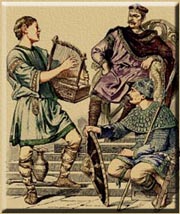
A scop sings his boasts, just like Beowulf does before Hrothgar.

Image found at http://bit.ly/2jumA3j


Back To Top
Synopsis

Beowulf and his crew make their way to Hygelac.


Back To Top
The Original Old English

“Gewat him ða se hearda mid his hondscole
sylf æfter sande sæwong tredan,
wide waroðas. Woruldcandel scan,
sigel suðan fus. Hi sið drugon,
elne geeodon, to ðæs ðe eorla hleo,
bonan Ongenþeoes burgum in innan,
geongne guðcyning godne gefrunon
hringas dælan. Higelace wæs
sið Beowulfes snude gecyðed,
þæt ðær on worðig wigendra hleo,
lindgestealla, lifigende cwom,
heaðolaces hal to hofe gongan.
Hraðe wæs gerymed, swa se rica bebead,
feðegestum flet innanweard.”
(Beowulf ll.1963-1976)


Back To Top
My Translation

“Went he then, along with his retinue,
down the beachhead, treading over the sandy seashore,
over the broad beach. The world candle shone overhead,
the sun strove from the south. They had endured,
bravely gone, to where stood that hall of lords,
the place where Ongentheow’s killer ruled,
went to where they had heard that the young king
was doling out rings. Hygelac was quickly told then
of Beowulf’s journey there, in that word it was said
that Beowulf was in the burgh, that his lifelong
shield companion had come, that the stalwart
warrior walked within the hall, hale and hearty.
Space was cleared, as the king commanded,
those who had travelled far by foot came in.”
(Beowulf ll.1963-1976)


Back To Top
A Quick Interpretation

Most of this passage is just standard stuff. Beowulf and his crew of Geats are coming to the Geats’ stronghold, and they hear that Hygelac must be in since “the young king/was doling out rings” (“geongne guðcyning godne gefrunon
hringas dælan” (ll.1969-1970)). But what catches my eye is the reference to “Ongentheow’s killer” (“bonan Ongenþeoes” (l.1968)).

This wikipedia article makes the point that this epithet for Hygelac is a bit of an extrapolation. As the article points out (and as we learn later in Beowulf itself), Ongentheow had a few run-ins with the Geats, including Hygelac.

But it was not Hygelac who killed him. Eofor did, with the help of Wulf.

I guess part of being a king in the Anglo-Saxon style was sharing in your retainers’ accomplishments as much as it was sharing out your gold with them. Which is pretty interesting if you think of it as a glory for gold kind of equation. In such a situation, the king’s reputation swells with every great victory his retainers win while those retainers only see gold for the deeds they do.

In some ways, this system of glory funnelling up and gold funnelling down is a dim mirror of the sort of corporate system that’s in place now.

Today’s workers are faceless and ill-remembered by history, but are paid for their labour (mental, physical, emotional), while the glory of their accomplishments adds another page to history’s book in the name of their employer.

Kind of shines a new light on copyright and patents doesn’t it?

I only wish that there were more accounts of how warriors in early medieval Anglo-Saxon communities felt about having their physical needs met and station raised at the cost of their being remembered for their own deeds.

Though, I guess, then, as now, if someone wanted to make a place for themselves in history they would grin and bear losing the glory earned for their lord/employer while saving enough gold to start their own comitatus/business and strive for their place in history.

But if you grew up in a society where the greatest service was service to your lord, would you even consider stepping out from his shadow? Were there people who strove for their own individual goals back then? What do you think? Leave your thoughts in the comments.


Back To Top
Closing

Next week, Hygelac asks how things went in Daneland.

You can find the next part of Beowulf here.
Back To Top

Good Queen Modthryth? How marriage makes women (and men) better (ll.1944-1962)

Introduction
Synopsis
The Original Old English
My Translation
A Quick Interpretation
Closing

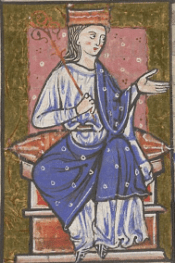
Aethelflaed, the anglo-saxon woman who wasn't queen but fought off vikings.

An image of Aethelflaed, fighter of vikings and the daughter of King Alfred the Great and Queen Ealhswith. Image from https://younghistorian7.wordpress.com/2014/03/18/a-look-at-some-anglo-saxon-queens/


Back To Top
Synopsis

The poet continues the story of Modthryth and what happened when she was married off.


Back To Top
The Original Old English

“Huru þæt onhohsnode Hemminges mæg;
ealodrincende oðer sædan,
þæt hio leodbealewa læs gefremede,
inwitniða, syððan ærest wearð
gyfen goldhroden geongum cempan,
æðelum diore, syððan hio Offan flet
ofer fealone flod be fæder lare
siðe gesohte; ðær hio syððan well
in gumstole, gode, mære,
lifgesceafta lifigende breac,
hiold heahlufan wið hæleþa brego,
ealles moncynnes mine gefræge
þone selestan bi sæm tweonum,
eormencynnes. Forðam Offa wæs
geofum ond guðum, garcene man,
wide geweorðod, wisdome heold
eðel sinne; þonon Eomer woc
hæleðum to helpe, Hemminges mæg,
nefa Garmundes, niða cræftig.”
(Beowulf ll.1944-1962)


Back To Top
My Translation

“Indeed, Hemming’s kinsman put an end to that.
The ale drinkers in the hall told another tale:
that she caused much less trouble to her people,
favoured fewer malicious acts, as soon as she was
given to the young lord while gowned in gold,
a man of noble descent, as soon as she boarded a boat
to cross the pale waters to marry Offa
according to her father’s counsel. Once there
the woman worked well on the throne, renowned for goodness,
she made the most of her destined life-span while alive;
she maintained her deep love with the prince of warriors
among all kingdoms, as I have heard,
the best between the two seas
of all mankind. As such, Offa was foremost
in gifts and in wars, a spear-bold man,
one honoured widely, who ruled his nature
and lands with wisdom. Then Eomer was born,
a help to warriors, Hemming’s kinsman,
grandson of Garmund, powerful in battle.”
(Beowulf ll.1944-1962)


Back To Top
A Quick Interpretation

The poet ends the story of bad queen Modthryth here. But it isn’t the ending I would’ve expected from such a story.

Instead of meeting her end as fated retribution for her wickedness, Modthryth is married off to another man.

It’s unclear if this is because Modthryth was more princess than queen or if her husband was killed. Unfortunately, I don’t have any information about her family tree, so I can’t really say much about why she’s suddenly eligible for marriage here.

However, it is clear that the story that the “ale drinkers in the hall” (“ealodrincende oðer sædan” (l.1945)) tell differs quite a bit from what we heard last week.

This time around Modthryth (at least, I think the poet’s still talking about Modthryth — Old English poetry can have some unclear pronouns at times) is a model queen. She changes so much in fact, that she becomes “renowned for goodness” (“gode, mære” (l.1952)). But that’s not enough. She also seems to help Offa become a better leader.

This point in particular is important to note because it illustrates the good that can come out of a good marriage. It can mellow a woman out (a chronic issue in a fair bit of medieval literature), it can help a man be better, and, in doing those two things, it can fulfil what I’ve always seen as a Christian imperative for marriage: enable the mutual and reciprocal improvement of the partners involved.

That such a lesson be included in Beowulf (even in one of the poet’s asides) definitely shows how Beowulf has been Christianized.

True, the reciprocal improvement of the members of a married couple is probably also celebrated in non-Christian contexts, too. But presenting such a terrible portrait of Modthryth before talking about how marriage redeemed her gives her an arc that’s got far too much to do with redemption for me to just write it off as the Beowulf poet sharing with us some universal lesson.

Not to mention the implication in last week’s passage that Modthryth’s earlier husband (or father?) lacked the power to control her. As a result she inflicted a dire punishment on any other man who looked at her.

But, Offa is a celebrated warrior of history and legend. As such he is powerful enough to control Modthryth, and the idea that women can only do good when controlled (or at least matched with an equal) seems like a very non-pagan idea to me. Boudica was fine on her own after her husband’s death, and women generally commanded respect in early medieval Germanic societies (for spiritual insight or otherwise). But I can’t think of a single Christian story about a woman who was generally respected or defiant to the end except for those who were in the service of god and wound up as saints.

But what do you think of this turnaround for Modthryth? Is it evidence of the Christian influence on Beowulf? Or does it say something about how the Anglo-Saxons and other Germanic groups viewed women and marriage’s potential effects on them? Feel free to discuss your thoughts in the comments!


Back To Top
Closing

Next week, the poet gets back to Beowulf and his meeting with Hygelac.

You can find the next part of Beowulf here.

Back To Top

Bad Queen Modthryth: A case in medieval microaggressions? (ll.1931b-1943)

Introduction
Synopsis
The Original Old English
My Translation
A Quick Interpretation
Closing

Aethelflaed, the anglo-saxon woman who wasn't queen but fought off vikings.

An image of Aethelflaed, fighter of vikings and the daughter of King Alfred the Great and Queen Ealhswith. Image from https://younghistorian7.wordpress.com/2014/03/18/a-look-at-some-anglo-saxon-queens/


Back To Top
Synopsis

The poet tells the story of the lovely and violent Modthryth.


Back To Top
The Original Old English

“Mod þryðo wæg,
fremu folces cwen, firen ondrysne.
Nænig þæt dorste deor geneþan
swæsra gesiða, nefne sinfrea,
þæt hire an dæges eagum starede,
ac him wælbende weotode tealde
handgewriþene; hraþe seoþðan wæs
æfter mundgripe mece geþinged,
þæt hit sceadenmæl scyran moste,
cwealmbealu cyðan. Ne bið swylc cwenlic þeaw
idese to efnanne, þeah ðe hio ænlicu sy,
þætte freoðuwebbe feores onsæce
æfter ligetorne leofne mannan.”
(Beowulf ll.1931b-1943)


Back To Top
My Translation

“Modthryth, the noble
people’s queen, committed terrible crimes.
For not anyone of that brave, dear company,
save for her husband, would venture to look upon her
during the day or even meet her eye,
lest they be bound in deadly bonds
thorny and twisted by hand, then made to wait for the mercy
of a sword held tight in their tormentor’s hand,
a blade with branching patterns that must settle their debt,
must slake its thirst for public blood. Such acts cannot compare
to the true custom of queens, even if she be peerless in beauty.
For such women are peace-weavers, and must not steal away life
from dear men for imagined insults.”
(Beowulf ll.1931b-1943)


Back To Top
A Quick Interpretation

All of a sudden we get another story. This time, we hear about bad queen Modthryth. The poet implying that Hygd, current queen of the Geats, is nothing like this woman.

It would be easy to chalk her violence up to vanity and an overheated sense of duty. Modthryth’s problem might not be just that she’s feeling the sting of “imagined insults” (“ligetorne” (l.1943)). Maybe she’s also buckling under the pressure of being a good and loyal wife to her husband. After all, she doesn’t punish him for looking at him, only other men.

Or, maybe Modthryth is such a wicked queen because she really is too eager to punish those who threaten the monogamy of her relationship with her husband.

Or, maybe this is a medieval take on the male gaze.

I’m not surprised that a medieval poem (and poet) don’t say anything about it directly. I’m also not surprised that the problem isn’t located in how the men are looking at Modthryth, but her reaction to their looking at her. It’s too bad that we’re not given more information here, actually.

Maybe Modthryth had been raped by one of her husband’s retainers in the past and she’s now defending herself against the rest using means she knows they’ll understand?

Or, maybe, if she’s anything like Hygd and Wealhtheow, she is part of a group that her husband has enslaved. If this is the case, and she was a princess or queen among her own people, then it’s understandable why she would object to being looked at like some piece of property. Though her violent and involved reaction is nonetheless a bit over the top.

Maybe Modthryth is crazy. Something in her past could have led her to develop some feelings about being looked at by men who are not her husband on which she acts violently. Or, maybe, she isn’t. As a woman that the poet points out is “peerless” (“ænlicu sy” (l.1941)), she is likely an unimaginably beautiful woman. Thus, at the very least, she’s had to live her life being stared at and lusted after. So maybe once she gained the power to do so, she could take no more idle gazes and the thoughts behind them and decided to act against them.

But we don’t get any background information. So the problem still is, at least in part, men looking at Modthryth. And unfortunately, nothing is said about it. What are the poet’s “imagined insults” are today’s microaggressions. And perhaps Modthryth just can’t take them anymore.

What do you think of Modthryth’s story? Is it an overtly sexist part the poem? Does Modthryth not get enough of a story to pass judgment on her? Is this an example of a medieval take on what we’d recognize as microaggressions today? Leave your thoughts in the comments!


Back To Top
Closing

Next week, the poet clarifies his point a bit.

You can find the next part of Beowulf here.

Back To Top

Wealhtheow, Grendel’s mother, and Hygd: The women in Beowulf (ll.1920-1931a)

Introduction
Synopsis
The Original Old English
My Translation
A Quick Interpretation
Closing

Aethelflaed, the anglo-saxon woman who wasn't queen but fought off vikings.

An image of Aethelflaed, fighter of vikings and the daughter of King Alfred the Great and Queen Ealhswith. Image from https://younghistorian7.wordpress.com/2014/03/18/a-look-at-some-anglo-saxon-queens/


Back To Top
Synopsis

The poet takes a break from Beowulf here to share a few details of Hygelac’s kingdom with us.


Back To Top
The Original Old English

“Het þa up beran æþelinga gestreon,
frætwe ond fætgold; næs him feor þanon
to gesecanne sinces bryttan,
Higelac Hreþling, þær æt ham wunað
selfa mid gesiðum sæwealle neah.
Bold wæs betlic, bregorof cyning,
heah in healle, Hygd swiðe geong,
wis, welþungen, þeah ðe wintra lyt
under burhlocan gebiden hæbbe,
Hæreþes dohtor; næs hio hnah swa þeah,
ne to gneað gifa Geata leodum,
maþmgestreona.”
(Beowulf ll.1920-1931a)


Back To Top
My Translation

“Then it was commanded that the prince’s treasure be carried up,
ornaments and plated gold. It was not far from there
for him to go to the treasure bestower,
Hygelac, son of Hrethel, he who dwelled within
his own home, living near the sea-cliff with his companions.
The building there was magnificent, the king was of princely fame,
one exalted in the hall, along with Hygd, his young queen,
a woman wisely accomplished, though she had lived
within the enclosed stronghold for but a few winters,
daughter of Haereth. Yet she was not bent down by vanity,
she was not sparing in gifts to the Geatish people,
she gave a great many treasures.”
(Beowulf ll.1920-1931a)


Back To Top
A Quick Interpretation

So far there have been two major women in this poem. And they are definitely at opposite ends of the spectrum of good/bad.

First, we met Wealtheow, the queen of the Danes. She was a woman who came from a group that Hrothgar or his family must have enslaved, based on her name. Despite these origins, the poet suggests that she’s a good queen who embodies all the best qualities of courtly women: quietly powerful, dominant in the hall, and a master of social niceties.

Next, we met Grendel’s mother. She is pretty much the opposite of Wealhtheow. After all, she’s supposed to be a monster. So instead of Wealhtheow’s happily fitting into a courtly setting and really shining, Grendel’s mother runs her own hall, answering to no one, and brutally striking out at those who attack her and her kin.

Now the poet introduces us to Hygd, the wife of Hygelac. The first thing we learn about her is that, much like Wealhtheow, she’s likely from a foreign people. After all, the poet notes that Hygd fits right in with the Geats, “though she had lived/within the enclosed stronghold for but a few winters” (“þeah ðe wintra lyt/under burhlocan gebiden hæbbe” (ll.1927-1928)). So Hygd is certainly a woman who wields her courtly power well and justly. Though there is a bit of a creepy note in mentioning how young she is.

Marrying women off when they would still be considered “girls” today was common practice in earlier societies, but that fed into the very purpose of marriage back then: cementing business and political deals. Love could be a factor, but more often than not I think it was hoped that it would come about after the vows were exchanged. Hence the steady popularity of love stories like those of Romeo and Juliet, Tristan and Iseult, or Lancelot and Guinevere. People were hungry for the idea of relationships built on love, even if they ran against whatever political or mercantile interests were at stake.

There’s also the issue of how Hygd fits into Hygelac’s court. She’s introduced along with the building and the talk of treasures. She’s introduced as Hygelac’s wife, sure, but there does seem to be a note of her being something Hygelac owns. Though in both Wealhtheow and Hygd’s cases there’s a sense that these women are able to create a great deal of power. And yet, there’s a hint of danger that lingers around women. In fact, the poet seems to be trying to strike a balance between good women and evil women, since the following passage describes the vanity and vice of Modthryth.

But, what do you think of the women in Beowulf? Is the poet trying to balance them out (and definitely not doing so with the men)? How does Hildeburh from the Finnsburgh section of the poem (ll.1068-1158) figure into this balance? Leave your thoughts in the comments!


Back To Top
Closing

Next week, the poet tells us the story of the wicked queen Modthryth.

You can find the next part of Beowulf here.
Back To Top

Beowulf and the Geats take a smooth ship trip (ll.1905-1919)

Introduction
Synopsis
The Original Old English
My Translation
A Quick Interpretation
Closing

A Viking ship on display in a museum in Oslo.

A photo of a ship from a Viking exhibition in an Oslo Museum. Taken by Grzegorz Wysocki, from https://commons.wikimedia.org/wiki/File:Exhibition_in_Viking_Ship_Museum,_Oslo_01.jpg.


Back To Top
Synopsis

Beowulf and his crew leisurely sail from Daneland to Geatland.


Back To Top
The Original Old English

“þa wæs be mæste merehrægla sum,
segl sale fæst; sundwudu þunede.
No þær wegflotan wind ofer yðum
siðes getwæfde; sægenga for,
fleat famigheals forð ofer yðe,
bundenstefna ofer brimstreamas,
þæt hie Geata clifu ongitan meahton,
cuþe næssas. Ceol up geþrang
lyftgeswenced, on lande stod.
Hraþe wæs æt holme hyðweard geara,
se þe ær lange tid leofra manna
fus æt faroðe feor wlatode;
sælde to sande sidfæþme scip,
oncerbendum fæst, þy læs hym yþa ðrym
wudu wynsuman forwrecan meahte.”
(Beowulf ll.1905-1919)


Back To Top
My Translation

“Then the mast was dressed with its sea garb,
the sail bound with rope; the sea wood creaked.
The wave-floater’s journey was not hindered
by wind over waves, that sea-goer swept forth
riding onwards atop foamy necked waters.
The ship with the ring-bound prow went over the sea current
so swiftly that they soon saw the Geatish cliffs,
the familiar headlands appeared, as the ship came closer
until that wind-battered boat rested upon the sands.
Swiftly the harbour guard was ready at the water,
he who for a long time had eagerly looked
far out to sea for that dear man.
He moored that roomy ship on the beach,
fixed it there with anchor ropes, lest the force of the waves
drive that beautiful boat from shore.”
(Beowulf ll.1905-1919)


Back To Top
A Quick Interpretation

And with that, Beowulf and his crew are back in Geatland. To borrow a term from modern video games, the Geats definitely fast-travelled from Daneland to Geatland. But there was nothing to get in their way. As the poet says:

“The wave-floater’s journey was not hindered
by wind over waves, that sea-goer swept forth
riding onwards atop foamy necked waters.”

“No þær wegflotan wind ofer yðum
siðes getwæfde; sægenga for,
fleat famigheals forð ofer yðe.”
(ll.1907-1909)

Since Beowulf is returning to his home turf the process of getting off the boat is much smoother than the Daneland coastguard’s inquisition.

As a matter of fact, there’s not a whole lot going on with characters here. The only human being who is mentioned is the “harbour guard” (“hyðweard” (l.1914)) of the Geats. Another character who is left unnamed and only characterized by his position. That he could be so eagerly awaiting the return of Beowulf and the Geats’ best and brightest definitely confirms that there must not be much going on with him outside of his job, too.

But, what we are told much about is the boat.

The poet doesn’t go into an opulent amount of detail, but we’re shown the ship’s mast being set up. Then the sea voyage is described in glowing terms. And the passage ends with a note about the harbour guard anchoring the boat to the shore so that “that beautiful boat” (“wudu wynsuman” (l.1919)) doesn’t float off. Though surely the weight of the treasures and horses Hrothgar gave Beowulf would keep the boat securely on the sand.

What I don’t get though, is why the poet doesn’t say anything about fate or god’s favour in the safeness of Beowulf’s sea voyage.

Perhaps it’s an implicit reference to some Anglo-Saxon superstition. Maybe they believed that praising safe sea travel would call calamity down upon the one praising it.

Or maybe it’s a call back to Beowulf beating up the sea monsters that he and Breca encountered during their race. He had cleared the seas and so there was nothing to keep Beowulf and his crew from a quick trip home.

Whatever the reason behind this lack of detail is, it definitely makes it clear that sailing needs no long detailed explanation. Either the poet had little to no interest in the subject, or they didn’t want to bore their audience and so they just included a few reverent lines about dressing the ship and anchoring it. Though maybe such a tidy voyage is just supposed to foreshadow the smooth sailing that Beowulf faces in the future.

But. There are about another 1000 lines of the poem, so the going can’t be that smooth for our hero just yet.

What do you think the poet’s trying to say with this short sea voyage? Are they trying to say anything or is it just a sea voyage? Leave your thoughts in the comments!


Back To Top
Closing

Next week, Beowulf and Hrothgar’s gifts go to the king of the Geats: Hygelac.

You can find the next part of Beowulf here.

Back To Top

Beowulf gives a sword to be a king (ll.1888-1904)

Introduction
Synopsis
The Original Old English
My Translation
A Quick Question
Closing

The decorative grip and pommel of the Gilling Sword, like Beowulf's ancient giant sword?

The grip and pommel of the Gilling Sword, found in a stream in Yorkshire in 1976. Did the giant’s sword that Beowulf found have a similar hilt? Copyright York Museums Trust http://bit.ly/2gh8HXJ. Image from http://bit.ly/2gpntKw.


Back To Top
Synopsis

Beowulf and the Geats leave Daneland.


Back To Top
The Original Old English

“Cwom þa to flode felamodigra,
hægstealdra heap, hringnet bæron,
locene leoðosyrcan. Landweard onfand
eftsið eorla, swa he ær dyde;
no he mid hearme of hliðes nosan
gæstas grette, ac him togeanes rad,
cwæð þæt wilcuman Wedera leodum
scaþan scirhame to scipe foron.
þa wæs on sande sægeap naca
hladen herewædum, hringedstefna,
mearum ond maðmum; mæst hlifade
ofer Hroðgares hordgestreonum.
He þæm batwearde bunden golde
swurd gesealde, þæt he syðþan wæs
on meodubence maþme þy weorþra,
yrfelafe. Gewat him on naca
drefan deop wæter, Dena land ofgeaf.”
(Beowulf ll.1888-1904)


Back To Top
My Translation

“Came they then to the sea, the very brave
and young company; they wore their ring-mail,
their shirts of interlocking rings. The coastguard observed
their coming, as he had earlier observed their arrival,
but he did not greet those guests of
the craggy promontory with insult, he rode towards the band.
He said to them that they would be welcome by the Weder people,
those warriors in bright armour that went to their ship.
There on the spacious beach that ship was
laden with armour, the ring-prowed ship,
and with horses and with treasures; the mast towered
over the hoarded treasures from Hrothgar.
The lord of the Geats then gave that guard a sword
bound in gold, so that afterwards he was
honoured all the more among the mead-benches for that treasure,
the gilded heirloom. Then the ship of them plunged into the sea,
stirred up the deep waters, thus they left Daneland.”
(Beowulf ll.1888-1904)


Back To Top
A Quick Interpretation

The best poetry says a lot with a little.

Beowulf’s gift of the sword to the coastguard demonstrates his magnanimity and a quality that makes him a great king: fairness. Beowulf doesn’t just toss the coastguard who, presumably, has been keeping watch over the Geats’ ship for the duration of their stay, some little trinket. He gives him a sword that’s covered in gold (or, as Seamus Heaney has it, it has “gold fittings” (l.1901) (“bunden golde/swurd” (l. 1900-1901))).

A gold-bound sword seems like a pretty good reward for watching what must have been a peaceful shore for a few days.

Though, it could be argued that out of a whole shipload of treasures a mere gold-bound sword is small change. So is Beowulf short-changing this guy?

I don’t think so.

I think that part of what the Anglo-Saxon kings considered when they divided treasure was that treasure’s usefulness to its receivers. A gold-bound sword might have questionable usage in combat. But, as the poet points out, this gift led the coastguard to be “honoured all the more among the meadbenches for that treasure” (“on meodubence maþme þy weorþra” (l.1902)). And that’s why I think it’s what an Anglo-Saxon king (like future Beowulf) would consider a perfectly fair gift for the coastguard.

After all, the poet has never left me with the impression that Daneland faced danger from outside of itself.

Grendel is a threat from within Daneland’s borders, and when the poet mentions the fall of Heorot he says that it’s a family squabble that leads to its end. So somebody guarding one of Daneland’s borders is probably not winning much glory through combat. Thus, Beowulf’s gift of the gold-bound sword is a perfect gift since it boost’s the man’s honour in the eyes of his companions.

With that, then, Beowulf leaves the land where he spent some very formative time with a final act that nods towards his being a fantastic king.


Back To Top
Closing

Next week, Beowulf and the Geats fight the sea.

You can find the next part of Beowulf here.

Back To Top

Hrothgar’s tearful farewell offers a glimpse into Beowulf’s future (ll.1866-1887)

Introduction
Synopsis
The Original Old English
My Translation
A Quick Reflection
Closing

A scop sings his boasts, just like Beowulf does before Hrothgar.

Image found at http://bit.ly/2jumA3j


Back To Top
Synopsis

Hrothgar gives Beowulf gifts and tearfully parts with him as the Geat and his companions leave Daneland.


Back To Top
The Original Old English

“ða git him eorla hleo inne gesealde,
mago Healfdenes, maþmas XII;
het hine mid þæm lacum leode swæse
secean on gesyntum, snude eft cuman.
Gecyste þa cyning æþelum god,
þeoden Scyldinga, ðegn betstan
ond be healse genam; hruron him tearas,
blondenfeaxum. Him wæs bega wen,
ealdum infrodum, oþres swiðor,
þæt hie seoððan no geseon moston,
modige on meþle. Wæs him se man to þon leof
þæt he þone breostwylm forberan ne mehte,
ac him on hreþre hygebendum fæst
æfter deorum men dyrne langað
beorn wið blode. Him Beowulf þanan,
guðrinc goldwlanc, græsmoldan træd
since hremig; sægenga bad
agendfrean, se þe on ancre rad.
þa wæs on gange gifu Hroðgares
oft geæhted; þæt wæs an cyning,
æghwæs orleahtre, oþþæt hine yldo benam
mægenes wynnum, se þe oft manegum scod.”
(Beowulf ll.1866-1887)


Back To Top
My Translation

“Then the protector of warriors, son of Half-Dane,
gave him twelve treasures,
commanded he then those dear ones to
go forth in safety, and to quickly come back.
The king then kissed that one of good and noble descent,
the lord of the Scyldings embraced that best of men,
with arms about his neck; then the
greyhaired one fell to tears. Two things were known to him,
the old one of great wisdom, one of the two was clearer:
that he would never afterward see him,
meet for a heart to heart. To him that man was so beloved
that he could not restrain his surging emotion,
his heartstrings were wound tight at that thought,
he keenly felt his fondness for the man whom
he now knew as his dearest friend. From him Beowulf then went,
the warrior now proudly wound in gold walked the green earth,
exulting in his treasure. He went to where his ship waited
for its owner and lord, where it had ridden at anchor.
Thereafter the gifts of Hrothgar were often praised
as the Geats went on their way. He was a true king,
blameless in all respects, until age deprived him
of the might of joy, as it has ever oppressed a host of others.”
(Beowulf ll.1866-1887)


Back To Top
A Quick Reflection

Well, this is quite a send off for Hrothgar. Beowulf may be leaving, but as of that last line Hrothgar slips out of the story and off this mortal coil. As Hrothgar himself suspects, he never again meets Beowulf.

But what a set of lines to go out on.

I mean, Saying that Hrothgar was “a true king” (“þæt wæs an cyning” (l.1885)) right up to the end when “age deprived him/of the might of joy” (“hine yldo benam/mægenes wynnum” (l.1886-87)) offers a very poetic iris slow wipe on his character and its involvement in the story.

Actually, come to think of it, it’s kind of strange that this farewell focuses so much on the old king of the Danes. I mean, this is Beowulf after all, right? Yet this is one of the few moments where we actually get this kind of insight into another character’s inner workings.

In all of Beowulf’s interactions with Unferth, for example, we’ve only ever had their dialogue and what the poet states are Beowulf’s intentions. But we don’t get any insight into Unferth’s thought processes. There are no sly snipes or profaning curses in inner monologue directed from Unferth to Beowulf. Even later on in the poem, every character that Beowulf encounters is presented as simply as non-player characters in video games. They’re all just people that Beowulf interacts with, but we hear nothing of people’s impressions of him or his actions until his funeral.

So what makes Hrothgar different? Why does the poet dwell so much on this foreign king when they could be writing reams about Hygelac’s joy at seeing Beowulf come back to Geatland safe and sound?

Well, I think that it comes back to J.R.R. Tolkien’s idea that Beowulf is not an epic poem but an elegy and John Leyerle’s idea that the poem follows an interlaced structure. Thematically, Hrothgar is the mirror of old Beowulf, and so all of this insight into his character and inner thoughts reflect old Beowulf’s own inner thoughts.

However, unlike a poet who likens a character to some great legendary figure because of a single characteristic, Hrothgar is more than just a reflection of future king Beowulf: just, generous, and ruling long and well. Buried in the last lines of this passage is the end of Beowulf as well. Old age puts an end to his adventuring, as little as he’s willing to admit to it when the time comes. Though silent and persistent old age ultimately adds him to the multitude of those whom it has chopped down in the past.

Why do you think we’re told about Hrothgar shedding tears and his fondness for Beowulf wrenching his heart strings as the Geat leaves? Share your thoughts in the comments!


Back To Top
Closing

Next week, Beowulf and his crew head back to their ships and meet an old friend.

You can find the next part of Beowulf here.

Back To Top

Hrothgar’s talk of gifts hides anxiety about society (ll.1855-1865)

Introduction
Synopsis
The Original Old English
My Translation
A Quick Question
Closing

A scop sings his boasts, just like Beowulf does before Hrothgar.

Image found at http://bit.ly/2jumA3j


Back To Top
Synopsis

Hrothgar congratulates Beowulf on restoring peace.


Back To Top
The Original Old English

“‘Hafast þu gefered þæt þam folcum sceal,
Geata leodum ond Gardenum,
sib gemæne, ond sacu restan,
inwitniþas, þe hie ær drugon,
wesan, þenden ic wealde widan rices,
maþmas gemæne, manig oþerne
godum gegretan ofer ganotes bæð;
sceal hringnaca ofer heafu bringan
lac ond luftacen. Ic þa leode wat
ge wið feond ge wið freond fæste geworhte,
æghwæs untæle ealde wisan.'”
(Beowulf ll.1855-1865)


Back To Top
My Translation

“‘You have brought it about so that by all people it shall be said,
by the Geatish people and by the spear Danes,
we have a shared peace and ceased strife,
ended the enmity that we once endured,
and that it was while I ruled over a wide kingdom,
over common treasures, greeted with gifts
many others from across the gannet’s bath.
The ring-prowed ships shall ever bring
gifts and love-tokens across the heaving crests. I of thy people
know that you are firm with friend or with foe alike,
steadfast in every respect in the old ways.'”
(Beowulf ll.1855-1865)


Back To Top
A Quick Question

Hrothgar here declares that Beowulf has brought about peace. And, since he’s a delegate from the Geats, his defeating the Grendels means that Danes and Geats share a strengthened bond now. No doubt the talk of treasure flowing freely between their nations underscores this new-forged peace, too.

But I can’t help but notice how Hrothgar puffs himself up here on lines 1859-1861. Here Hrothgar notes that Beowulf brought about this peace while he ruled generously over many, though we never really see that many. In fact, Hrothgar’s calling this out about himself seems strange because when I think of proper medieval speech-giving, I think that rulers need to be humble. If anyone boasts about a ruler’s accomplishments, it’s an underling like a herald or a standard bearer of some kind. Maybe if Grendel’s mother hadn’t dragged Aeschere off, he would be the one saying these things, though. After all, he was the one who announced Beowulf in the first place, I believe.

Setting aside matters of humility and hierarchy, though, I hear a strong note of doom in Hrothgar’s final lines. There’s just something in his calling the Geats “steadfast in every respect in the old ways” (“æghwæs untæle ealde wisan” (l.1865)). This statement suggests that there are new ways that aren’t so clear cut. But what are these new ways? Switching allegiances at random?

Since this poem is set in the distant past, did those old ways die out while the new ones took over? To the people hearing and reading Beowulf in the 11th century, was the past that this poem presented where ideals of honour and being true to your word lived in the same way the middle ages as a whole are where those things live for many people today?

The fact that Hrothgar notes the Geats’ steadfastness in the old ways as a positive thing definitely suggests that they’re becoming harder to find. So does that mean that even in the era of Beowulf, honour among clearly defined allies and enmity towards equally well-defined foes was a fading quality in people? Or could this line have been altered by the Christian monks who put the poem to paper to try to dispel notions that the pre-Christian past was a better time?

As with many of the themes and ideas in this poem there are no clear answers to these questions. But, that’s the beauty of discussing literature, it’s all a matter of interpretation and opinion. So, what do you think of Hrothgar’s final words to Beowulf? Inscribe your thoughts in the comments!


Back To Top
Closing

Next week, Hrothgar gives some sweet gifts and Beowulf and the Geats head for their boats.

You can find the next part of Beowulf here.

Back To Top

Why was this week quiet?

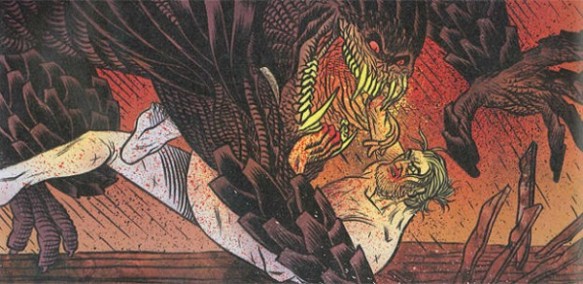
Beowulf fights Grendel as depicted by Santiago Garcia and David Rubin's graphic novel adaptation of Beowulf.

Beowulf battles Grendel in Santiago Garcia and David Rubin’s Beowulf. Image from http://bit.ly/2jVrgOn.

So, you might have noticed that I missed both posts this week. Even the promised translation post. Sorry about that.

The reason why I missed posting here at all this week is a combination of work being incredibly busy and a lingering cold taking root in my throat and chest. Thankfully, work will slow down this coming week, and I’m feeling better already. So, I can’t quite promise two posts this coming week (I’ll have to do something big when the news post comes back — maybe check out Beowulf’s appearance in Once Upon a Time to see how he’s been adapted 😉 ), but I will be trying to get a translation post out. I have roughly another 800 lines to post up here, and they aren’t going to post themselves!

Beowulf as spiritual achiever (ll.1840-1854)

Introduction
Synopsis
The Original Old English
My Translation
A Quick Question
Closing

A scop sings his boasts, just like Beowulf does before Hrothgar.

Image found at http://bit.ly/2jumA3j


Back To Top
Synopsis

Hrothgar says that Beowulf will make a good king, if he ever gets the chance to take the throne.


Back To Top
The Original Old English

“Hroðgar maþelode him on ondsware:
‘þe þa wordcwydas wigtig drihten
on sefan sende; ne hyrde ic snotorlicor
on swa geongum feore guman þingian.
þu eart mægenes strang ond on mode frod,
wis wordcwida. Wen ic talige,
gif þæt gegangeð, þæt ðe gar nymeð,
hild heorugrimme, Hreþles eaferan,
adl oþðe iren ealdor ðinne,
folces hyrde, ond þu þin feorh hafast,
þæt þe Sægeatas selran næbben
to geceosenne cyning ænigne,
hordweard hæleþa, gyf þu healdan wylt
maga rice. Me þin modsefa
licað leng swa wel, leofa Beowulf.'”
(Beowulf ll.1840-1854)


Back To Top
My Translation

“Hrothgar spoke to him in answer:
‘The Lord in his wisdom sent those words
into your mind; never have I heard wiser words
from one so young in age.
You are of powerful strength and of wise mind,
with wit in your words. I consider it something to be expected,
that if it shall happen that the spear takes him,
if fierce battle seizes the son of Hrethel,
if illness or iron edge claims your lord,
the guardian of people, and you still have your life,
then the Sea Geats will not have
anyone better to choose as king,
warrior of hoard guardians, if you will rule
the kingdom of your kin. The better I know you,
the more I like you, dear Beowulf.'”
(Beowulf ll.1840-1854)


Back To Top
A Quick Question

If this was set in a democracy, Beowulf definitely has Hrothgar’s vote. But, since the world of Beowulf is more of a feudal monarchy, Hrothgar’s words are at least a ringing endorsement of Beowulf. If (if!) he should ever be king. Since he’s not Hygelac’s son, or an heir in any other direct way, Beowulf can’t exactly bank on being king of the Geats.

The real story here, I think, is in the first few lines of this passage.

I can’t quite get over Hrothgar’s saying that “‘the Lord in his wisdom sent those words/into your mind'” (“þe þa wordcwydas wigtig drihten/on sefan sende” (l.1841-1842)). There’s something here to suggest that Beowulf was indeed written down by a Christian monk (or monks) who wasn’t afraid to add a bit of Christianity into their copying.

I mean, if Hrothgar is complimenting Beowulf on being a medium for divine wisdom, then it seems to me that he’s saying Beowulf has a direct line to the divine law that’s inscribed on the hearts of all good Christians, according to medieval theology. In other words, Beowulf is in a spiritually perfect state, despite his youth.

But I can’t really justify that reading of those few lines.

Nothing else in Hrothgar’s speech seems to have been Christianized, nor point in that direction. The list of potential killers of Hygelac just seems like a list of fatal things. There’s no “live by the sword, die by the sword” about it. But I think that, even if some meddling monks did make a few subtle changes to the poem, the Catholic Church in northern Europe saw Beowulf as a way to bridge Germanic paganism and Christianity.

After all, Beowulf was a figure that could blend the brazen machismo of figures like Odin or Thor with a righteous warrior persona who put on the armour of the holy spirit. I think that side comes out when Beowulf chalks his victory over Grendel up to god, and why the poet says things like ‘fate must decide’ or that god was on Beowulf’s side.

But where’s my proof for this interpretation?

Well, Beowulf’s battle prowess can be seen pretty plainly in his boasts and when he actually takes out Grendel and the monster’s mother. It’s something that the poet can show us as well as tell us.

But that doesn’t make him a complete person in the medieval mind.

To do that, he also need to have achieved spiritually. But that’s harder to show convincingly.

Though Beowulf’s emerging from the Grendels’ lake at around the same time as Christ is said to have given up his spirit when on the cross could get this across, if your audience or readers were familiar enough with that part of the Easter story. There’s also Beowulf’s harrowing the monster’s lair, just as Christ harrowed hell, according to the Catholic Easter story.

Yet character isn’t just revealed through actions. It’s also learned through what other people say about a person. So, as a long time and mostly successful king, Hrothgar’s saying that god put those words into Beowulf’s mind (and the implication that Beowulf was able to release them as they were) is definitely a legitimate way to show that Beowulf has obtained some level of spiritual achievement.

But that’s all just my theory. What’s your take on Hrothgar’s words to Beowulf? Is there any secret Christian meaning in them, or is Hrothgar just saying “hey Beowulf, you’ll be a good king” and nothing more?

Leave your thoughts in the comments!


Back To Top
Closing

Next week, Hrothgar gets political in his farewell speech.

You can find the next part of Beowulf here.

Back To Top