Hrothgar decides to leave the lake, wondering about what’s beneath the bloody waters (ll.1591-1599)

Synopsis
Translation
Recordings
What the Danes Forgot About Beowulf
What Would the Water Say?
Closing

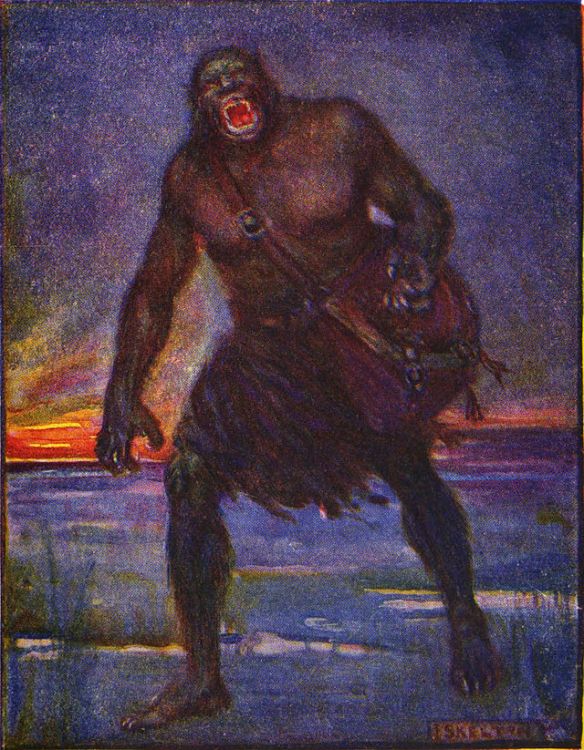
Beowulf and his band of Geats carrying Grendel's head.

J. R. Skelton – Marshall, Henrietta Elizabeth (1908) Stories of Beowulf, T.C. & E.C. Jack.


Back To Top
Synopsis

Hrothgar and his counsellors confer and conclude that Beowulf is dead.


Back To Top
Translation

“Soon those wise men saw,
those who were with Hrothgar watching the water,
that the surging waves were stirred up,
that the water was red with blood. The old ones,
the grey-haired, gathered to speak clearly together
of how that prince down in the deep would not return,
how he who went seeking to be victorious would not
come back to their glorious king; thus they decided
that the she-wolf of the lake had destroyed him.”
(Beowulf ll.1591-1599)


Back To Top
Recordings

Old English:

{Forthcoming}

Modern English:

{Forthcoming}


Back To Top
What the Danes Forgot About Beowulf

And so the Danes give up on Beowulf.

Since Hrothgar and his counsellors (surely “the old ones” (“gomele” l.1594)) have seen no sign of Beowulf and he’s been down there for quite a while, they conclude that he has died. And so they leave. Easy as that.

Of course, they don’t know that Beowulf is actually pretty busy beneath those bloodied waters. But, being the “ale flagon is half empty” kind of people that they are (12 years of being terrorized will do that to just about anyone), they guess that the blood is Beowulf’s.

And why not think that, right?

It would be pretty easy to just say to yourself: “this Geat was strong enough to beat Grendel, but the monster’s mother is too much for him.”

Which is a logical thing to conclude. Beowulf handily defeated Grendel, but the fight with the mother is quite different. It’s in her lair for starters, and it’s underwater, both of which are sure to be a disadvantage for any warrior.

Except that when Beowulf first met the Danes he boasted about defending himself and Breca from underwater beasts while they were swimming in the open ocean. So Beowulf’s no slouch when it comes to combat beneath the sea. But I guess the Danes are overcome with grief (or have sobered up and forgotten the tales that Beowulf told while the mead cups were being drained).

If you were in the place of the Danes and saw no sign that Beowulf was winning or won and had waited for a considerable amount of time, would you guess he was dead and leave too? Why or why not?


Back To Top
What Would the Water Say?

Were the young warrior “sige-hreðig”1, beneath the water wave,
would the liquid home of the “brim-wylf”2
thrash its “yð-geblond”3 to spread her blood,
make a gift of it to every molecule?
Or would the waters be indifferent, merely lapping at the feet
of the “blanden-feax”4 ones gathered around to watch for signs?


1sige-hreðig: victorious, triumphant. sig (victory) + hreð (victory, glory)

Back Up

2brim-wylf: she-wolf of the sea or lake. brim (surf, flood, wave, sea, ocean, water, sea-edge, shore) + wylf (she-wolf)

Back Up

3yð-geblond: wave-mixture, surge. yð (wave, billow, flood, sea, liquid, water) + bland (blending, mixture, confusion) [A word that is exclusive to Beowulf.]

Back Up

4blanden-feax: grizzly-haired, grey-haired, old. bland (blending, mixture, confusion) + feax (hair, head of hair)

Back Up


Back To Top
Closing

Next week, not everyone leaves the lake, and Beowulf watches something strange.

You can find the next part of Beowulf here.

Back To Top

Beowulf beats Grendel (again), of woundings and loyalty (ll.1570-1590)

Synopsis
Translation
Recordings
What was Grendel’s Mother Thinking?
A Wound for a Wound, a Sword-Stroke for a Sword-Stroke
Closing

Grendel's mother menaces the pinned Beowulf with a knife.

By J. R. Skelton – Marshall, Henrietta Elizabeth (1908) Stories of Beowulf, T.C. & E.C. Jack, Public Domain, https://commons.wikimedia.org/w/index.php?curid=11001837


Back To Top
Synopsis

Beowulf uses the sword that slew Grendel’s mother to finish off his wounded body.


Back To Top
Translation

“A light shone, brightened the hall from within,
made it as bright as the great candle
set in the heavens. He looked about the hall;
turned toward the far wall, with weapon raised,
its hilt hard up against ambush, Hygelac’s thane,
emboldened and resolute. That edge had proven
all but useless to that fighter, and he sought to use it
to avenge all of Grendel’s awful attacks,
each of the monster’s missions against the West-Danes,
many more than one occasion when he alone
slunk into Heorot to slay Hrothgar’s hearth-companions
who were all were asleep, devoured fifteen Danes
while all slept as if dead,
and made off with as many others,
a loathsome booty. Beowulf paid him his reward,
the fierce fighter, for there he saw laid out
the wounded body of Grendel,
now life-less, his grim energy drained through the injury
he bore from the fight in Heorot. His body was wide open
since he endured that death blow.
One hard sword-stroke severed his head from his body.”
(Beowulf ll.1570-1590)

Back To Top
Recordings

Old English:

{Forthcoming}

Modern English:

{Forthcoming}


Back To Top
What was Grendel’s Mother Thinking?

All revved up from killing Grendel’s mother, Beowulf’s bloodlust draws him to take Grendel out, too. Why was Grendel there in the first place? I can only imagine that his mother had been tending to his wounds. Or, maybe she was just mourning him. Or maybe she tried to save him, but couldn’t, and she had been in the midst of preparing Grendel’s body for its final send off when Beowulf dove into their lake. However I can think to explain it, it comes back to Grendel’s mother doing something with Grendel’s body because she recognized it as more than just some thing. Like a human mother she valued her son’s life and his dismembered body was her last reminder of that. So, chalk up another one in the “human” column for the Grendels.

I kind of wish the poet went into more detail here, though. I mean, even if they were put into exile because they were the original inhabitants of where Heorot now stands, or because Grendel was rejected from society at birth, or because they’re the last remnants of a long since defeated tribe, I’m really fascinated by what’s going on in this underwater hall.

You’ve got two people living in this hall who tend to stay out of sight, there’s an armoury with a giant’s (or Roman?) sword, and a ceremoniously placed body of a dead loved one. What’s the story here in casa (or cueva) Grendel?

Unfortunately, we’re left guessing as Beowulf pays no mind at all to any of this. Nope, he’s got heads to lop off and places to go, a thane on the rise, this one.

Speaking of, even though it might seem like literally adding injury to injury, Beowulf’s taking Grendel’s head isn’t too weird. I’m not sure if this is a reason for trophy hunters taking animal heads as well, but I think Beowulf’s actions here come back to an ancient (Northern) European belief. This is the idea that the head is where everything important to a person (what some might call the soul) is housed. So in cutting off Grendel’s head, he’s laying claim on the beast’s very soul.

Do you think Grendel’s mother was trying to help heal her son, or was his body laid out to be mourned? Leave your thoughts in the comments!


Back To Top
A Wound for a Wound, a Sword-Stroke for a Sword-Stroke

A “an-ræd”1 “hilde-rinc”2 in the midst of the “guð-ræs”3, though “guð-werig”4 by many a “heoro-sweng”5, is sure to be mindful that he is a “heorð-geneat”6 and to leave several “guð-werig”4 thanks to his own “heoro-sweng”5.

At least, if The Battle of Maldon and what it says about “heorð-geneatum”6 and their loyalty to their lords holds any water.

1an-ræd: of one mind, unanimous, constant, firm, persevering, resolute. an (one) + ræd (advice, counsel, resolution, deliberation, plan, way, design; council, conspiracy; decree, ordinance; wisdom, sense, reason, intelligence; gain, profit, benefit, good fortune, remedy; help, power, might)

2hilde-rinc: warrior, hero. hilde (war, combat) + rinc (man, warrior, hero)

3guð-ræs: battle-rush, onslaught. guð (combat, battle, war) + ræs (rush, leap, jump, running, onrush, storm, attack) [A word that is exclusive to Beowulf.]

4guð-werig: wounded. guð (combat, battle, war) + werig (weary, tired, exhausted, miserable, sad, unfortunate) [A word that is exclusive to Beowulf.]

5heoro-sweng: sword-stroke. heoru (sword) + sweng (stroke, blow, cut, thrust)

6heorð-geneat: retainer. heorð (hearth, fire, house, home) + neat (companion, follower, (esp. in war), dependent, vassal, tenant who works for a lord) [A word that is exclusive to Beowulf.]


Back To Top
Closing

Next week, the story shifts back to the Geats and Danes waiting around the shore of the lake.

You can find the next part of Beowulf here.

Back To Top

Thoughts on “Hrothgar, Heorot, and Threats to Heroism”

In the blog post “Hrothgar, Heorot, and Threats to Heroism” Peter J. Leithart makes some interesting points about heroism in Beowulf.

Basically, he takes an in depth look at what each of the monsters that Beowulf faces represent. In doing so he makes it clear that each creature stands in opposition to some element of human society, whether that’s general order and custom, the importance of social order in the hall setting, or the wealth sharing function of kings.

Over all, I think that this post makes for a quick, interesting read. It even offers some true, if melancholy, insights into how heroism perpetuates itself.

As Leithart explains, heroes are indeed special people, but anyone can memorialize them and carry their memory and example to future generations.

Now, being on a fairly religious blog, Leithart makes ample mention of Christian interpretations in his post. And I think that he’s more than right in a lot of his analysis. After all, when the poem was finally written down, it was written down by Christian monks. And I’m sure that those monks wanted to ensure that their work was circulated and preserved (monks were the medieval period’s copy machines, after all), so adding some Christian embellishments or details makes sense.

Plus, spinning the poem (however much it needed to be spun in this direction) as a Christian epic would have helped to make it relevant to a wider Christian audience.

So references to Christian ideas and images are easy to find in Beowulf. The Christian creation story and all of the talk of Cain are prime examples of these.

However, I think that Leithart goes a little too far saying that the writer of the poem would have seen the dragon as satanic. Something as generic as a dragon is definitely open to interpretation. Though, because of the popularity of imagery like the archangel Michael binding Satan while he’s in the form of a dragon, I’m sure dragons to many Christians were incarnations of Satan. But people were still individuals, and so where some people saw Satan others may have seen an embodiment of greed and gluttony or of pride.

I also don’t entirely agree with Leithart’s setting up a dichotomy between the family that the Grendels have and the life of the hall that Grendel and Grendel’s mother attack. I mean, sure, if you live a sheltered life, shielded from the outside world by your parents, then you’re going to have a hard time adjusting to it. A family so tightly knit that there’s wool constantly over your eyes sounds to me less like a family and more like a cult.

But, being outcast, going your own way, and thumbing your nose at climbing up some sort of social ladder is something you can try to do. I think that such an individual path is what true entrepreneurs seek out. And what’s more heroic than that?

Anyway, Leithart’s article is neither news nor an interview with someone doing something with Beowulf. So why did I decide to post it in this week’s showcase?

Well, it’s because I really like Leithart’s analysis but don’t think the religious overtones (which the medieval audience of the poem would have been very aware of and sensitive to) are necessary to reach his conclusions. Despite its religious trappings (be they Christian or Nordic paganism), Beowulf is about heroism.

And, as Tolkien pointed out, Beowulf is an elegy. Which means that it does not have a happy ending.

Instead, Beowulf ends with the death of its hero which leaves his people doomed to destruction. But what Beowulf does is provide an example for people as one who upholds order, the way of the hall, and generosity. That he does this through violence and action and other exciting things might not seem very novel, but I find it fascinating.

Why? Because so much of our entertainment has moved away from such a complicated display of violence.

Beowulf is a hero who gets to his goals through fighting, but he is also ultimately taken out in a fight with the greatest monster he faces. Aside from Terminator 2, or Batman vs. Superman (setting aside all the problems I had with that movie), I can’t think of any other pop culture touchstones where the hero isn’t allowed to live happily ever after in the greater future that their fighting has created. And I think that this version of violence needs to be featured more more widely. Right alongside calculating the trajectory of blood splatter from an exit wound, the consequences of violence would add an element of realism to our stories.

A lot of Beowulf might just be a bunch of people bashing each other with swords, but all that fighting has consequences and those consequences carry on into the future (as Alexis Fajardo pointed out in last week’s news post). And that’s one of the things what makes Beowulf so memorable to me.

What do you think about Beowulf’s commentary on heroism? Is it still relevant today? Leave your thoughts in the comments!

Grendel’s mother is gone, what warriors do (ll.1557-1569)

Synopsis
Translation
Recordings
Grendel’s Mother Beaten, But Where did She even come From?
A Warrior’s Two Faces
Closing


Back To Top
Synopsis

Beowulf kills Grendel’s mother.


Back To Top
Translation

“He saw then in her armoury a sword blessed by victory,
a sword of giants’ craft from elder days, strong of edge,
ready for a warrior’s glory; that was the best of weapons,
but it was more than any other man
would have strength to bear into the dance of battle,
superb and splendid, the handiwork of giants.
He seized that belted hilt, the Scylding warrior,
he was fierce and fatally grim, when he drew that ring-patterned sword
she had no hope of further life, he angrily struck her,
so that the sword caught slickly at the base of her neck,
it shattered her vertabra; the sword passed through
her entire, doomed body; she crumpled to the floor,
the sword sweating blood, the man rejoicing in his work.”
(Beowulf ll.1557-1569)


Back To Top
Recordings

Old English:

{Forthcoming}

Modern English:

{Forthcoming}


Back To Top
Grendel’s Mother Beaten, But Where did She even come From?

And Beowulf has done it. He has killed Grendel’s mother. She wasn’t exactly “unseam’d from the nave to the chops” as the Sergeant says of Macbeth’s deed when talking with King Duncan in Macbeth (I.ii.22), but it still sounds like he split her with his enormous sword. How else could a threatened masculinity assert itself, right?

But what I wonder about while reading this passage is what sort of operation Grendel’s mother had in her underwater hall. I mean, Not only does she pull a dagger on Beowulf, but she has an entire armoury of some kind.

As more and more is built up around her, it’s sounding less and less like Grendel’s mother is some sort of animalistic monster and more like she’s the remnant of some sort of human culture. Or, at the least, she’s someone who was cast into exile and wound up living in a cave that had been lived in before.

So maybe Neil Gaiman and Roger Avary were onto something when they added an affair between Hrothgar and Grendel’s mother to the story of the 2007 Beowulf movie. But, instead of being a seductive water witch, Grendel’s mother was actually a member of Hrothgar’s hall.

Perhaps she was one who had given birth to a son with some sort of disability and, instead of just leaving him out on the rocks to die (if exposure was a thing the Norse did with babies who didn’t look “right”), she stole away into the night with him, found the cave, and became fierce and monstrous as she faced down all of the natural terrors that the community would otherwise have protected her and her child from.

Actually, looking at the timeline that the book gives us, Hrothgar ruled through 12 years of Grendel’s terror (ll.147-149). He also ruled for some time before that, enough time for Heorot to be built under his watch. whereas Grendel’s mother had ruled her depths for either 50 years or, as Seamus Heaney has it: “a hundred seasons,” which would work out to 25 years (ll.1498).

Now, it might be a bit of a stretch that Hrothgar and Grendel’s mother knocked boots if she’s been ruling for 50 years while he’s maybe been ruling for 20. But, if Grendel’s mother has only been ruling for 25, then, perhaps Grendel is Hrothgar’s son. So maybe she was an early mistress of the prince or even the young king Hrothgar and had to be kept quiet to allow for a more politically convenient marriage to come along.

Or, maybe there’s a bit of Anglo-Saxon history getting into the story here and Grendel’s mother was a Roman woman with a strange child that was cast out. After all, because they had better forging techniques, the Anglo-Saxons often considered Roman swords magical, mythically crafted weapons.

Unfortunately, though, all we can make of the Grendel’s mother’s background is based on assumptions.

But that’s also fortunate. As a poem Beowulf has a lot of gaps in its background information, and because of these gaps it can be talked about and used as a lens through which we can look at our own time almost endlessly.

So what do you think Grendel’s mother was doing with an armoury? Was she just a monster who happened upon an old previously inhabited cave? Or was she somebody exiled from Daneland who put everything around her together herself?


Back To Top
A Warrior’s Two Faces

After the fact, a warrior who happens to bear a “eald-sweord”1 that he believes to be “sig-eadig”2 in the “beadu-lac”3 is likely to feel quite high and mighty. He’ll probably talk of the “weorð-mynd”4 he won while his grip was upon the “fetel-hilt”5.

But in the moment, through the “beadu-lac”3, that same warrior with the “hring-mæl”6 is a different person. He’s a “heoro-grim”7 swinging precisely and delivering death as limbs are severed and “ban-hring”8 are broken. His memory confers upon him “weorð-mynd”4 but his actions only make “flæsc-hama”9 after “flæsc-hama”9.

1eald-sweord: sword from elder days. eald (old, aged, ancient, antique, primeval, elder, experienced, tried, honoured, eminent, great) + sweord (sword)

2sig-eadig:blessed by victory. sig (victory) + eadig (wealthy, prosperous, fortunate, happy, blessed, perfect)

3beadu-lac: war-play, battle. beadu (war, battle, fighting, strife) + lac (play, sport, strife, battle, sacrifice, offering, gift, present, booty, message)

4weorð-mynd: honour, dignity, glory, mark of distinction. weorð (word, value, amount, price, purchase-money, ransom, worth, worthy, honoured, noble, honourable, of high rank, valued, dear, precious, fit, capable) + mynd (memory, remembrance, memorial, record, act of commemoration, thought, purpose, consciousness, mind, intellect)

5fetel-hilt: belted or ringed sword-hilt. fetel (belt) + hilt (handle, hilt of a sword)

6hring-mæl: sword with ring-like patterns. hring (ring, link of chain, fetter, festoon; anything circular, circle, circular group, border, horizon, rings of gold, corslet, circuit (of a year), cycle, course, orb, globe) + mæl (mark, sign, ornament, cross, crucifix, armour, harness, sword, measure) [A word exclusive to Beowulf]

7heoro-grim: savage, fierce. heoru (sword) + grim (fierce, savage, dire, severe, bitter, painful)

8ban-hring: vertebra, joint. ban (bone, tusk, the bone of a limb) + hring (ring, link of chain, fetter, festoon, anything circular, circle, circular group, border, horizon, rings of gold (as ornaments and as money), corslet, circuit of a year, cycle, course, orb, globe)

9flæsc-hama: body, carcase. flæsc (flesh, body (as opposed to soul), carnal nature, living creatures) + hama (covering, dress, garment, womb, puerperium, slough of a snake)


Back To Top
Closing

Next week, Grendel comes back into the story.

You can find the next part of Beowulf here.

Back To Top

Alexis Fajardo’s Kid Beowulf sees the young Geat go on heroic adventures across epics

A Quick Note: I am in no way associated with Alexis Fajardo, Kid Beowulf, or The Beat. I’m just bringing this to my readers as a bit of news from the world of Beowulf.

Beowulf adaptations continue to come out, despite the story’s generally low profile in most circles these days. The latest adaptation to come to my attention is Alexis Fajardo’s new graphic novel series Kid Beowulf. Fajardo himself describes the project in this interview with Alex Dueben from The Beat.

In his adaptation of Beowulf, Fajardo goes back to when Beowulf was a kid (as the title suggests). The young Beowulf lives through some of the events that the poem describes (like the swimming contest with Brecca), but the focus is on entirely invented adventures.

Throughout these adventures, Beowulf travels around to visit other heroes from the epic poetry of other nations. But the biggest change that Fajardo makes is in Beowulf’s relationship with Grendel. In his version, Grendel isn’t just Beowulf’s first major victory, but also related to him and growing up alongside him. So in all of kid Beowulf’s adventures, Grendel is never far behind.

But Fajardo doesn’t deviate from the source material entirely. In the interview with The Beat he explains that ultimately Beowulf and Grendel split up and meet again at Hrothgar’s hall, where their destined fight takes place. Whether or not the implications of Beowulf tearing off Grendel’s arm despite their long-term relationship are dealt with Fajardo doesn’t say. But after reading what he’s said about his project I feel like he’ll probably leave that part of the fated fight out of his series.

Beyond using the old poem to create something new, in the interview Fajardo also makes an interesting point about superheroes.

For the most part, he notes, they never have to deal with the consequences of their choices.

His passion for the epic form showing, Fajardo then says that this is where the heroes of epic poetry have one up on superheroes since these heroes do deal with their actions’ consequences. For example, Beowulf dies because he decides to fight the dragon himself, rather than letting another have the glory. And Beowulf’s death leads to the decline and destruction of the Geats, since Beowulf had made a few enemies and was no longer around to keep them at bay.

As with a lot of stuff these days, despite the cartoony look of Kid Beowulf, Fajardo’s descriptions and the sample pages included in the interview make it sound like it’s going to deal with complex issues. What’s more, I think it’s fair to say that these issues will be dealt with in a way that acknowledges their nuances.

If you’re a comics/graphic novels fan, curious to see how one artist thinks Beowulf may’ve been as a kid, or just want to see how this adaptation of Beowulf goes, the first book of Alexis Fajardo’s Kid Beowulf is out now and can be found at Fajardo’s website.

How do you feel about adaptations that focus on characters’ lives before the events that made them famous like Fajardo’s Kid Beowulf? Leave your thoughts in the comments!

Beowulf’s borrowed sword fails, a quick guide to facing off against a water witch (ll.1518-1528)


Synopsis
Translation
Recordings
Why Hrunting Had to Fail, and Grendel’s Mother’s True Threat
How to Face a Water Witch
Closing

Grendel's mother menaces the pinned Beowulf with a knife.

By J. R. Skelton – Marshall, Henrietta Elizabeth (1908) Stories of Beowulf, T.C. & E.C. Jack, Public Domain, https://commons.wikimedia.org/w/index.php?curid=11001837


Back To Top
Synopsis

The sword Unferth leant to Beowulf fails him, just as Grendel’s mother advances on our shocked hero.


Back To Top
Translation

Then clearly he saw that accursed woman of the deep,
the strong sea-woman; a mighty blow he gave
with his battle blade, he held nothing back in his handstroke,
so that the ring patterned sword sang out upon her head
its greedy battle dirge. Yet there that surface dweller discovered
that the flashing sword would not bite,
that it would not harm his target’s life: the sword failed
that prince in his time of need. Before it had endured many
hand to hand combats, had often shorn away helmets,
sliced through the fated ones’ war garments; that was the first time
that dear treasure failed to show forth its true glory.
(Beowulf ll.1518-1528)


Back To Top
Recordings

Old English:

{Forthcoming}

Modern English:

{Forthcoming}


Back To Top
Why Hrunting Had to Fail, and Grendel’s Mother’s True Threat

A few entries back, I mentioned that Hrunting was the first named sword in the poem. Well, for all of the power and mystery and strength that’s implied for a sword when it’s given a name, Hrunting’s glory is short lived.

The sword proves useless in this fight, just as Beowulf needs it most. After all, if the sword worked as it should, then his attack should have ended the battle before it began. But, for a reason that the poet never gives (except through the audience’s assumption that Grendel’s mother shares her son’s immunity to weapons), Hrunting has no effect. It’s as if Beowulf just found an electric Pokemon to help him take out a gym leader’s ground type Pokemon, and he never realized that ground-types are immune to electric types. Unfortunately, for all of their board games and riddles, I don’t think the Anglo-Saxons had charts drawn up showing the strengths and weaknesses of various monsters to various heirloom swords.

Actually, I find the failure of Hrunting funny.

It’s supposed to be this 100% never fail, surefire thing, but then, in Beowulf’s hands, it fails.

Had it succeeded in killing Grendel’s mother in a single blow, where would the glory for a hero like Beowulf be? She’d be just like any other foe he’s faced. And that just wouldn’t do; the reputation of the sword needed to take the hit for Beowulf’s sake.

In fact, if Beowulf killed Grendel’s Mother in one strike, then she would’ve been weaker than Grendel. I mean, Beowulf had to wrestle Grendel for some time before he tore off the monster’s arm. And that’s not how this can work.

Grendel’s mother isn’t just some ghoul that comes around haunting halls, she’s a “water-wolf” (“grund-wyrgenne” (l.1518)), a “water witch” (“mere-wif” (l.1519)). So she’s still humanoid, but is, at least, given her titles (and maybe her nature in the eyes of an at times misogynistic culture), much more of an intellectual or spiritual threat than a physical one.

Sure, she grabbed Beowulf and dragged him down, but if you get into the spiritual element of the poem (read: the Christian element), it’s very easy to interpret Grendel’s mother dragging Beowulf down as tempting him. I mean, think about it, he’s this upright warrior for god who seems almost entirely chaste.

Plus, Beowulf’s beating Grendel shows that he’s nothing to be trifled with physically, and Beowulf is very pious about attributing his victory to god and fate. So where could the next big threat go except into the spiritual realm?

So it makes sense that the second threat Beowulf faces is more spiritual.

Who even knows how she “grasped” Beowulf when she was pulling him down? I’m imagining that she full on wrapped herself around him, almost like water itself.

The presence of water even adds a drowning motif, which, I’m not sure was commonly related to temptation at the time, but no doubt is now. Though, of course, there’s also the redemptive property of water in the rite of baptism, so, all’s not lost for Beowulf and his failed sword. A sword that, in Beowulf’s overly capable hands, just had to fail to increase his renown — otherwise, he’d just be another one who used Hrunting instead of the one man who used it to no effect.

How much of a threat do you think Grendel’s mother is to Beowulf? Is she more of a physical threat or a spiritual one?


Back To Top
How to Face a Water Witch

When fighting a “mere-wif”1 it’s important to be prepared.

Be sure to wear your best “fyrd-hrægl”2 for “hand-gemot”3. This will help you against the “mægen-ræs” that the “mere-wif”1 is bound to unleash upon you. In fact, if you’re particularly unlucky, she may show how feral she had to be to earn the epithet “grund-wyrgenne”4.

You’ll also want to bring along a “hilde-bille”5. It isn’t necessary to have a ” hring-mæl “6, nor is it recommended. These sorts of swords are fine against human opponents, but generally have no effect on your average “water witch”7. Any sword which can catch the light dramatically as you hold it aloft so that it can be your ” beado-leoma “8 while you sing your ” guð-leoð “9 will do. after all, the sword is mostly required to intimidate and parry the “mere-wif”1‘s attacks. Damaging such an opponent with any forged iron has long been thought impossible.

It is highly recommended that you do not fight a “mere-wif”1 on her own turf. Her familiarity with and power over water and the creatures of the deep is sure to prove overwhelming. And, if she brings you into a strange underwater cave, then may the Measurer, Lord of All, have mercy upon your soul. If you find yourself in such a situation, your wyrd is clear and inescapable.

1mere-wif: water witch. mere (sea, ocean, lake, pond, pond, cistern) + wif (woman, female, lady, wife) [A word exclusive to Beowulf]

2fyrd-hrægl: corslet. fierd (national levy or army, military expedition, campaign) + hrægl (dress, clothing, vestment, cloth, sheet, armour, sail) [A word exclusive to Beowulf]

3hand-gemot: battle. hand (hand, side (in defining position), power, control, possession, charge, agency, person regarded as holder or receiver of something) + (ge)mot (conflict, encounter) [A word exclusive to Beowulf]

4mægen-ræs: mighty onslaught. mægen (bodily strength, might, main, force, power, vigour, valour, virtue, efficacy, efficiency, good deed, picked men of a nation, host, troop, army, miracle) + ræs (rush, leap, jump, running, onrush, storm, attack)

5grund-wyrgenne: water-wolf. grund (ground, bottom, foundation, abyss, hell, plain, country, land, earth, sea, water) + wyrg (wolf, accursed one, outlaw, felon, criminal) [A word exclusive to Beowulf]

6 hilde-bille: sword. hilde (war, combat) + bill (bill, chopper, battle-axe, falchion, sword)

7 hring-mæl: sword with ring-like patterns. hring (ring, link of chain, fetter, festoon; anything circular, circle, circular group, border, horizon, rings of gold, corslet, circuit (of a year), cycle, course, orb, globe) + mæl (mark, sign, ornament, cross, crucifix, armour, harness, sword, measure) [A word exclusive to Beowulf]

8beado-leoma: battle-light, sword. beadu (war, battle, fighting, strife) + leoma (ray of light, beam, radiance, gleam, glare, lightning) [A word exclusive to Beowulf]

9guð-leoð: war-song. guð (combat, battle, war) + leoð (song, lay, poem) [A word exclusive to Beowulf]


Back To Top
Closing

Next week, Beowulf regroups and Grendel’s mother moves in.

You can find the next part of Beowulf here.

Back To Top
Thoughts on Beowulf’s new rock musical adaptation

So, come September, Beowulf will be getting the musical treatment!

And not just any sort of musical treatment, but the rock ‘n’ roll musical treatment!

Though, according to this article, this musical isn’t going to be a straight telling of Beowulf. Not entirely, anyway.

The twist with Beowulf: A Thousand Years of Baggage is that while the events of Beowulf unfold (simplified so that all three monsters attack Heorot), a panel of academics criticizes and unpacks what’s going on in the story.

This sounds like a really cool concept, especially because of the “rock” label that’s being applied to it. Musicals with the flavour of rock music are some of my favourite operas, after all. From prog rock concept albums to early attempts like The Phantom of the Paradise — the rock musical is a solid genre.

But what sticks out about this to me more than anything is that a new Beowulf musical suggests that history does indeed repeat itself.

Back in the 70s there was a musical version of Beowulf, simply called Beowulf: A Musical Epic. It might have slipped under the radar of many because it was a Canadian production, and I don’t think it had much of a run south of the border. But this production’s varied (too varied for “Rock” alone to suit, I think) musical score by Victor Davies and the lyrics by Betty Jane Wylie make for a fantastic retelling of the story.

But what I like most about the 70s adaptation is that there really aren’t any changes to the story.

Some of the digressions in the original are cut out or reworked, and at least one character is renamed, but other than that, Beowulf: A Musical Epic stays true to the poem: Beowulf goes to Heorot to fight Grendel, fights Grendel’s mother, then goes back to Geatland where he eventually becomes king, has to fend off a dragon, and leaves his warrior legacy in the hands of Wiglaf. For its fidelity alone, I think Beowulf: A Musical Epic is worth listening to, since so few adaptations let Beowulf grow old and show us his end.

In the popular culture (all of the movie, and book adaptations) Beowulf is usually seen only defeating Grendel and maybe Grendel’s mother, but we never really see Beowulf fighting the dragon as an old man and his death, and I think this is an essential part of the poem. The fact that the poem covers it suggests that the early audience of the poem thought much differently (maybe more complexly?) about heroes than many of us do today, and certainly more so than most modern people would give early medieval people credit for.

So I’m excited for this new musical, but, whenever (and however) I manage to engage with it, I know to approach it as something more than just an adaptation. Though, that said, I’m hoping for some raucous academic commentary to go along with the brutal physicality of so much of the story.

How do you think this new Beowulf musical will work out? Will it be the next Hamilton, or just enjoy a small run in Providence, Rhode Island? Leave your thoughts in the comments!

Susan Signe Morrison’s Grendel’s Mother: The Saga of the Wyrd-Wife

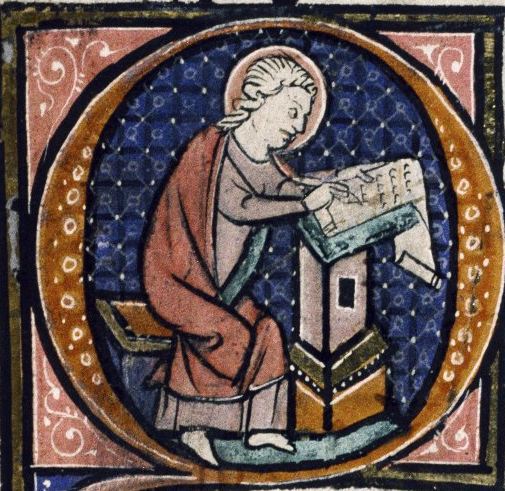
St John writing a book

Along with a number of movie adaptations, Beowulf has been novelized here and there. John Gardner’s Grendel stands out, but Susan Signe Morrison’s Grendel’s Mother: The Saga of the Wyrd-Wife, takes adaptation a step further.

Instead of just retelling the story of Beowulf from Grendel’s mother’s perspective as the title suggests, Morrison goes all in with her titular character. In fact, the novel begins with a fisherman’s wife discovering the child that grows up to be the fearsome woman of the moors. So, much like Gardner’s Grendel, Grendel’s Mother: The Saga of the Wyrd-Wife, is much more about its central character than retelling the Beowulf story from a viewpoint other than the titular hero’s.

Along with her focus on the life of Grendel’s mother (which Morrison extends beyond the fight with Beowulf), Morrison has written her novel in a way that’s highly reminiscent of Beowulf‘s style. Morrison includes a great deal of alliteration, parataxis, and a few of the characteristic digressions that fill out the original poem. These last two elements are put to good use, I think, but the alliteration sometimes comes across as more comical and sing-song than Morrison may have intended. Nonetheless, her prose offers a great example of how modern novel prose can be crossed over with Old English usage and style. The care with which Morrison blends these two styles is just what I’d expect from a professor of English.

If you’re curious to find out more about Grendel’s Mother: The Saga of the Wyrd-Wife, check out the book’s website, or its page on Amazon.

What do you think of people creating whole lives for side characters in old stories? Leave your thoughts in the comments!

The dangers Beowulf could be facing & how to earn devoted vassals (ll.1473-1481)

Synopsis
Translation
Recordings
The Possible Dangers of Grendel’s Mother
How Liberal Lords Earn Devoted Vassals
Closing

Grendel's mother menaces the pinned Beowulf with a knife.

By J. R. Skelton – Marshall, Henrietta Elizabeth (1908) Stories of Beowulf, T.C. & E.C. Jack, Public Domain, https://commons.wikimedia.org/w/index.php?curid=11001837

Back To Top
Synopsis

Beowulf reminds Hrothgar of what he promised he would do for the Geat if he dies fighting Grendel’s mother.

Back To Top
Translation

“Beowulf spoke, son of Ecgtheow:
‘Now think upon it, son of Half-Danes,
wise ruler, now I am ready for this journey,
gold-giving friend of men, that which we two had spoken on:
that if I while in your service shall
lose my life, that you would go forth afterwards
always in a father’s place for me.
That you would be a preserver of my retainers,
my companions, if battle shall take me.'”
(Beowulf ll.1473-1481)

Back To Top
Recordings

Old English:

{Forthcoming}

Modern English:

{Forthcoming}

Back To Top
The Possible Dangers of Grendel’s Mother

The battle that Beowulf is heading off for is not the same as the one he had in Heorot. That’s what this passage is really all about.

In the lead up to the fight with Grendel we heard Beowulf boasting about past victories and the greatness of his strength. We heard confidence bordering on pride that’s tempered with the simple sentiment that fate or god will decide the outcome of the fight. In other words, going into the fight with Grendel, Beowulf felt that his strength and Grendel’s were probably equal. At least, I think that’s fair to say.

I mean, as you can see in this passage, Beowulf is making a much bigger deal out of diving into this lake and fighting Grendel’s mother.

There are a lot of assumptions that could be going into the sense of danger that Beowulf seems to be feeling here.

Grendel’s mother has lost a child, and all animals — including humans — fight tenaciously when the life of their young is in peril or has recently been lost.

Perhaps there’s an underlying assumption here that since this particular parent is a mother, Grendel’s mother’s rage will be tempered with the fury that only women can seem to muster. In particular I’m thinking of the difference that Patton Oswalt points out in Talking for Clapping when he says that when little boys are mad at each other they just punch each other until the dispute’s over, whereas when little girls are made at each other they try to destroy each other emotionally. No doubt all of these men are hesitant to approach a thing with woman’s form that’s doubly provoked in this sense (lost her child, and is its mother).

Also, since this poem would have been written down by Christian monks, perhaps there’re also some assumption about women as temptresses and being spiritually dangerous. I mean, the strictly Judeo-Christian religious tend to see danger for the soul in the form of women (possibly because those organized religions are primarily run by men). So I can’t even imagine the kind of spiritual danger such a religious person would see in the primal sexuality that something as wild as Grendel’s mother could command. In fact, the image at the top of this entry is a depiction of a scene that could easily be read in a very sexually charged way.

Of all of the assumptions and givens that could be roiling through Beowulf’s mind at this point though, the sharpest is probably that he does not have home field advantage in this fight.

Whether or not Beowulf believed his strength to truly equal Grendel’s, Hrothgar legally gave him Heorot for that night. Since it was temporally his, Beowulf probably fought all the fiercer to protect it. And, just as with animals and their young, animals are protective of their territory. So, since he’s about to dive into the Grendels’ realm, Beowulf is clearly at a disadvantage.

And that is where I think the biggest sense of danger comes from for the hero of this poem.

Of course, there’s also the simple escalation of the threat as is necessary in any multi-part story. So if Beowulf and Grendel were equals, he is now at a lower level, so to speak, than Grendel’s mother. And yet he has to face her all the same. So he’s reminding Hrothgar of his promises.

In short, Beowulf’s already strapped on his physical armour, and now in this passage he’s donning his emotional/psychological armour.

What danger do you think is Beowulf’s greatest concern at this point in the poem? Leave your thoughts in the comments!

Back To Top
How Liberal Lords Earn Devoted Vassals

For a protector1 who is a liberal lord2, vassals3 would go forth4 as if they and their liberal lord2 were companions5.


1mund-bora: protector, preserver, guardian, advocate. mund (hand, palm, (of the hand, as a measure), trust, security, protection, guardianship, protector, guardian, the king’s peace, fine for bread of the laws of protection or guardianship of the king’s peace; II.money paid by bridegroom to bride’s father, bridegroom’s gift to bride) + bora (ruler)

2gold-wine: liberal prince, lord, king. gold (gold) + winn (toil, labour, trouble, hardship, profit, gain, conflict, strife, war)

3mago-þegnum: vassal, retainer, warrior, man, servant, minister. mago (male kinsman, son, descendant, young man, servant, man, warrior) + ðegn (servant, minister, retainer, vassal, follower, disciple, freeman, master (as opposed to slave), courtier, noble (official rather than hereditary), military attendant, warrior, hero)

4forð-gewitan: to go forth, pass, proceed, go by, depart, die. forð (forth, forwards, onwards, further, hence, thence, away, continually, still, continuously, henceforth, thenceforward, simultaneously) + witan (I.guard, keep, look after; II. impute or ascribe to, accuse, reproach, blame; III.depart, go, go out, leave off, pass away, die)

5hond-gesella: companion. hand (hand, side (in defining position), power, control, possession, charge, agency, person regarded as holder or receiver of something) + sellan (to give, furnish, supply, lend, surrender, give up, betray, entrust, deliver to, appoint, allot, lay by, hide, sell, promise)


Back To Top
Closing

Next week, Beowulf continues to remind Hrothgar of his promises. And, he makes a new promise that shakes up what happened when everyone was drunk in Heorot.

You can find the next part of Beowulf here.

Back To Top

The Danes’ deadly curiosity, life is dangerous in these waters (ll.1432b-1441a)

Synopsis
Translation
Recordings
Brutal Curiousity
The Dangers of Being a Child of the Waves
Closing

Beowulf, Grendel, Old English, Anglo-Saxon

An illustration of Grendel by J.R. Skelton from Stories of Beowulf. Grendel is described as “Very terrible to look upon.”Stories of beowulf grendel” by J. R. Skelton – Marshall, Henrietta Elizabeth (1908) Stories of Beowulf, T.C. & E.C. Jack. Licensed under Public Domain via Wikimedia Commons.

Back To Top
Synopsis

The Geats and Danes kill one of the monsters of the waters and drag it ashore.

Back To Top
Translation

“One of the Geats
severed the life of one with an arrow from his bow,
than did it battle against the waves, since that war arrow stuck in
its side; it was then slower against the waters
in that sea, until death took its fight away.
It was quickly pulled from the waves
in an assault of savagely barbed boar spears,
fiercely they attacked it to tug that wondrous
traverser of the waves to the shore; the men
all gazed upon that terrible stranger.”
(Beowulf ll.1432b-1441a)

Back To Top
Recordings

Old English:

{Forthcoming}

Modern English:

{Forthcoming}

Back To Top
Brutal Curiousity

There is no way to soften the blow here. The Geats and Danes are downright brutal with this sea monster — be it seal or walrus or actual monster.

First, it’s struck with an arrow. Then they all watch as it goes through its death throes in the water, no doubt bloodying them up further. But then they don’t just look at each other and grunt out “huh, I guess they can die.” No. Instead they stick spears intended for hunting boars into the corpse and bring it ashore for a closer look.

At least I guess I should credit them for being curious. I mean, these guys don’t just kill the thing and then leave it there. There’s a genuine inquisitiveness present in this passage. It’s just that it’s pretty deeply cut by a brutal kind of caution. Cut so deep in fact, that the metaphorical drink it’s diluting is just about all water at this point.

Still, the assembled warriors all gawk at the corpse of this animal (monster?) that they’ve pulled to shore. Which does accomplish a few things for the story.

As I noted above, it proves that these monsters can be killed. It also proves that they aren’t likely impervious to human weapons like Grendel was. Though I’m not sure how top of mind that is and how much more likely it is that they killed the beast to make sure it didn’t attack them when they tried to get a closer look. Though, it’s still hard to set aside their letting it thrash around in the water until it dies.

It doesn’t get mentioned here, since next week’s passage will jump back to Beowulf himself, but maybe this closer observation of one of these monsters confirms something very important for the Geats and Danes around it. That it’s no monster at all.

As a sea-faring people, I have no doubts that both Geats and Danes are familiar with sea-life, whether helpful or harmful to their crossing the seas. Maybe this closer look is all it takes for them to realize that the creatures in the water here aren’t monsters at all but just creatures as common as deer. And maybe that’s why this is the moment that the poet chooses to end his general narration before getting back to the heroics of Beowulf.

Unless, this creature is indeed a monster, or just monstrous. Last week there was the mention of these creatures all around them being the same ones that were responsible for wrecking ships on their way out to sea. Maybe seeing these creatures up close didn’t lead to a revelation about their nature, it just erased the fear that all the assembled people had for these beasts as these strange and unknown creatures. But, now, at the very least, as Arnold Schwarzenegger rightly observed in a movie about another monstrous menace, Predator: “if it bleeds we can kill it.”

What do you think? Are the Geats and Danes killing, then jamming boar spears into this creature’s corpse out of fear? Or just because they want to be sure about its nature and their own safety? Let me know what you think in the comments!

Back To Top
The Dangers of Being a Child of the Waves

If you’re a sea-going creature, you’ve spent your whole life in the water. You know the ebb and flow like the back of your fin. You truly are a “wæg-bora”1.

But the ways of the air are entirely foreign to you. The area above the water is where the great fiery ball lives, far off in the distance. Or it is simply quite small. None of the stories of your kind are certain. But they are certain that the space between water and fiery ball is usually clear and open. So being hit by sharp barb, or “here-stræl”2, from a “flan-boga”3 is entirely unexpected. Hard clouds sometimes pass along the surface of your waters, but stories of those sharp long barbs are few.

But they are brutal.

Especially since there are many mentions in these stories, talk of “heoru-hocyht”4 “eofer-spreot”5 being driven from an unknown enemy that lives in the space between waters and the fiery ball. Those who have witnessed such assaults with the barbs that swim through the space between often tell of these greater barbs following their smaller kin, just as certain of your own kind swim together. But instead of bringing the joy and safety of community, these barbs always cause great “yð-gewinn”6.

Such are the dangers of being a child of the waves.


1wæg-bora: child of the waves?[sic]; traverser of the waves?; goer upon the waves. wæg (motion, water, wave, billow, flood, sea) + bora (ruler)

2here-stræl: arrow. here (predatory band, troop, army, host, multitude, battle, war, devastation) + stræl (arrow, dart, missile; curtain, quilt, matting, bed)

3flan-bogan: bow. flan (barb, arrow, javelin, dart) + boga (bow, arch, arched place, vault, rainbow, folded parchment)

4heoru-hocyht: savagely barbed. heoru (sword) + hocyht (with many bends?[sic]. Perhaps a clue to how it was barbed?)

5eofer-spreot: boar-spear. eofer (boar, wild boar, boar-image on a helmet) + spreot (pole, pike, spear)

6yð-gewinn: wave-strife, life on the waves. (wave, billow, flood, sea, liquid, water) + winn (toil, labour, trouble, hardship, profit, gain, conflict, strife, war)

Back To Top
Closing

Next week, the poet shifts back to Beowulf. And the Geat hero gets geared up.

You can find the next part of Beowulf here.

Back To Top