Natural Exhaustion ["Dum Diane vitrea" Fourth Stanza] (Latin)

Abstract
Translation
Recordings
Teasing Meaning from Images
It’s all about Sleep
Closing

{An idyllic windmill scene. Image found on JA Tappero’s Main Page.}

Back To Top
Abstract

The poet waxes on about satisfying (?) post-coital sleepiness.

Back To Top
Translation

“Morpheus then draws forth
an urge in the mind
Like gentle wind over mature corn,
clear shoreside river murmurings,
the circuitous orbit of mill arms,
he who steals sleep from clear eyes.”
(“Dum Diane vitrea” Stanza 4)

Back To Top
Recordings

The entire poem will be recorded once it’s all been posted. This recording will then be posted with a final, full edition of my translation.

Back To Top
Teasing Meaning from Images

What this stanza describes sounds unequivocally like post-coital sleepiness. The way it’s described with rustic, idyllic even, similes strengthens this reading, too.

After all, If love is often romanticized in classical literature as the affection between a shepherd and a shepherdess, why not also romanticize the urge to sleep afterwards with a bunch of natural imagery? Though it definitely needs to be noted that this stanza’s imagery isn’t entirely natural.

Corn may grow on its own, but it’s made into fields by human hands, just as much as a windmill is something of human design and construction. Yet, associating these things with sleep makes sense on many different levels.

There’s the obvious level of their soothing nature, and that of all three working together to paint a very calm and relaxed scene. And relaxed is the best word for this scene, since all of these actions are passive. The corn merely bends in the wind, the water is just running to lower ground, and the mill’s arms turn as gusts go by.

Further, the first and third of these images are visual cues of something invisible but audible: wind, while the second of the three is an aural representation of something very visual. This synaesthetic description of the sweeping desire to sleep is incredibly effective if you think about the last time you felt utterly exhausted. Alternatively, you could compare this stanza’s main image to the gradual release of tension in a yogic meditation or that you might experience if you just lay in bed, close your eyes, and concentrate on your breathing.

But why, if the poet wanted to depict an idyllic country scene, did he use these three things? Why does the poet choose the wind in a cornfield, the babbling of a river, and the wind through the arms of a windmill? These are all things found in the countryside, sure. But why these three? How do they work together? And why move from wind to water to wind?

Back To Top
It’s all about Sleep

It’s possible that this arrangement offers further reflection on the medieval biphasic sleep pattern.

The wind could be the gentle and effortless rest that sleep affords, while the water, coming in between wind images, could be the awake phase in between sleep periods (or sex itself, depending on how far you want to take the flow of the river).

What’s more, shifting the wind image to that of a mill after that middle water image works perfectly well within an interpretation of this stanza as the medieval sleep pattern in miniature. After all, a windmill would often be used to grind grains (corn included) into meal or flour, and medieval associations between this flour and male potency (or more generally the active principle) are many.

So reading these three images as a representation of the night as a whole is certainly possible within context. What’s especially significant about such a reading though is that it shows the poet’s associating this sleep pattern with human use of nature, and the way that nature and humanity interact. On the surface, this kind of idea sounds tame enough, but through such a series of associations, the poet could well be asserting that sex is merely something natural.

Maybe the poet is even trying to go so far as to bring sex, something contemporarily thought of as dangerous and needing control (a natural, base urge), into the more civilized and human realm. Moreover, because of the cyclical nature of this series of images, the poet seems to suggest that sex is just another part of a natural cycle that can be put under human control, or under human use (as water and its flow can be).

Back To Top
Closing

Of course, all of this is speculation – go right ahead and share your own in the comments!

Also, don’t miss Thursday’s Beowulf entry – Beowulf is firmly cut from the story, as its focus moves over to the grieving Wiglaf.

Back To Top

The Fallen Hero and the Fleeing Thanes [ll.2836-2852a] (Old English)

Abstract
Translation
Recordings
Reflection amidst Grief
Joining the Two
The Battle-Leaving
Closing

Back To Top
Abstract

Today’s excerpt is very clearly in two parts. In the first we see the wrapping up of explicit mourning for Beowulf, and in the second the return of the cowardly thanes who fled when the dragon grew fierce.

Back To Top
Translation

“Indeed few mighty men on earth
have so succeeded, as I have heard,
though every deed they did was daring,
few of them would make a rush against the breath of the
fierce ravager or could disturb a hall of rings by hand,
if he discovered the ward awakened
dwelling in the barrow. Beowulf had paid
for his share of the noble treasures with his death;
each had reached the end of
their loaned lives. It was not long then
before the laggards in battle left the wood,
ten cowardly traitors together,
those that dared not fight by the spear when
their liege lord was in greatest need;
but they were ashamed when they came bearing shields,
dressed in war garments to where their lord lay;
they gazed on Wiglaf. ”
(Beowulf ll.2836-2852a)

Back To Top
Recordings

Old English:

Modern English:

Back To Top
Reflection amidst Grief

The first half of this excerpt clearly expresses closure for Wiglaf, whether directly or indirectly.

Where the earlier meditation on the dragon might seem more like the poet/scribe’s own musing on death, it’s much easier to relate these lines about Beowulf’s sacrifice and his grand deeds to Wiglaf’s own thoughts. Yet, at the same time, having had a hand in defeating the dragon, it’s fair to say that Wiglaf may also have marvelled at the dragon’s corpse.

In fact, it could well be that Wiglaf first had to marvel at the corpse in order to really register the magnitude of Beowulf’s deed. And, as one of the poem’s audience proxies (since the warriors in the audience – of any skill level – could probably relate to Wiglaf’s facing a major, brand new challenge), it’s fair to say that he may have been so shocked by Beowulf’s death that it takes the meditation on the dragon to make him realize that its corpse was his and Beowulf’s doing.

Victory seemed impossible, but together they achieved it – though they can never be together again.

Back To Top
Joining the Two

What’s interesting about the way the poet/scribe transitions between the meditation on Beowulf and the thanes’ return is that he uses a statement involving both parties. It’s not that Beowulf had reached the end of his loaned days, nor that the dragon did, but that both did. In death all things are just creations of the god that the poet/scribe may have been trying to tell his audience about.

Or, all things are ultimately and equally the toys of fate, depending on a person’s outlook. The fact that both the dragon and Beowulf reached the end of their loaned days, though, points to a deeper connection than anything implied by a mere whim like that so often associated with fate or wyrd.

After the transition to the thanes’ return we aren’t given much in the way of juicy material. They wend their way back to see the aftermath of the fight, and we’re not given any solid reason why aside from implications of feeling guilty and ashamed. However, what the poet/scribe chooses to point out in his description of the thanes is very telling.

Back To Top
The Battle-Leaving

After describing them as cowards they’re described as “ashamed when they came bearing shields,/dressed in war garments.” This fits in nicely with the idea of hypocrisy, and may also touch on a distrust of any consciously known dissonance in a person’s appearance.

It’s important for the poet/scribe to mention this here because it underlines a concern with a mismatch of appearance and essence. The thanes that fled are ashamed to be wearing the garb that marks them as warriors since these things were to help them become warriors but their own essences weren’t up to the task.

Further, since the majority of the thanes fled it’s implied that the old ways have failed the Geats. As a result of this, they’ve all gone soft in the face of new challenges, save for one. And, after nearly 100 lines of being without it, he is outfitted once more with his proper name: Wiglaf.

Renaming Wiglaf at this point may seem strange, but I think that it’s a positive example of the exterior matching the interior.

As mentioned in a previous entry, his name literally means battle-leaving or battle-heirloom. Since Wiglaf is the one left after the battle with the dragon, it seems almost as though he has fulfilled his name. Since he is indeed now a battle-leaving, he has achieved its proper meaning and is now a figure of authority that not just the thanes, but that the rest of the Geats will look to for guidance.

Unlike the cowardly thanes who are ashamed of the dissonance between their equipment and their conduct, through his courage Wiglaf has transcended into a perfect alignment between his name and his being which leads to his becoming as major a figure as Beowulf was, though his part of the story is much shorter.

Back To Top
Closing

All the same, check back next week for the continuation of that story on Thursday as Wiglaf lays into the thanes. Also, don’t miss verse four of “Dum Diane vitrea,” which will be posted come next Tuesday.

A little more immediately, go over to A Glass Darkly tomorrow for Part Two of Shocktober: a look at Leprechaun in the Hood

And you can find the next part of Beowulf here.

Back To Top

Moon Fruit ["Dum Diane vitrea" Third Stanza] (Latin)

Abstract
Translation
Recordings
A Fruitful Opening
That Spontaneous Spark
Closing

{Handle it, but don’t hold it, the poem counsels. Image found on a blog called Imprint.}

Back To Top
Abstract

Some of the virtues of sex are indirectly extolled.

Back To Top
Translation

“Oh how fruitful is that remedy of drowsiness,
Which tempestuous cares and sorrows sedates!
So long as it steals up to sore open eyes,
themselves a sweet joy of love to have.”
(“Dum Diane vitrea” Stanza 3)

Back To Top
Recordings

The entire poem will be recorded once it’s all been posted.

Back To Top
A Fruitful Opening

The opening pun of this week’s stanza is, thankfully, something that works in both languages.

“Felix” may not unerringly translate into “fruitful” but it’s one of many possibilities, just as one could say that there are many English synomnyms for “fruitful.” In any case, this is about as subtle as it gets, since the rest of the poem is just a celebration of sex.

Turning back to the pun in line one, though, it’s possible that the play on the word fruitful/felix, could be a reference to the fertility rate of having sex during this waking interval.

But even something like the Domesday book didn’t keep records of when children that women managed to carry to term were conceived down to the hour, so the potency of the hours between midnight and second sleep isn’t really something we can check.

It’s possible, though, that since the two hour window of wakefuless would be the best time for sex from a social/scheduling point of view (one of the few times you wouldn’t be toiling away at your daily labour, eating, or, well, sleeping), that this is billed as the ideal time.

After all, it’s not like that was the only time that medieval people knocked boots. Any time at which they could gain a private moment they’d do it, just as we do. There’s no particular evidence that I can cite for that, but it’s definitely something that just stands to reason.

With that sort of sexual freedom from a temporal standpoint, it makes sense that an authority like the Church would try to suggest an ideal time for sex.

It’s a cold view of what is through-and-through a love poem, but since the “Dum Diane vitrea” was written in Latin, and Latin was the language of the Church and the educated (who were educated by the Church), it’s not outside of the realms of the probable that this poem is a propaganda piece aiming to keep sex in (or move it to) a set time.

This interpretation of stanza three is also supported by the idea that Abelard may have written the whole of the “Dum Diane vitrea.” Having been a victim of wild passions with his student, Eloise, and winding up castrated for his pleasures, he’d be the perfect person to get to sit down and write a stirring love song about how sex should be kept in the appropriate place. Make that appropriateness cosmic, and you’ve got a powerhouse on your hands.

Back To Top
That Spontaneous Spark

Once we get to line three, things heat up a bit further.

At this part of the stanza we get the conditional “So long as” (“Dum”). So, though the exclamation effectively closes the statement that covers lines one and two, we also have to consider sex something that sneaks up on a person.

In other words, it can’t be a cold duty between a married couple (assuming that those are the people the poem addresses), but rather something spontaneous.

Back To Top
Closing

Check back here on Thursday for the rest of Wiglaf’s mourning, and the return of the cowardly thanes!

Back To Top

Two Fallen Greats [ll.2821-2835] (Old English)

Abstract
Translation
Recordings
Showing Mourning
Seeking Meaning
Closing

{A dramatic rendition of the dragon battle that gives it an intense, resonant scope. Image found on Zouch Magazine & Miscellany.}
 

Back To Top
Abstract

A reflection on Beowulf’s death dwells on the dragon.

Back To Top
Translation

“That which had happened was painfully felt
by the young man, when he on the ground saw
that dearest one pitiably suffering
at his life’s end. The slayer also lay so,
the terrible earth dragon was bereaved of life,
by ruin overwhelmed. In the hoard of rings no
longer could the coiled serpent be on guard,
once he by sword edge was carried off,
hard, battle-sharp remnant of hammers,so
that the wide flier by wounds was still and
fallen on earth near the treasure house. Never
after did he move about through the air by flight
in the middle of the night, in his rich possession
glorying, never could he make more appearances,
since he fell to earth at the war leader’s deed of the
&nbsp&nbsp&nbsp&nbsp&nbsp&nbsp&nbsphand.”
(Beowulf ll.2821-2835)

Back To Top
Recordings

Old English:

Modern English:

Back To Top
Showing Mourning

The first question to surface here, like the hideous sea beasts pulled from Grendel’s Mother’s mire, is why a section of the poem that’s showing Wiglaf’s grief for Beowulf immediately after his death dwells so long on the dragon rather than Beowulf.

It could be that the poet/scribe went this way because so much of the rest of the poem is given over to Beowulf. Or it could be that Wiglaf’s attention is simply drawn to the dragon because of the sheer spectacle of the sight. Though, it could also be that Wiglaf looks over to the dragon for the sake of contrast, to put off the reality of Beowulf’s death for just a short time so that he, as all but Beowulf’s named successor, can have a brief respite before he must coldly go forth and fulfil his duty as the new Geatish leader.

Of course, it could also be the poet’s own voice that pulls away from Wiglaf at this point, leaving his perspective behind for a time to turn a little more omniscient, and to give us, the listers/readers a view of the dragon as it lay dead so that we can contrast it with Beowulf.

Back To Top
Seeking Meaning

Germanic culture widely held that dragons were symbols of the greed that would undermine the gift-centric Germanic society. So perhaps the focus on the dragon and the recounting of how it can no longer do anyone any harm suggests that greed itself has been defeated, and by one so noble as to sacrifice his own good for going against the advice of his counsel and fighting the dragon.

Maybe even the defeat of greed and the destruction of the Geats themselves that is an almost inevitable result (since they’re now kingless and sitting on all of this gold) are related.

If this version of the poem is as Christian as some believe, then this shift over to the dragon shouldn’t be read as Wiglaf’s or the poet/scribe’s attempt to contrast a death with a death, but instead as a way to show that the perfection of a society through the defeat of its greatest evil leaves that society at its end.

If Beowulf was ever used as a missionary tale, then this part of the poem could well be that which attempts to sooth potential converts into the belief that in becoming Christian their previous beliefs die off and they enter into something more perfect.

Or, again, their physical being ends, but just as Beowulf persisted up until he defeats his society’s major evil, so too would the spirit of the assimilated society persist in its people. Plus, missionaries would probably say the new converts were all imbued with the spark of life that, in the Christian tradition, is generally regarded as a spoken thing – just as this story itself would’ve been at the time, even after having been written out.

Back To Top
Closing

So could this episode in the Beowulf saga be another key moment in the use of the poem as missionary propaganda, or is it just the poet/scribe’s representation of Wiglaf’s mourning? Leave a comment in the box to let me know your thoughts!

Next week, stanza three of “Dum Diane vitrea” will drop, and Wiglaf meets the cowardly thanes as they slink onto the scene.

And you can find the next part of Beowulf here.

Back To Top

Fading Light, Rising Passion ["Dum Diane vitrea" Second Stanza] (Latin)

Abstract
Translation
Recordings
Sleeping on It
Setting Speculation in a Bed of Structure
Closing

{The evening star, shining bright within the embrace of coming night. Image found on NASA’s Astronomy Picture of the Day webpage.}

Back To Top
Abstract

Some action parallel to that of the previous stanza occurs, as the evening star fades.

Back To Top
Translation

“As the light of the evening star fades,
Charm’s humour is given to
The drowsy dew of fleeting passion.”
(“Dum Diane vitrea” Stanza 2)

Back To Top
Recordings

Watch for the recordings of the whole poem once its translation is fully posted (around November 20).

Back To Top
Sleeping on It

Time is a tricky thing to pin down when it’s not referred to with a clock reference.

All the same, this brief stanza looks like it’s about the point in a typical night when people would rise from sleep for a brief period to do some night activities. This dual-phase sleep practice goes back to the pre-artificial light days, when people would go to bed around sunset, wake around midnight and then go back to bed two hours later until day break.

It might sound a little useless to sleep in bursts like this, but aside from the practical purposes (like guard shifts), sleeping in two phases seems to make the mind more perceptive and to really help cognition (just ask any regular napper).

More to the point for our poem, with this bi-phasal sleeping pattern in mind this stanza describes the influence of Venus, the evening star (“Hesperus”) on the people as they sleep. This stirs their passions and their loins as “the drowsy dew of fleeting passion” (“roris soporiferi
mortalium generi”) falls upon them.

To be more direct, the couples in the poem have sex – one of the many things that people would do during their nightly two hour vigil. And an activity that’s quite perfectly suited to that time between sleeps. After all, you’d be out working all day and probably a little to weary and weighted to be in the mood for sex before sunset, but after that initial rest, your mind would be relaxed, your loins would be fired,and you’d be ready for it.

So perhaps the action of last week’s stanza wasn’t so much about the power of palour to assauge the woes of a person’s public life and to soothe them as it was simply about the moon rising (since it would be the middle of the night) when people woke after their first shift of sleep.

Back To Top
Setting Speculation in a Bed of Structure

As per how these two stanzas work together, this one doesn’t seem to be moving anything forward, rather it just describes another act that goes on during the action of the first stanza.

As Diana rises in the moon and the stars come out, the evening star fades and its influence over the sleepers is complete as they awake and are ready to consummate the desire of their hearts.

Structurally, it’s also likely that this stanza would work as the first chorus of this poem as a song. After all, it is from the “Carmina Burana” – a collection of such songs. Further, this stanza’s brevity also suggests that it’s a chorus.

Yet, however “Dum Diane vitrea” develops from verse to chorus to verse to chorus and onwards will need to be seen next week.

Back To Top
Closing

Leave your thoughts on my theories in the comments for today’s entry, and check back here on Thursday for how the poet portrays Wiglaf’s immediate reaction to Beowulf’s death.

Back To Top

Moon Love ["Dum Diane vitrea" First Stanza] (Latin)

Abstract
Translation
Recordings
Liminal Evening
Sister to the Stars
Lifting the Cloud of Unloving
Closing

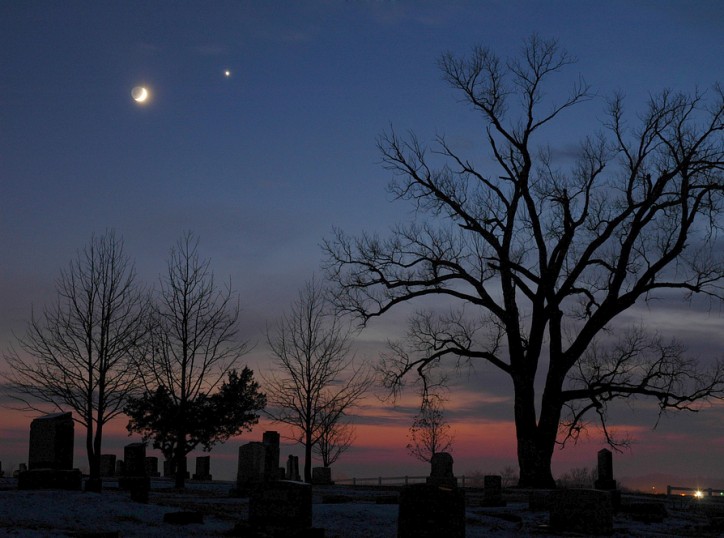
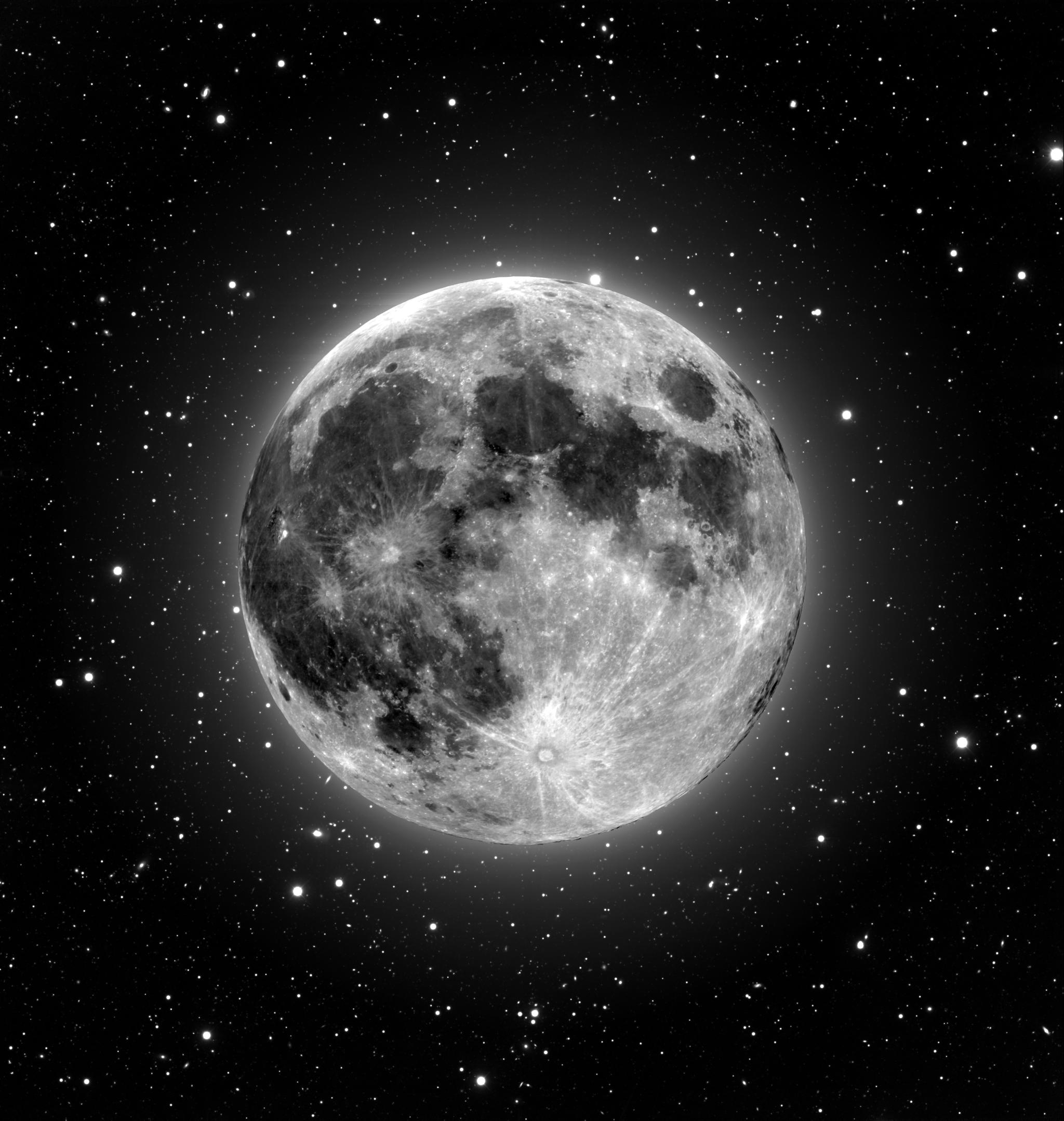
{The moon and stars looking ready for a night out. Image found on NASA’s “Astronomy Picture of the Day” website.}

Back To Top
Abstract

The poem begins like so many days: with the dawning of the sun as a stand in for love.

Back To Top
Translation

“When Diana’s glassy torch rises late
And is kindled by her rosy brothers,
A pleasant breath of wind lifts
the etheric cloud from all couples;
Thus she softens emotive power
And immoveable hearts, which
Towards the pledge of love she sways.”
(“Dum Diane vitrea” Stanza 1)

Back To Top
Recordings

Since this is a poem, it will be recorded as a whole and then posted as a whole once it’s been completely translated. Once that happens, and all of the individual stanzas have been posted, an entry will be dedicated to looking at the poem as a whole. This entry will also include a complete recording.

Back To Top
Liminal Evening

What is “Diana’s glassy torch”? Is it the final light of evening? Or is it the way that the sun reflects from the curvature of the earth so that we can still see some light even though the sun’s already set. Whatever it is, it makes it clear that this stanza is about a liminal moment.

That is, this moment is one between two set, concrete points of time – the day and the night.

Yet, even with this stanza’s liminality established, what is it that causes this cloud that’s apparently settled over couples to lift?

As far as can be told from this stanza, it’s just the switching over from day to night.

The most relevant aspect of this transition seems to be that it’s a move from the outward show of day toward the private and unknown night.

The reference to Diane’s mysterious brothers (or allies, “fratris”) supports this interpretation, after all, only when night has fully arrived do the stars emerge.

And that’s just what her brothers are – the stars.

Back To Top
Sister to the Stars

For, Diane is the moon and her glassy torch is the moon as it sheds its pale light, so her rosy allies are the stars. Why they’re described as being rosy is unclear, unless it used to have a meaning along the lines of self-luminescent. A person with rosy cheeks is usually blushing, and a rose itself is red – a colour that is vibrant enough to pull in human attention.

With all of that out of the way, just what is the cloud that settles over couples?

Back To Top
Lifting the Cloud of Unloving

Since this cloud is dispelled as the moon rises and the stars come out, it sounds likely to be the troubles of the day. The moon, accompanied by the stars gives such a different atmosphere that it changes the context of perception and allows people to forget their troubles.

Perhaps, along with factors of wealth and work, this is also why palour was sought after among women in classic ideas of beauty – just as Diane’s pale light could inspire lovers to come together, so too could the palour of a young woman be considered a palliative against the troubles of the day. Maybe such paleness was also important because it helped to wash away whatever troubles a husband/lover experienced in the public sphere.

Th public/private binary is definitely an interesting thing to apply to this poem since it already invokes the binary of night and day (through implication), but it’s also problematic.

Medieval life wasn’t exactly one that leant itself to privacy – walls were thin, roads were narrow, and small towns banded together not to be cliquey and such, but because it was necessary for survival and protection.

As a result, private/public would be better represented as public/less-public, in that at least around the house (most) people wouldn’t be intentionally watching you.

Back To Top
Closing

Next week’s stanza continues along the way of love and calls on a lot of night imagery, so perhaps we’ll see all of these ideas come into play again then. In the meantime, leave your own thoughts in the comments, and watch for Beowulf’s final farewell on Thursday.

Back To Top

After a Partial Peter Gabriel Eclipse

Over the past week, here’s what I’ve done for the sake of my fiction and poetry writing:

  • Outlined four of the five acts of the audio drama that I’m currently working on;
  • Worked out all of the climactic events for my perspective characters in Dekar 4 – except for the main female character;
  • Begun to research some of the magazines I’m thinking of sending my short story to;
  • Noted more story ideas.

By this week’s end I’ll have:

  • Completed my research into magazines and made a short list of five to send my stories to;
  • Sent my stories to the first magazine from this list;
  • Written up and organized a chapter-by-chapter outline of Dekar 4;
  • Written out the next act (4 scenes) of the audio drama I’m working on.

If you’re wondering why this second list is fairly similar to the to-do list from last week’s entry, my only excuse is that going to see Peter Gabriel in Toronto was a major distraction. In fact, here are the two highlights of the show (thanks to babyVantage and apc611 respectively):


This week’s distraction will be a jaunt out to see “Whose Live Is It Anyway” at the Center in The Square. All the same, I’ll have ample time for writing and planning, so I think that I’ll be able to make short work of this week’s to-do list.

Along with that, I’ll be posting my translation of the first verse (for real this week) of “Dum Diane vitrea” on Tuesday and of Beowulf’s final words on Thursday.

Over at A Glass Darkly, you can find some creative writing tomorrow, a search for the salient in Samuel L. Jackson’s The Samaritan on Friday, and some more “Annotated Links” on Saturday.

And, watch for regular updates over at my examiner.com page.

Back to Top

Translation and the Bejewelled Truth [ll.2794-2808] (Old English)

A quick note: I realize that I had planned the first entry for the poem “Dum Diane vitrea” this past Tuesday. However, since I was quite distracted by travelling to Toronto for a Peter Gabriel concert by way of Guelph, that entry was not published. Watch for it next week, and my apologies for missing a beat. I’ve got my rhtyhm back now, though.

So, onwards!

Abstract
Translation
Recordings
The Facets of Translation
Answering Questions Raised
Probing Possibility
Closing

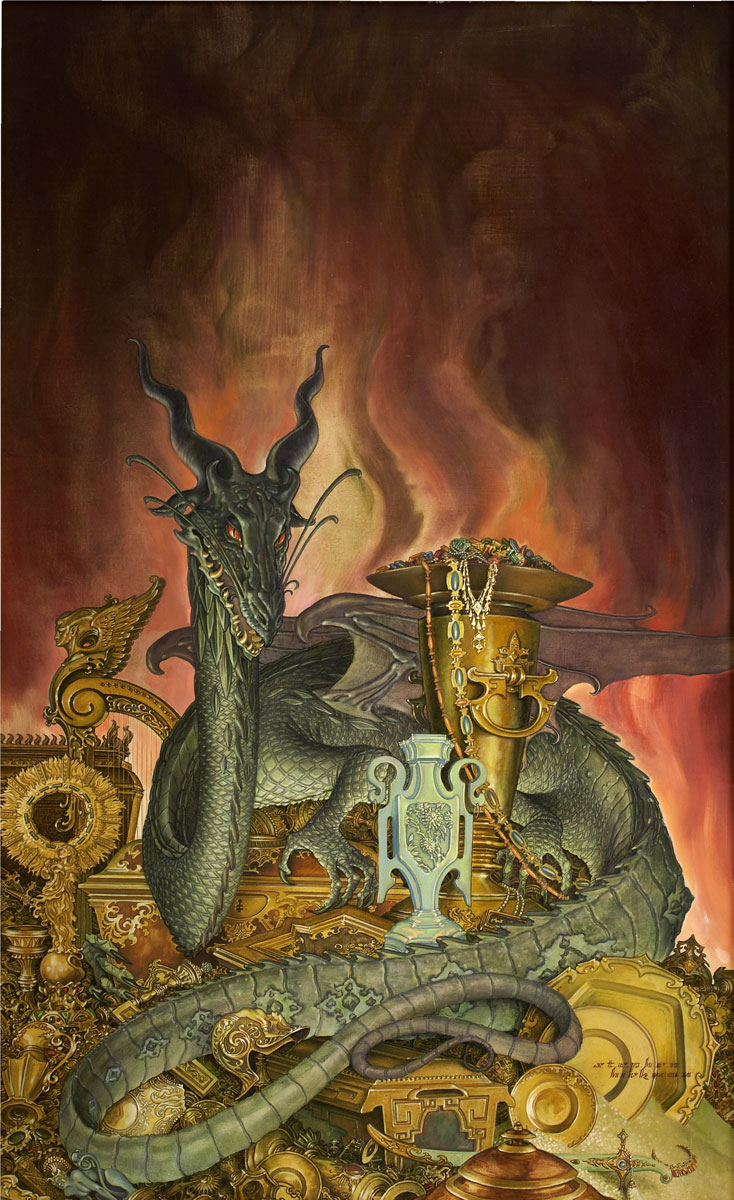
{Is the dragon’s hoard perhaps much less substantial, but much more potent? Image found on the blog PowerOfBabel.}
 

Back To Top
Abstract

Beowulf gives thanks for his seeing the dragon’s treasure, and gives Wiglaf instructions for his funerary arrangements.

Back To Top
Translation

“‘I for all of these precious things thank the Lord,
spoke these words the king of glory,
eternal lord, that I here look in on,
for the fact that I have been permitted to gain
such for my people before my day of death.
Now that I the treasure hoard have bought
with my old life, still attend to the
need of my people; for I may not be here longer.
Command the famed in battle to build a splendid barrow
after the pyre at the promontory over the sea;
it is to be a memorial to my people
high towering on Whale’s Ness,
so that seafarers may later call it
Beowulf’s Barrow, those who in ships
over the sea mists come sailing from afar.'”
(Beowulf ll.2794-2808)

Back To Top
Recordings

Old English:

Modern English:

Back To Top
The Facets of Translation

The most prominent feature of this week’s passage is the awkward opening sentence.

Its gist is straightfrward enough: Beowulf is thanking what we can safely guess is the Christian god for his successes, as he has done previously. However, if translating things fairly literally (perhaps too literally), we wind up with a second clause about the words being spoken by god (“wuldurcyninge wordum secge” ll.2795). Many translations omit this line since it appears to just repeat and expand upon Beowulf’s thanks to god, as it could come out as “[I…]speak these words to the king of glory.”

Yet, and this is where I exert a bit of extra pressure on the text, I’ve translated the second line as a reference to the jewels and the like being the words of god.

The reason for taking this route with the translation is simple: it gives the reader the opportunity to interpret the dragon’s hoard as the words of god, as some sort of cosmological truth as spoken directly by the creator of those cosmos. Opening up this possibility forces readers to take another look at the dragon, too. It’s still antagonistic in that it’s keeping the words of god to itself and needs to be killed for them to be distributed, but then just what kind of entity is it?

It might stretching things to the breaking point, but it seems that the dragon could be interpreted as the powerful priesthood or any entrenched exclusionary religious group, and Beowulf could then be considered some kind of scholar, wrenching the truth from those who are in places of religious power and being ready to redistribute it. Though, as we find out later in the poem, this doesn’t happen since the treasure is buried with Beowulf since the Geats consider it too dangerous to add massive wealth to their leader-less state.

Back To Top
Answering Questions Raised

In this reading of the hoard as cosmological truth, we need to consider what it means for Beowulf to die for it. One possibility is that in taking on such a major source of authority he destroys all of his own credibility, and as a result the truth that he uncovers can’t be successfully transmitted since without credibility (or in more contemporary terms, authority or auctoritas) no one will willingly accept what he has to say.

That brings us around the matters of the theif and of Wiglaf. In this interpretation of the dragon’s hoard as some sort of great truth, the theif could well be one who haplessly leaked one of its aspects and therefore set the whole of Beowulf’s kingdom astir. A little bit of knowledge can be much more dangerous than a lot, after all.

As per Wiglaf, he could be an acolyte of the elder scholar Beowulf. He could be a youth who has joined his cause when noone else was brave enough to, and who cared enough for the tradition of truth than the institution which had grown up and kept it from the masses.

Back To Top
Probing Possibility

The last question that this interpretation needs to face is whether or not it could have been knowingly injected into a poem written down by people working for the medieval church, an institution that was rarely free from accusations of withholding knowledge or working contrarily to the truth of things. Representing the church as a dragon, something commonly equated with the devil, could be risky in a medieval context, but I argue that this interpretation of the dragon’s hoard would hold up since the dragon could be explained as a symbol only for the corrupt within the Church and not necessarily the Church itself.

So, do you think that this interpretation holds water, or am I just stretching my own credibility by trying to keep my translation as literal as I can? Or, for that matter, have I missed something in my translation? Let me know in the comments!

Back To Top
Closing

Next week, the full complement of a Latin and Old English entry will return, with the first verse of “Dum Diane vitrea” and Beowulf’s further final words to Wiglaf.

You can find the next part of Beowulf here.

Back To Top

On Wiglaf’s Rushing Back [ll.2783-2793] (Old English)

Abstract
Translation
Recordings
Loyal Wiglaf
As Beowulf Lay Bleeding
Closing

Back To Top
Abstract

Wiglaf remains nameless, as he rushes back to show Beowulf the gold from the hoard.

Back To Top
Translation

“The messenger was in haste, eager in the journey back
By precious things he was urged on; anxiety oppressed him,
whether he would meet bold in spirit and alive
in that place the prince of the Weders,
deprived of strength, where he had earlier left him.
He then with the treasure the renowned prince,
his lord bleeding, found,
his life at an end; he then again began the
sprinkling of water, until the beginning of words
broke through his heart. The warrior king spoke,
old in sorrow – looked at the gold:”
(Beowulf ll.2783-2793)

Back To Top
Recordings

Old English:

Modern English:

Back To Top
Loyal Wiglaf

There’s a lot about loyalty in this passage. Wiglaf’s rushing back with gold in tow to show Beowulf, as per his final request, really highlights it.

In fact, that’s really all we’re treated to here, which is quite remarkable given all of the information we’ve been given in previous passages of the same length. When Wiglaf is in the hoard, the treasure is described and listed, when he and Beowulf are fighting the dragon, almost every lines shows us their manoeuvre or the dragon’s. But here, we just have Wiglaf rushing to show Beowulf the treasure.

It’s quite a distinct split from what’s come before. But it’s also a great way to signal that the big shift from being primarily about Beowulf to being about his death and the future of the Geats is finally about to come.

Back To Top
As Beowulf Lay Bleeding

One word in particular stands out, though. When Wiglaf returns to Beowulf we’re immediately told that he’s found bleeding (“driorigne” l.2789). To note this with this word in particular is strange, since it suggests that before he left for the hoard Beowulf’s wound had somehow stopped bleeding, been stopped bleeding, or Wiglaf expected it to stop before he got back.

Regardless of what the case may be with the wound itself, that we’re given this detail really drives home the fact that this is it for Beowulf. Just as he is found bleeding his very life away, so too will the words that he next speaks be his last, as he releases the last of those two – effectively closing the word hoard.

Curiously, I imagine that his body will continue to bleed beyond his actual time of death, which, though maybe not apparent to a listening audience, acknowledges an idea that words are themselves a kind of adornment for life, something that can be woven and worn over something more plain like a brooch binding the collar of a simple cloak.

At the same time, Beowulf doesn’t mention anything about grand words that he’s spoken in the past when he tells Wiglaf that he has joy in his wound, but rather the hero says this because he has done nothing to incriminate himself. Perhaps then, even a listening audience would notice the warp and woof of the scop’s words as he sang the song of Beowulf.

Back To Top
Closing

Next week, Old English will return, but the return of Latin is still uncertain.

You can find the next part of Beowulf here.

Back To Top

The Emptiness of All that Gold [ll.2771b-82] (Old English)

Abstract
Translation
Recordings
The Hoard’s Sheer Immensity
The Golden Power
Closing

{The immensity of the Lost Underworld in Earthbound is just like that of the hoard: identity erasing. Image found on flyingomelette.com.}
 

Back To Top
Abstract

The dragon is dwelled on, while Wiglaf wanders through the hoard.

Back To Top
Translation

&nbsp&nbsp&nbsp&nbsp&nbsp&nbsp&nbsp&nbsp&nbsp&nbsp”None of that sight there
was for the serpent, when the blade carried him off.
Then, I have heard, the hoard in the barrow, ancient
work of giants, was ransacked by one man, he loaded
his lap with drinking vessels and dishes of his own
choosing, the standard he also took, brightest of banners.
The sword earlier had injured – the blade was iron – that
of the aged lord, that was the treasure’s guardian for
a long time, terrifying fire brought
hot from the hoard, fiercely willing in
the middle of the night, until he a violent death died.”
(Beowulf ll.2771b-82)

Back To Top
Recordings

Old English:

{Forthcoming}

Modern English:

{Forthcoming}

Back To Top
The Hoard’s Sheer Immensity

Already it’s been mentioned how Wiglaf is not referred to by name for some time after this point, but here the poet/scribe takes this lack of identity to a strange place.

Instead of referring to Wiglaf via synecdoche with a piece of a warrior’s equipment, or calling him a “thane” or “fighter,” the poet/scribe simply calls Wiglaf “one man” (“ānne mannan” (l.2774)).

The effect of this pronoun and its adjective is immense.

However, this immensity doesn’t come from the alienation that the poet/scribe subjects Wiglaf to, but rather from the sheer size of the hoard that the poet/scribe’s making Wiglaf suddenly so small implies. Don’t forget that because of that shining banner everything is now illuminated, so we can liken this part of the poem to a long panning shot that might be used in movies to show a suddenly-broken-into, vast treasure chamber in an ancient temple or tomb.

Yet, it’s curious that the poet/scribe describes the immensity of the hoard in this way, especially since there’s so much build up to it.

We hear about it when the thief stumbles into it (ll.2283-4), again when Beowulf and his thanes head to the barrow (ll.2412-3), and then again in Beowulf’s command to Wiglaf (ll.2745-6).

Plus, any Anglo-Saxon would have been practically salivating at the prospect of finding so much treasure all in one spot – becoming instantly wealthy and instantaneously being able to exercise huge influence over others through gifts, thereby shoring up his or her own reputation and social network so that they would be more secure than gold alone would allow.

Back To Top
The Golden Power

In fact, it’s exactly within the gold-giving culture of the Anglo Saxons that we can find another reason for the poet/scribe’s describing the hoard as he does.

Rather than focus on how much there is, the poet/scribe has described the hoard through a kind of lack. It’s big and immense, but it’s the sort of thing that you can lose yourself in – even if you’re a loyal thane who’s already pledged your very being to help your lord in his dying moments.

And this is what makes the dragon’s hoard so dreadful. It’s big, it’s vast, it’s unwieldy.

No one could use that much gold for social reasons, and the temptation to fall into self-indulgence (as Heremod does in the story Hrothgar tells Beowulf (ll.1709-1722)) is practically irresistible. If there is a curse on the gold, that is the curse: to be instantly given so much that you don’t know what to do with yourself so you revert to an animalistic state.

Some have even theorized that the survivor who sings the “Lay of the Last Survivor” (ll.2247–66) somehow became the dragon: The last of his kind pining away over the treasure that could not buy back the lives of his fallen people or return them to their former glory.

This might also explain why the dragon is so prominently featured in this passage, despite his being long since dead. As Beowulf’s wishes have taken over Wiglaf’s identity, now the dragon’s identity, the miserly lord of plenty, threatens to do the same. Yet ultimately Wiglaf resists, for the poet/scribe sings that the dragon “a violent death died” (“hē morðre swealt” (l.2782)) to round out Wiglaf’s time in the hoard.

Back To Top
Closing

Next week, this blog will be on break. I’ve fallen too far behind in the recordings to keep heading onwards and since I finished “O Fortuna” this week, I want to give myself time to catch up before moving onto my next Latin text.

In the meantime be sure to check my past entries and recordings, and if you like what you read and hear, feel free to support my efforts here!

And, you can find the next part of Beowulf here.

Back To Top