Grendel feels glee again, shining laughter in Heorot hall (ll.720-730)

Abstract
Translation
Recordings
Grendel’s noise, and anger or bag?
Shining foes and roaring laughter
Closing

Beowulf, Grendel, Old English, Anglo-Saxon

An illustration of Grendel by J.R. Skelton from Stories of Beowulf. Grendel is described as “Very terrible to look upon.”Stories of beowulf grendel” by J. R. Skelton – Marshall, Henrietta Elizabeth (1908) Stories of Beowulf, T.C. & E.C. Jack. Licensed under Public Domain via Wikimedia Commons.

Back To Top
Abstract

This week, Grendel enters the hall and finds succulent sleeping youths.

Back To Top
Translation

“Came he then to the hall
the joy of journeying men to rob. The door’s
secure fire-forged bar soon gave way, as he touched it:
it burst open for the one meditating mischief, then he became angry,
standing at the hall’s mouth. Quickly then
that fiend on the shining floor trod,
went with hatred at heart; he stood, in his eyes
an unfair light like flame.
Saw he in the hall many men,
a sleeping peaceful host gathered all together,
a heap of youths. Then his heart roared anew…”
(Beowulf ll.720-730)

Back To Top
Recordings

Old English:

{Forthcoming}

Modern English:

{Forthcoming}

Back To Top
Grendel’s noise, and anger or bag?

The main thing I want to address this week is how much noise Grendel must be making with his entrance. From the way the poet describes it, he destroys the door by merely touching it and then seems to toss it aside. For a creature of the shadows he isn’t very stealthy when it comes to the works of man.

And yet, the Geats within are asleep. And what’s more, they remain asleep despite the racket that Grendel’s entrance must have made.

Well, I think Grendel makes so much noise (or at least seems to) is the poet’s way of describing how destructive Grendel is. I think the poet’s describing a sort of weird disconnect, in which Grendel is causing heavy damage to the hall door but not making any noise; his actions aren’t making any waves. At least, none that the poet comments on, which I find very odd.

Perhaps this the supernatural power of Grendel, to cause great destruction but to leave no trace of it aside from wreckage. That sounds like something that could be pretty frightening to a people like the Anglo-Saxons. After all, how can you pre-emptively defend yourself from something that gives you no warning?

Of course, it’s possible that the poet might just be lazy here. Or maybe it’s just not part of the Anglo-Saxon tradition to write for more than one sense at a time. Whatever the case, it wouldn’t be as exciting if Beowulf and his men were waiting at the ready for Grendel. Even though that’s generally how most movies have this scene play out.

I’m not sure if it has any extra meaning in this context, but maybe this is the poet’s way of Anglo-Saxon-izing Christ’s parable of the unwary servants and the thief in the night. Though if that’s the case, if Beowulf is god’s champion, why isn’t he up and ready?

The other thing from this passage to bring up here is the word “belgan.” This word means “to be angry,” or “to become angry.” Or, taken as the final meaning that Clark Hall and Meritt offer, it means “bag,” purse,” “leathern bottle,” “pair of bellows,” “pod,” “husk,” or “belly.”

I can’t help but wonder if this word is supposed to double as Grendel’s anger and the “glove” that Beowulf describes him as carrying when he tells the story of their fight. Though, given Grendel’s reputation for eating Danes, maybe that glove is nothing more than his stomach, a thing he always has with him and with which he’s ready to store whatever he needs to.

What’s your take any the Geats’ sleeping through Grendel’s entrance? Did he come in quietly despite his destroying the hall’s door? Or are the Geats just really sound sleepers?

Back To Top
Shining foes and roaring laughter

This week’s passage has a few words of note, so let’s take a look.

First off, this week’s words of note aren’t compounds. As in last week’s post, those compounds that are used are straightforward.

For example, the word “sibgedryht” is made up of the word for “kin,” “relationship” (“sib”) and “host,” “company,” or “troop” (“gedryht”) and all together means “peaceful host,” or “related band.”

Likewise, the word “mago-rinc,” which means “youth,” “man,” or “warrior,” is a combination of the Old English word for “male kinsman,” “son,” young man” (“mago”) and the word for “man, warrior, hero” (“rinc”). So there’s not really much there.

Instead, the words of not this week are those of the non-compound variety. You might even call them the regular words of the Old English language even. Imagine that.

Two such regular words stand out this week. The first of these is “fagne.”

This word shows up fairly frequently in Beowulf. It shows up so often because it fits quite a few lines and because it means “variegated,” “spotted,” “dappled,” “stained,” “dyed,” “shining,” or “gleaming,” all meanings that work well in descriptions of light or of treasure.

However, in Clark Hall and Meritt, the entry for “fagne” also redirects you to “fah” which means “hostile,” “proscribed,” “outlawed,” “criminal,” “foe,” “enemy,” “party to a blood feud.” In this passage “fagne” is used to describe the lustre of the floor that Grendel walks over.

But maybe both meanings are supposed to be at play.

Maybe the poet is trying to get twice as much out of a single word. That is, maybe he meant to imply that Grendel’s very step darkens the bright and joyful glimmer of the hall floor to a clouded enmity.

Or, if the poet wasn’t going for a dosage of extra meaning, maybe “fagne” is being used as a pun. Maybe.

The other word I want to point out and pick on is “ahlog.” I want to do so with this one because it’s not really clear whether it’s supposed to be a form of the word “ahliehhan,” meaning “laugh at,” “deride,” “exult,” or a form of the word “ahlowan,” meaning “to roar again.”

If it’s the former, then Grendel simply laughs, maybe enjoys a bit of a thrill or sense of power as he looms over his sleeping victims.

But, if his heart “roars again,” I’m left with the question: when did his heart roar before? Are we to take this to mean that Grendel has lost whatever twisted joy he once took in terrorizing the Danes and only just rediscovered it?

This angle perhaps characterizes him a bit too much, but it leads me to wonder which is more monstrous: a monster who simply terrorizes to terrorize, or one with a sense of duty to terrorize, who punches in at sundown and out at sunrise for decades even after the joy is gone?

If the word meant is “ahlowan,” then maybe Grendel’s being a more complex monster is why Beowulf was included with The Life of St. Christopher, Letters of Alexander to Aristotle, Wonders of the East, and Judith in what we now call the Nowell Codex. After all, if these stories were gathered together just because they all had monsters in them, you’d think there’d be more in th codex (physical and fiscal limitations of medieval publishing notwithstanding). Maybe Grendel is more complex than most give credit.

At the least, this fork in interpretation is food for thought — is Grendel just a mindless monster, or a creature who had just been going through the motions for years until he happened upon the heap of hapless Geatish youths and rediscovered his passion for his line of work?

What do you think?

Back To Top
Closing

Next week, Grendel makes his first move against the sleeping Geats. And Beowulf re-enters the poem.

You can find the next part of Beowulf here.

Back To Top

How Grendel contrasts with Heorot, and an exalted humbling (ll.710-719)

Abstract
Translation
Recordings
Grendel and Heorot contrasted
Cliffs as lids, and an exalted humbling
Closing

Beowulf, Grendel, Old English, Anglo-Saxon

An illustration of Grendel by J.R. Skelton from Stories of Beowulf. Grendel is described as “Very terrible to look upon.”Stories of beowulf grendel” by J. R. Skelton – Marshall, Henrietta Elizabeth (1908) Stories of Beowulf, T.C. & E.C. Jack. Licensed under Public Domain via Wikimedia Commons.

Back To Top
Abstract

Grendel and Heorot are described as Grendel makes his way towards it.

Back To Top
Translation

“Then came from the moor under misty cliff
Grendel bounding, he bore god’s ire,
meant the sinner against humankind
some to ensnare in that humbled hall.
Raging beneath the heavens, he headed to that wine hall,
the gold hall best known to men,
shimmering with ornaments. That was not the first time
that he the home of Hrothgar sought out.
Never had he in earlier days nor afterwards
found a thane so hard in the hall.”
(Beowulf ll.710-719)

Back To Top
Recordings

Old English:

{Forthcoming}

Modern English:

{Forthcoming}

Back To Top
Grendel and Heorot contrasted

This week’s passage is at odds with last week’s. Not in that it’s written in a completely different style or anything like that, but because it takes the emphasis on Grendel’s appearance and shifts it onto his intent.

However, this passage does include some description of Heorot itself that sets up a contrast between it and its attacker.

Last week, Grendel was described as a being who moves in the shadows, who slinks around. As a result, I think the Anglo-Saxons imagined Grendel as the antithesis of brightness.

Now, it only gets about a line and a half of description here, as opposed to the three we had for Grendel last week. But in those one and a half lines, Heorot is described, quite simply, as “shimmering with ornaments” (“fættum fahne” (l.716)). It is also referred to as a “gold hall” literally, since “goldsele” translates handily from Old English to Modern English with little change (l.715). So Heorot, in very short order, is clearly made out to be the pinnacle of colour, of brightness.

Perhaps that’s why it’s given so little description here. I mean, it could just be that way because the poet has already described the hall on earlier occasions, but I think that what’s happening here goes beyond being mere shorthand by which the poet intends to remind people that Heorot is bright and shiny.

I think that this description is less lingered on than that of Grendel because the hall’s brightness makes itself apparent. Just how the eye worked wasn’t likely to have entirely worked out when Beowulf was being set down in writing, but the Anglo-Saxons would definitely have been aware of how the eye’s drawn to light. Thus, they probably had some sense that bright things are immediately bright while dull things are dull over time.

In other words, I think that Heorot is being characterized here as a flash to Grendel’s dull wall. The former is so bright it overcomes you, while the latter is so not bright that you can stare at it for hours.

So why set up this contrast? I think it’s to show how diametrically opposed Grendel is to the Danes. He’s there to steal them because they are his opposite, not only in the eyes of god or whatever, but simply in how they are perceived.

Or, if you like, the Anglo-Saxons may have had some concept of darkness swallowing light as much as light creating darkness. It’s possible that this idea may also have come in with Christianity, since the metaphor of darkness eating light sounds like something that any zealous missionary would bust out to frame Christianity as the underdog in a perpetual struggle not between the forces of nature or great heroes, but between the Anglo-Saxon’s two poles of perception: darkness and light.

One other thing that struck me about this passage, though it’s less thought out, is the line “he bore god’s ire” (“godes yrre bær” (l.711)).

This one is pretty easily a reference to Grendel bearing the mark of Cain and all of that, but it also ties neatly into an idea that I brought up in my entry two weeks ago.

What if, if Beowulf is god’s champion or god’s representative on earth in some way, Grendel’s bearing god’s ire isn’t just some poetic phrasing, but is actually a reference to his being marked for death by Beowulf? After all, if Beowulf’s stories and oaths are true, he seems very much to be the worker of that wrath. It’d be a neat bit of foreshadowing, I think

One other thing about Heorot as it’s described here.

In line 713 the poet notes that the hall itself is “humbled” (“hean”). Given Heorot’s glory and grandeur in its description here, this seems odd. But I think that it’s the poet/scribe tying off the contrast that I’ve noted. I think that it’s their way of saying that Heorot wasn’t just deteriorating because it was so often empty since Grendel started attacking, but it was actually losing its lustre because it had fallen under the shadow that is Grendel.

On the one hand this might sound like a simple reading of the contrast of light and dark and the notion that the darkness is overpowering the light. But think about it for a second. Grendel’s not just dimming brightness or being shadow incarnate — he is taking the lustre from the brightest thing of all: gold.

How can any one — Geat, Dane, or even god — stand up to that? Grendel is a darkness so powerful that it is stripping away the characteristic property of an object.

What do you make of the contrast between Heorot and Grendel that seems to be set up in this passage?

Back To Top
Cliffs as lids and an exalted humbling

Okay, so there’s not much to write about when it comes to words that stand out in this week’s passage.

I’m actually starting to wonder if there’s some sort of pattern to watch for in these stretches where the poet is describing physical things.

For the most part, it’s these descriptive, geographical parts of the poem (as far as I can tell, and from memory) that contain the straightforward compounds — those compound words that, even when defined as separate words and then recombined, mean simply what they’d mean paired up otherwise.

For example, “mist-hloþum” sounds like it could be something really badass — maybe about the way that Grendel moves or his villainous intent. But, taken together these words just mean “misty cliff.” Apart they mean “mist, misty” (mist) and “cliff, precipice, slop, hillside, hill” (hlið). So, again, “misty cliff.”

Now, Old English would be far more straightforward if each word only had one meaning. But, because spelling was far from being standardized, some Old English words have various spellings, which makes Old English dictionaries networks of meaning.

For instance, in the Clark Hall and Meritt dictionary entry for “hlið” there’s a note that redirects you to “hlid,” a word that can mean “lid, covering, door,gate, opening” — basically a word with the sense of there being an opening that is also covered.

Now this definition of “hlið” could combine with mist to a similar effect.

If you think of the mist as enveloping a space, then the cliff jutting out from it is a covering for what would otherwise be open: the hole in the mist.

But that doesn’t open much up aside from a discussion of Anglo-Saxon metaphysics and their take on the nature of holes and openings. A topic that I know nothing about.

So instead let’s turn away from compounds and write about the word “hean.” As mentioned above, it’s used in this passage to describe Heorot.

Now, what’s neat about this word’s use here is that it’s not just a matter of its being another weird word with two, practically opposite meanings. As it appears here either of its meanings could work without any sort of linguistic stretching.

So, here’s how the word appears in the passage: “…in sele þam hean” (713).

And here’s what the word “hean” can mean: “lowly,” “despised,” “poor,” “man,” “bar,” and “abject” or “raise,” “exalt,” and “extol”

So, in that context, since the poet’s talking about Heorot, he could be praising it. It could be the “exalted hall.” Or it could be a reference to the hall’s current, fallen state: “that humbled hall.” I’ve chosen the latter because I think it best fits the situation and were it supposed to be “exalted hall,” I think that “hean” would be “hiēhst,” the superlative form of the Old English word for “high.”

Though I have to say that it’s fairly clever of the poet to use this word. Not just because it fits in with the alliterative line but because I think it is supposed to carry both meanings simultaneously. It was indeed the most exalted of halls but it is now humbled.

What do you think of the idea that simple compound words generally refer to geographical features?

Back To Top
Closing

Next week, Grendel arrives at Heorot and peeks in on his prey.

You can find the next part of Beowulf here.

Back To Top

Beowulf wrathfully awakens and Grendel as shadow skulker (ll.700b-709)

Abstract
Translation
Recordings
Beowulf’s waking and Grendel’s shadows
More on Grendel, a bit on righteous wrath
Closing

Beowulf, Grendel, Old English, Anglo-Saxon

An illustration of Grendel by J.R. Skelton from Stories of Beowulf. Grendel is described as “Very terrible to look upon.” “Stories of beowulf grendel” by J. R. Skelton – Marshall, Henrietta Elizabeth (1908) Stories of Beowulf, T.C. & E.C. Jack. Licensed under Public Domain via Wikimedia Commons.

Back To Top
Abstract

Grendel comes slinking over to Heorot, but Beowulf wakes and waits.

Back To Top
Translation

“The truth is shown,
that mighty god rules humankind
always. In the deepest night
came slinking the wanderer in shadow; the warriors slept,
when they should have been holding that hall,
all but one. It was known of many people,
that they might not, as long as the Measurer allowed it not,
be brought beneath shadow by the sin-stained,
but that one woke with wrath in enmity
pledged enraged battle to the creature.”
(Beowulf ll.700b-709)

Back To Top
Recordings

Old English:

{Forthcoming}

Modern English:

{Forthcoming}

Back To Top
Beowulf’s waking and Grendel’s shadows

Well, although the first two lines and a bit are more suited to last week’s passage (they’re a reiteration of the idea of god’s power), they go well with this week’s too. Why? Well, because it reminds the audience that god is there and so such an ungodly thing as the Danes losing out on their hero entirely won’t happen.

In a way, I wonder if this reference to god’s power is here at all less for reiteration and more to solidify the frightening aspects of Grendel. For an enemy that humanity can’t deal with on its own must be truly terrifying. And Danes and Geats and Anglo-Saxons alike surely didn’t think so little of themselves that they needed god for every thing.

But I’m getting away from the passage. Aside from the opening sentence, the rest of this week’s passage is about Grendel’s approach and Beowulf’s being awake.

Though just how is he awake?

Last week, I got the sense that Beowulf bedded down with the rest of his thanes. So he had his bedroll down or whatever and had settled into rest before the narrator cut away to the machinations of god. But here we’re told that everyone in the hall (who was supposed to be guarding it, by the way) were asleep except for Beowulf.

So was Beowulf cunning enough to realize that he could catch Grendel by surprise if he pretended to sleep as the others did? Or was he actually asleep for a time and then stirred before Grendel arrived thanks to some sort of divine intervention?

Considering Beowulf’s fixation on the fight, I find myself leaning more towards his being woken up through god’s touch. So, in truth, all the Geats had fallen asleep, including Beowulf, and his happening to stir to wakefulness is the miracle that saved them all (well, as we’ll see in a few weeks, almost all). Thus, this is where the might of god (as the narrator describes it) is shown.

Truth be told, I like the idea that Beowulf’s waking is an act of god because it seems somehow apt that the great boaster (still in his late teens, likely) is still susceptible to sleep.

Such a reading is supported by the flow of the narration, as it moves from describing Beowulf’s pre-bed vow to the Geats settling into bed to god’s role in what’s to come to Grendel’s approach to Beowulf’s waking with a curse and a pledge of violence on his tongue. It’s like god woke Beowulf but he’s nonetheless grumpy when he first gets up, so Grendel’s not just his enemy, but likely the first thing he sees and turns his freshly woken rage to.

Anyway, the other thing that I think is of note in this passage is Grendel’s characterization. This kind of gets into the second section’s territory since it has to do with words, but bear with me.

In two instances Grendel is associated with shadows:

1) Lines 703-704: “Com on wanre niht/scriðan sceadugenga.” (“In the deepest night/came slinking the wanderer in shadow”)

2) Line 707 “…se scynscaþa under sceadu bregdan.” (“…be brought beneath shadow by the sin-stained.”)

Add to this his being sin-stained (“scynscaþa” (l.707)).

The references to shadow alone paint a picture of Grendel as this being who lives more in darkness than in light. It makes him a very mysterious figure to modern readers, but keeping in mind the way that Anglo-Saxons categorized colours (that brighter is better, brightness is the defining quality of colour), Grendel must have been a terrifying force utterly opposed to all lightness, merry-making, and friendship. That sounds kind of bad to us, but to a society where those were essential for the physical survival of individuals, relationships and social networks, such a creature could be compared to a sentient computer virus.

What’s more, Grendel’s being related to shadows makes him diametrically opposed to light, since shadows are very much light’s opposite. The fact that light makes shadows also yields something, but I think that just ties back to Grendel’s being the kin of Cain and “sin-stained.”

What really strikes me about the way Grendel’s described, though, is that those three words all have an “s” sound in them.

Shadows can be very fleeting, they shift and move as their light does. And what could be more fleeting than the letter that you sound by simply exhaling through closed teeth? The sound brings to mind steam from a kettle, smoke from a fire, or the sound of water racing down a river. All of which are fleeting and ever-shifting. That sound also gives Grendel a very slinky sort of feel, that he’s a creature that skitters about. A word that even in Modern English has disgusting connotations.

So why then, maybe you’re wondering, is he named “Grendel”? There’s not an “s” in sight in that name.

I think that, though he’s very much a creature who flits and slinks as shadows do and who dwells in them (possibly controls them?), he is called Grendel because that is his signature feature. He grinds things, destroying them, dragging them down to the insubstantiality of a shadow, reducing them to dust and powder.

It’s possible that this process would extend beyond people’s personal bodies to their reputations, their names. After all, none of the warriors who came before Beowulf to challenge Grendel are named. And why should they be?

What do you think Grendel looks like? Something like a troll? Or more of a misshapen person?

Back To Top
More on Grendel, a bit on righteous wrath

Let’s start this section off with a little more about Grendel and how he’s portrayed here.

On line 709 Grendel is referred to as “geþinges” (meaning “creature,” or, more generally, “thing”).

I think that within the context of this passage, using a word that boils down to “thing” (even if it can mean “creature”) suggests that Grendel is a being of little sentience. He’s denied any sort of personality or any sort of reasoning faculty.

Just as the Anglo-Saxons probably likely believed it to be madness to try to reason with a bear, it’s pretty clear that Grendel can’t be reasoned with. This goes far to promoting his image as a being who has no other purpose than to destroy and spread fear and terror. I also think it plays into the shadow imagery that he’s so strongly associated with here.

For, going back to the Anglo-Saxon classification of colour being dependent on light/brightness, a shadow would be considered near the bottom in the kingdom of colours. Just as the phrase “deepest night” is used here to indicate the darkest, deepest part of the night (literally “wanre niht,” the “dullest night” (l.702)). So Grendel’s being associated with shadows and referred to as a thing really makes it clear that he’s a being of sheer evil and not to be pitied in the least, nor empathized with, nor really regarded at all as anything other than a monster.

I think this portrayal is here to either help forward Beowulf as god’s champion (or simply as a great warrior), or because Grendel, at one point, was something more.

It’s easy to say that Grendel represents old pagan practices that don’t work because they aren’t true (remember the bit about the Danes praying to their idols for help back on lines 175-180? completely ineffectual) and Beowulf is the bringer of the new light, of the word of god through Christ and all that. But I don’t think that’s quite right.

I think that the writer or transcriber of the poem was well aware of what Grendel was and wanted to downplay it to an incredible degree. Why? Perhaps to put what he represented into a bad light.

But really, does it matter what Grendel is? He’s so generic in his being a personification of the lowest sort of evil that he could be whatever bugbear a society who took up this poem wanted him to be.

At the emergence of Christianity as an evangelical faith, Grendel could be old religions; today he could simply be terror itself. This is what makes poems like Beowulf so transcendent. Not that they’re so open to interpretation that they can mean anything but because they’re drawn in just the right strokes to give such poems layers of meaning — some of which aren’t apparent until someone reads them hundreds, even thousands of years after they’re written.

The other word that I think is interesting is “anda.” This is a word with several meanings: “grudge,” “enmity,” “envy,” “anger,” “vexation;” “zeal;” “injury,” “mischief,” “fear,” or “horror.”

What’s curious about this word is that it, like many other words, suggests a connection between concepts that we don’t often credit to medieval societies. It combines the idea of grudges and anger with that of horror and fear. In short, it’s a word that suggests that the Anglo-Saxons were aware of the idea that we hate what we fear.

In this passage in particular this is intensified, since it’s used for Grendel in the bit about Beowulf’s waking in wrath against him. So much for being the big brave hero — it seems that part of Beowulf’s might may well be in his extreme fear. Though maybe this is more than intentional if Beowulf has any sort of explicit religious aspect to it.

It could be that the poem’s suggesting that fear tempered by faith, channelled through it (as Beowulf’s seems to be channelled through his faith that god will determine the victor in his various fights) creates strength in a person. Though, in this case, that strength seems to come from an extreme, faith-fuelled hatred or bigotry.

Well. Timeless poems aren’t without problems.

What do you make of Beowulf’s wrathful anger? Is it righteous? Is it an example of misguided faith?

Back To Top
Closing

Next week, Grendel arrives at the hall and revels in what he finds there.

You can find the next part of Beowulf here.

Back To Top

Geats want to go out fighting, “alma mater” to the max (ll.688-700a)

Abstract
Translation
Recordings
The dedication to die away from home
Very dear country
Closing

Beowulf, Anglo-Saxons, poetry, translation

A pillow inspired by artifacts found at the Sutton Hoo site. Design by Karen Dixon, full information available at http://www.millennia-designs.com/tapestry-cross-stitch-embroidery-kits/76/91/53/.

Back To Top
Abstract

Beowulf and his fellow Geats bed down for the night while the narrator assures us that their beliefs about never again seeing home are unnecessary.

Back To Top
Translation

“He Kept himself bold then, took a pillow
to his cheek with his band, and he among the many
ready seafarers gave themselves to hall-rest.
None of those thought that they should afterward
ever see their dear land again,
their people or their towns, where they had been raised;
and they had prayed, with fervour earlier, that they
in that wine hall be taken by death in battle,
those Danish people. But to them the Lord gave
woven success in war, thanks to the Weder people,
joy and help, that they the fiend there
through that one’s strength fully overcame,
by his own might.”
(Beowulf ll.688-700a)

Back To Top
Recordings

Old English:

{Forthcoming}

Modern English:

{Forthcoming}

Back To Top
The dedication to die away from home

Unlike last week’s passage, there’s a fair bit more going on in this week’s. Not that it’s wall to wall action or anything, but, nonetheless, I have some things to say about it rather than just a thing.

In the middle of this week’s passage, we get something that seems uncharacteristic for the sorts of warriors Beowulf and his men are said to be. We’re told that “None of those thought that they should afterward/ever see their dear land again,” (“Nænig heora þohte þæt he þanon scolde/eft eardlufan æfre gesecean”(ll.691-692)). At first, this bit of information makes it seem as though the Geats feel that theirs is a doomed project.

And why not?

Countless others have tried before them and have failed. Why should they, a band of warriors whose leader is really an unproven whelp have any better luck?

But, immediately after this fairly touching bit about never returning to where they were raised (ll.693) we’re given a little more information. The sort of information that clarifies things further and explains quite a bit about the difference between our culture and that expressed in Beowulf.

From lines 694 to 695 we’re told that the Geats had earlier prayed (the word is “gefrignan,” meaning, in general “to ask”) that they should die in battle. Again, at first you think, well, that’s probably so that they don’t have to face defeat. That they’ll be remembered as having gone down fighting. But when you put this idea with the belief that they’ll never see home again, then you get what I think is the full picture.

The Geats think that they’ll never see their homeland and loved ones again because hat’s just how resolved they are to dying in the fight with Grendel. It’s not that they’re afraid of the monster or sorrowful about a doomed fate. Instead, I think the poet/scribe is showing us the strength of the Geats’ resolve. They’re so willing to die in the service of this quest that they, in the calm before Grendel storms in, are convinced that they’ll never go back across the waters to see Geatland again.

Nevertheless, this passage closes out with a curious reassurance.

In line 698, the poet/scribe tells us that Grendel will be defeated, but by “one’s strength” (“anes cræft” (l.699)). What’s curious about this to me is that, on one hand, this seems to be about Beowulf.

But If such is the case what’s unclear is whether this means that Beowulf’s strength overcomes Grendel’s or if it’s Beowulf’s strength that convinces god to give the victory to the Danes (as mentioned on lines 698-699).

But, “one’s strength” (l.699) could also refer to god itself.

Since Beowulf is always invoking god as the one who grants him victory after victory, it wouldn’t surprise me if the poet/scribe (more so the scribe) snuck this into the poem as a reference to what the Christian version of a single omniscient and omnipotent deity was.

Based on nothing aside from his depth of knowledge, I agree with Robert Graves in his argument that the peoples of Northern Europe had the idea of a singular ruling deity, a sort of monotheism, before Christianity (as Graves outlines in The White Goddess).

But it’s possible that early Christian missionaries sold those people on the idea of Christ and God and such on its being a new, fresh deity, someone who could overcome and vanquish the old gods or their champions. With this sort of reading, “one’s strength” takes on a much more proselytizing tone, and, over all, makes the poem weirdly more Christian than it would be otherwise (that is Beowulf thanks god for victories, but those victories are by god’s grace, so the whole poem, whatever else it is, is really about god’s grace in battle).

However, where such a religious reading of this line falls apart is that there’s no clear reference to god.

It’s possible that Beowulf, at best an adaptation of a hero from an earlier story, is god as god’s champion, and so that “one alone” is both god and Beowulf simultaneously. But to expect that this meaning would get across to the audience of a poem seems far-fetched to me.

Yet, in that case, it could be that the poet/scribe intended this particular passage as a sort of coded wink or nod to those in the know. Maybe at this point in the poem, while it was being read/performed, the guy beside you who’d been pretty quiet up until then would turn to you and say “have you let Jesus Christ into your heart, brother?”

How much Christian influence do you think is in Beowulf? Are all of his references to god just references to a pre-Christian deity?

Back To Top
Very dear country

This week’s passage isn’t without its compound words, but most of them are straightforward and to the point. They’re combinations of words that make sense together and don’t offer as much room for wiggling.

These are words like “hleorbolster” (“hleor” (meaning “cheek,” “face,” or “countenance”) + “bolster” (meaning “cushion”)) or “wigsped” (“wig” (meaning “war,” “strife,” “battle”) + “sped” (meaning “success”). But, as in all good poetry, this passage does have its variety.

Otherwise I’m not sure how you’d explain the presence of “eard-lufan.”

This word is, at first blush, a simple compound. It combines the word “eard” (meaning “native place,” “country,” “region,” “dwelling-place,” “estate,” “cultivated ground,” “earth,” “land,” “condition,” or “fate”) with the word “lufan” (meaning “dear,” or “beloved”).

So, very simply, we get the dictionary-prescribed “dear home” (as in Clark Hall and Meritt) or “beloved home” (as in C.L. Wrenn’s glossary). The difference here is infinitesimal, and it looks like an easy enough compound word to deal with.

But what about those weird definitions of “eard” near the end of that list up there? “Condition” and “fate” are strange words to translate a word that seems to otherwise just mean “home” or “earth.”

I think these alternate meanings of “eard” don’t alter the compound word or give it radically different meanings, though. I think that their being possible translations for “eard” just deepens the meaning of “eardlufan.”

For the most part, “eard” is a word that represents earth and home. I think the inclusion of “condition” and “fate” in this list suggests that a dear home isn’t just a place where a person grew up, but also where they hope to die. It is a place so dear to them so utterly connected to them and they to it, that they want to be raised there, live there, and die there.

I’m basing this speculation on the Biblical notion that “dust thou art, and unto dust shalt thou return” (Genesis 3:19) (something I imagine the Anglo-Saxons were aware of); the earth or ground isn’t just our home or where we make our dwelling, but we are the very stuff of it and return to it when we die.

I think this extra shade of “eardlufan” deepens its meaning because it suggests a connection with a country and a land so strong that a person would give all they have for it. I might even go so far as to say that a person who uses such a word implies that they themselves are a part of the country or land from which they come.

What’s more, to the Anglo-Saxons, a people who identified with the wandering, country-less Jews of Exodus, this notion of an incredible bond with a place must have been a great fantasy. It may have even driven them to settle in as much as they did in the British Isles. Perhaps it even encouraged them to establish a country for themselves, the nation of wanderers that they saw themselves as.

But that’s just some succinct speculation. Though it brings to mind a question.

When it comes to early nationhood, which do you think came first: a country big enough to sustain a large group of people or a large group of people who strongly identified as a single group?

Back To Top
Closing

Next week, Grendel begins his approach to Heorot.

You can find the next part of Beowulf here.

Back To Top

Beowulf’s boast before bedtime (ll.675-687)

Abstract
Translation
Recordings
Beowulf’s boastful address
A compound word for “prowess”
Closing

Boasting was a sort of performance among Anglo-Saxons. Rocking the harp while telling tales of your deeds would make those tales even more convincing. Image found at http://www.comm.unt.edu/~ktaylor/scop/boasting.htm.

Boasting was a sort of performance among Anglo-Saxons. Rocking the harp while telling tales of your deeds would make those tales even more convincing. Image found at http://www.comm.unt.edu/~ktaylor/scop/boasting.htm.

Back To Top
Abstract

Beowulf boasts about what he will do to defeat Grendel and invokes the judgement of god regarding who shall have the victory in the upcoming fight.

Back To Top
Translation

“Spoke he then some good boast words,
Beowulf the Geat, before he went to bed down:
‘I consider my own prowess with battle work unbowed
when compared to Grendel;
as Grendel himself slays without sword,
that thief of life, nevertheless I shall do all.
He has not the advantage, that he shall slay me,
though he hew away my shield, though he be vigorous in his
evil deed: but we this night should
forego the sword, if he seeks to dare
a battle beyond weapons; and afterwards wise god
shall decide which of us, oh holy Lord,
is worthy of glory, as he deems proper.'”
(Beowulf ll.675-687)

Back To Top
Recordings

Old English:

{Forthcoming}

Modern English:

{Forthcoming}

Back To Top
Beowulf’s boastful address

This week’s passage is weird in that there isn’t a whole lot to pick out that hasn’t already been picked out.

Beowulf speaks a final boast before he (and likely the rest of the Geats) head to bed for the night. In this boast he covers mostly familiar ground: he won’t be bowed by Grendel, let god decide, etc, etc.

But who is he boasting to?

Hrothgar and the bulk of the Danes (all of them, perhaps, since who among them would want to stay in the hall?) have left.

The fourteen warriors that Beowulf has with him are, as always, it seems, silent extras, so if they’re listening we don’t get any impressions of what they think about their leaders’ boasts. Yet, anyway.

Then, since Beowulf appears to have no audience, the boast is likely for himself and himself alone. It’s another of his means of psyching himself up.

But then, why, I have to ask, does he make this boast with the same formal diction that he used when addressing Hrothgar?

Beowulf’s sentences in this passage are chopped up and rearranged across multiple lines, making translation trickier than usual. Perhaps Beowulf’s engaging in some apostrophe here — addressing god itself with this boast of his.

Or maybe he’s just speaking his intention so that, in a way no doubt familiar to contemporary self-help readers and motivational speakers, it’s given an existence outside of him before he performs it. That is, in speaking about his defeating Grendel, even if it comes to a “a battle beyond weapons” (“wig ofer wæpen” (l.685)), Beowulf could be putting it out there so that he has something outside of himself to hold himself to; he’s giving himself something to grasp at in the upcoming struggle. It’s also a good way to clarify, one more time, just what his intentions are — for himself and for anyone listening.

Or, based on nothing from the poem thus far, but instead on the inclusion of a bard-like character in Sturla Gunnarsson’s 2005 film Beowulf and Grendel, maybe one of the Geats that Beowulf brought with him is making a record of this adventure and Beowulf wants to make a definite statement before the action takes place?

That last one, though possible, seems unlikely, -since Beowulf is fairly well-spoken himself and presents his adventures at great length to Hygelac when he returns to Geatland. Though, even Anglo-Saxons (or their folktale analogue, the Geats) probably appreciated the importance of back-up plans. Especially of things that could lead a person to great glory.

Nonetheless, I don’t think Beowulf is boasting here for the sake of a bard in his party.

Beowulf’s addressing god is definitely possible, and the constant recourse he makes to god as the agent of his victories suggests a certain kind of devotion on the Geat’s part.

Maybe Beowulf is even addressing god here to garner some of the deity’s favour — something that Grendel, as kin of Cain, surely has no access to. Though, with such a reputation, maybe it was thought that Grendel had the help of Satan (I’m pretty sure that concept had made its way into Christianity by the sixth century, the earliest date for Beowulf‘s composition) and so Beowulf calls on god to judge the victor as a counter to his opponent’s demonic support. Addressing a deity would definitely be reason for Beowulf to speak with the diction that he does.

Though it’s possible that he’s also just being overly eloquent because of a buzz or his being slightly drunk. I mean, he has been drinking all evening, right?

Matters of record or prayer/deity acknowledgement aside, I think it’s most likely that Beowulf makes this boast for his own good.

I think he puts his aspirations into words to make them more real so that he can have something to reach for beyond the abstract idea of beating some sort of hitherto unseen monster. It could be argued that even if Beowulf is addressing god here, that too is done as a way of psyching himself up. Though whether or not such ideas would be current among the Anglo-Saxons is another question all together. They may still have totally thought that prayer pierced the firmament of immutable stars overhead and made an inroad for god’s power to enter the realm of mortals.

Do you think giving yourself pep talks before you face major challenges helps make them easier to overcome?

Back To Top
A compound word for “prowess”

Just as Beowulf’s boasting doesn’t bring much new to the table thematically, this passage is pretty light on new words that are awesome. Easy puzzles like “gylp-word” (“boast word) and “guþ-weorca” (“war work”) make appearances, but those words are too straightforward to easily go into depth with.

However, one word stands out (as always seems to be the case in this section, right?). This word is “herewæsmun” — a word that looks like a compound (and, I’m convinced, is one), but, at first look, defies being broken into its constituent parts.

The “here” part is pretty straightforward: “predatory band, troop, army, host, multitude.” Easy enough.

But there’s no entry in my Clark Hall and Merrit dictionary for “wæsma.” The closest thing is an entry for “-wæsma” (acknowledging that it is only a suffix) which redirects you to “here-w” and the compounds definition: “prowess.”

The word “wæstm” is pretty close to “wæsmun”/”wæsma,” so I think that it’s a good candidate for defining the latter half of herewæsmun. Though wæstm’s meaning “growth,” increase,” “plant,” “produce,” “offspring,” “fruit;” “result,” “benefit,” “product;” “interest,” “usury;” “abundance,” “stature,” “form,” or “figure” doesn’t mesh neatly with a word for “army” to give us a compound that means “prowess.”

However, in the glossary included with my copy of C.L. Wrenn’s second edition of the Old English Beowulf (published in 1958 by Harrap & Co.), “herewæsma” appears as “herewæs(t)m.” The inclusion of the “t” (even in parentheses) suggests that, though Wrenn doesn’t include “wæstm” in his glossary, “herewæsma” is indeed a compound of “here” and “wæstm.” Wrenn’s definition of the compound as “vigour in war” also makes a little more sense than Clark Hall and Meritt’s generalized “prowess.”

Plus, “vigour in war” isn’t that difficult to arrive at given the combination of words presented.

For, if you take a word meaning “troop” or “army” and combine it with another meaning “fruit” or “stature” then you get a word with the sense of something that is the fruit of a war band or one of great stature in such a band. And, if you think about what it’d be like to fight in a band of warriors, something that’s likely to come to mind is how you and the group might coalesce into one unit and be rallied by each other in the heat of battle. What would come from such rallying? Vigour in war — or, more generally, prowess.

Neat, huh?

Though passages like this might be light on interesting words, this is the stuff I love about readin Old English literature. It gives me a chance to really stick my hands into the muck of words (even if that muck is already pre-sifted by people like C.L. Wrenn and John R. Clark Hall and Herbert D. Merrit). Actually, this depth of language is one of the reasons why I think Beowulf is so rich; its language is much more sensitive to context than much of Modern English seems to be.

Which language do you think has more fluidity: Old English or Modern English?

Back To Top
Closing

Next week, check back here for a run down of the passage wherein the narrator tells of how none of the Geats thought they’d ever see home again.

You can find the next part of Beowulf here.
Back To Top

Beowulf in a state of undress, compounds-Compounds-Compounds! (ll.662-674)

Abstract
Translation
Recordings
Beowulf prepares himself
On “warmakers,” “bedmates,” “kings of praise,” and more
Closing

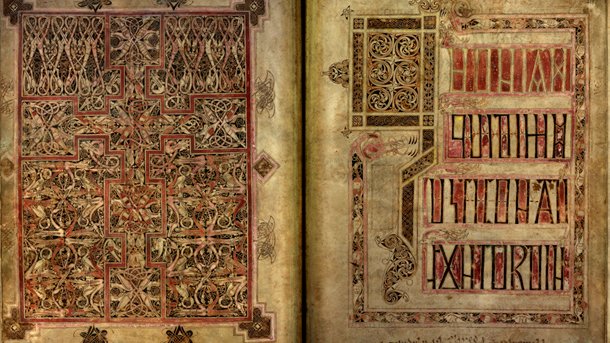
A page from an illuminated manuscript. Words are important. Image from http://www.myarmoury.com/talk/viewtopic.php?t=28126&view=next.

A page from an illuminated manuscript. Words are important. Image from http://www.myarmoury.com/talk/viewtopic.php?t=28126&view=next.

Back To Top
Abstract

Hrothgar and his retinue depart the hall, and Beowulf prepares himself for the coming brawl.

Back To Top
Translation

“Then from him Hrothgar went among his warrior band,
the prince of the Scyldings out from the hall;
the war chief would seek out Wealhtheow,
the queen consort. The king of heaven had
against Grendel, as people later learned by inquiry,
set a hall guard; one with a special office to fulfil
for the lord of the Danes, a steadfast guard against monsters.
Indeed that Geatish man eagerly trusted
the courage of his strength, the Measurer’s protection.
Then he did off with his iron corselet,
took the helm from his head, entrusted his ornamented sword,
servant of the best iron,
and he commanded them to keep his war gear.”
(Beowulf ll.662-674)

Back To Top
Recordings

Old English:

{Forthcoming}

Modern English:

{Forthcoming}

Back To Top
Beowulf prepares himself

In this week’s passage of Beowulf the main focus is on the man himself.

Hrothgar leaves with his retainers and the hall is, as far as is implied anyway, vacated by all except for the Geats. Interestingly, the language sort of signals this departure of the Danes in an interesting way. The word here used for Hrothgar as prince of the Danes is “eodur”, a word that means “boundary/limit/enclosure” along with “prince” or “lord.”

Such a combination of meanings in one word may seem strange but makes a sort of clear sense – to rule one must be the protector of his or her people, and what better way to represent that protection than a fence or a hedge growing round about them?

The association with greenery that comes in with the related meaning “hedge” may also say something about the Anglo-Saxons’ Germanic roots, but what exactly I cannot say. There’s still much more for me to learn about this period.

As per Beowulf himself, we see him her un-equipping all of his gear. He removes his equipment piece by piece and hands off his sword to his fellow Geats, who, at least literally, are nowhere to be seen. As a means of putting the spotlight squarely on Beowulf, the poet makes no mention of any of the other Geats here, instead only using an implied pronoun packed into the verb “het” (meaning “commanded,” but only in the third person singular) to refer to someone to whom Beowulf is handing off his sword.

It’s weird that it’s in the singular rather than the plural, but I suppose Beowulf has a squire of sorts with him. Maybe it’s the later named (on line 2076) Handscio?

Grammatical ticks aside, I don’t think it’s too weird that the poet would cut out the other Geats here. This is, after all, Beowulf’s time to shine. It’s just very odd that he travel with so many other men and not really use their skill at all. If Beowulf is so over-powered, then why bother with any other party members?

Honestly, the only thing I can think of is to make a parallel between this story and that of Christ and his apostles. Such an analogy certainly wouldn’t have been lost on medieval (or Early medieval) audiences, and this sort of monstrous take on a demi-god come to redeem mankind from sin (Beowulf as Christ, Grendel as sin (being the kin of Cain, the first murderer)) could well be a major reason why our copy of Beowulf was found bundled with stories about monsters in the Nowell Codex.

But moving on from the matter of the vanishing convenient Geats, Beowulf’s un-equipping himself seems to serve more purpose than just getting him to do some great deed. The word “truwode” is used in describing his mental state.

This is a curious word to use in such a context because along with the somewhat visible Modern English meaning of “trust” the word also means “persuade.” I see two ways to take its having this mixture of meanings.

One is somewhat positive: the Anglo Saxons regarded trust as something that needed to be earned, and that could be built up, but that was not, in any way, automatic.

The other way to interpret it is less so: Anglo-Saxons were far more cynical than we might realize and their perception of trust is that it was nothing more than a pretense. A pretense with real results, but a pretense nonetheless.

Since the reference to Beowulf’s trusting in his strength is paired with a mention of his faith in god’s protection (l.670), I feel like the first interpretation is probably more likely true.

It’s curious, too, though. If Paul’s mention of spiritual armour (Ephesians 6:11) was only known to people writing poetry in English after a certain time, then maybe that could help date Beowulf. Or, maybe some preacher to the Anglo-Saxons (maybe even one from the Irish Celts) mentioned the concept of faith as armour in passing and it just stuck in someone’s head, bounced around, and found its way into their big ol’ poem.

Finally, I just want to mention one weird thing about Beowulf’s sword. Actually, this ties back to the idea of a ruler being an enclosure for his or her people.

On line 673, Beowulf’s sword is literally described as “best of iron servant” (“irena cyst ombihtþegne”). I think that this means it is served by the best of iron, that its concept as a sword is brought to greatest realization through its expression in its excellent iron. But why not just express this greatness of the sword with a reference to sharpness or the sword’s origin? What should it matter that Beowulf’s sword is served by the best of iron?

What’re your thoughts on all of these points? Are the other Geats just forgotten by the poet because this poem is called Beowulf and not Beowulf and the Geats? Is Hrothgar an “enclosure” of his people as much as he’s their “prince”?

Back To Top
On “war makers,” “kings of praise,” “hall-wards” and more

Since this week’s passage has quite a bit going on in it, it’s also got its fair share of curious words. All of those that I’ve picked out for this section are compounds. Let’s see if I can get through them all in my fifteen minute writing time.

So first up is wigfruma, a combination of the word for “war” or “strife” (“wig”) and the word for things like “beginning/creation/originator” and “prince/chief/ruler” (“fruma”). Since “fruma” carries senses of both being the first and being the topmost, I think this appellation fits Hrothgar rather snugly.

No doubt Hrothgar started the odd war in his time and he’s described as having the fortunes of war favouring him (l.64). Actually, “wigfruma” suggests that the Danes are a put upon people, a people who have endured much strife and tribulation.

In fact, I wonder just how common it was for a people to enter into a pact with another through a peaceweaver, a woman sent over as a sort of arranged marriage to secure peace. Was this something of a last resort or was it something that happened frequently enough to not really be talked about or mentioned in literature?

Though, saying that Hrothgar is a war starter (one interpretation of “wigfruma”), I can’t help but wonder if he had started a strife with the Celts or Welsh, or wherever Wealhtheow hails from, and at the time that group perceived the Danes to be their greater, a people who could crush them, so they sent her to stop things from moving to total war.

Next up is “cyningwuldor,” a word that combines the word for “king” (“cyning”) with the word for “glory/praise/heaven” (“wuldor”). There’s not much to say here. No matter how you interpret this word it’s meaning is pretty clear: god.

Though it’s a strange way to think of a deity as the “king of praise” or the “king of thanks.” I mean, is that a title given because this particular deity is given the greatest amount of thanks and praise? Could this be referring necessarily to an early conception of the Christian god as taught by missionaries, or instead to the sort of all-god that Graves writes about in The White Goddess?

The word “seleweard” is similarly simple. But, of course, it hides a certain twist when you dig down. The word combines “sele” (hall) with “weard” (“ward/advance post/waiting for/guardian/king;possessor”).

Beowulf’s being a “hall ward” or “hall lord” or “hall protector” is clear enough: Hrothgar gave him possession of the hall for the night and he’s been keen on guarding it himself since he heard of the Danes’ plight. But, the other combination of “hall” and “lurking, or “waiting for” works just as well in this instance. Beowulf is indeed waiting in ambush for Grendel since the kin of Cain has no idea whatever that this mad Geat is there to meet him this night.

Moving right along, the word “sundornytt” doesn’t seem to have much going for it. It refers to a special office or duty, but, weakly, could also mean “varied office.” Yeah, I don’t think there’s much here.

The last compound word of note in this week’s passage is “eotonweard.” It brings together the word for “giant,” “monster,” “demon” (“eoton”) and “guard,” “ward,” etc. (“weard”).

Now. In its original printing my Clark Hall and Meritt dictionary defined this word in the most tantalizing of ways: “watch against monsters?[sic]” It also lists this instance in Beowulf as the only appearance of the word in Old English.

Unfortunately (fortunately?) in the supplement that’s part of my edition “eotonweard” makes another appearance.

There it’s defined as “watch against the monster.” It’s a small difference (basically changing “monsters” to “monster,” made, perhaps, because there is just one Grendel, after all), but I still like to read this word as an echo of Hrothgar’s joking with Beowulf about not knocking the place down in the process of beating Grendel; I think it’s another hint at Beowulf’s own monstrousness. Actually, perhaps part of god’s help (whether it’s what Beowulf explicitly calls down or not) is helping him to keep his strength in check so that he doesn’t destroy the hall along with Grendel.

Since this section is often about compound words, what do you think of my being so hung up on them? Are they just words that happen to be combinations of others, is there a fixed meaning to these combinations, or do you think that they’re a fluid mix of their parts?

Back To Top
Closing

Next week we get Beowulf’s pre-bedtime speech explaining why he’s un-equipped himself.

You can find the next part of Beowulf here.

Back To Top

Hrothgar maybe jokes, and compound words abound (ll.652-661)

Abstract
Translation
Recordings
Hrothgar’s Joke?
Compound words and a single seed
Closing

Interlaced men motif. Image from http://public.wsu.edu/~hanly/oe/503.html.

Interlaced men motif. Image from http://public.wsu.edu/~hanly/oe/503.html.

Back To Top
Abstract

Hrothgar hands authority over the hall to Beowulf and promises him great riches if he survives the night.

Back To Top
Translation

“Greeted the men each other then,
Hrothgar Beowulf, and to him wished health,
gave rule of the drinking hall, and these words said:
‘Never before have I to any man yielded up,
since I could raise my own hand my own shield,
the noble house of the Danes but to thee now.
Have now and hold this best of houses:
Have remembrance of fame, mighty valour’s seed,
be wakeful against the wrathful one! Thy desire shall not
lack if you this brave deed survive with your life'”
(Beowulf ll.652-661)

Back To Top
Recordings

Old English:

{Forthcoming}

Modern English:

{Forthcoming}

Back To Top
Hrothgar’s Joke?

The main focus of this week’s passage is Hrothgar’s handing the hall over to Beowulf for the night. This is a pretty big deal. And not just because Hrothgar says that it’s unprecedented (lines 655-657).

The lord of Heorot’s handing the hall over to Beowulf for the night suggests that he, Hrothgar, has full and utter trust in Beowulf to be successful. Beowulf isn’t just a glorified night watchman; he’s been made the ward of the hall. It is his to use as he sees fit. But what does such ownership confer?

Well, no doubt there are some things in Anglo-Saxon law that could shed some interesting tints of light on the matter, but I don’t have those to hand, nor do I have the time to chase them down just now. However, in and of itself, I think the trust that Hrothgar is putting into Beowulf is significant enough.

Hrothgar knew Beowulf’s father, so there’s a connection between them. Nonetheless, Hrothgar has only just met Beowulf, really. So his handing over his hall — the hall that he built when the Danes were powerful and prosperous — into the power of one whom he’s really only just met shows a great deal of trust.

But, of course, I think that there’s something more here, too.

After Hrothgar hands the metaphysical/figurative keys to Heorot over to Beowulf he adds something to his wishes of luck and success. He tells Beowulf to “be wakeful against the wrathful one!” (“waca wið wraþum” (l.660)).

On one level the “wrathful one” is clearly Grendel. Again, his wrath goes unexplained, but as hearers of the poem, wrath alone is really the only motivation that the marsh monster is given for the repeated raids against Heorot. Simple wrath.

But, given all of the previous points at which I found readings of the poem that take references like these and point them to Beowulf, I think it’s possible that Hrothgar is throwing a bit of a jibe the Geat’s way.

I think that Hrothgar, having never before given control of his grand hall over to someone else, is trying to coolly warn Beowulf to not get too carried away. I think he’s saying “hey, be careful and try not to bring the place down tonight, okay?” or more philosophically, “when you confront the monster don’t become monstrous yourself, all right?”

After all, Beowulf’s stories of overcoming terrible beasts have involved him becoming just as savage to overcome them.

In this passage I think reading Hrothgar’s wish of luck as a lighthearted warning against his own strength and temper gives a little more credit to Hrothgar, a character who is often depicted as being in the very dredges of despair.

That Hrothgar could crack a joke at a time like this, even one that would probably be accompanied by a slight glint of the eye and a weak half-smile, suggests that he’s got some resilience left in him. Hrothgar’s still able to rule, it’s just difficult for him to ask for help and to acknowledge that he needs it.

Though that only further supports reading this line as a crack at Beowulf as well as a warning to be vigilant against Grendel. Comedy is often a disarming way for people to assert themselves and why not give the otherwise utterly melancholic Hrothgar a bit of a joke line as he makes his way out?

Besides, later on, we’ll hear Beowulf throw a jibe right back at him.

In the meantime, I think it’s also interesting that Hrothgar feels the need to tell Beowulf he’ll be rewarded handsomely for his efforts. It’s possible that along with being just a simple incentive, mentioning the reward is also Hrothgar’s way of reminding Beowulf what’s in it for him if he doesn’t destroy the hall in the process of defeating Grendel. His stories of might and courage have painted him as being rather reckless after all.

What do you think about this situation? Is Hrothgar joking with Beowulf? Or is he just wishing Beowulf rote luck?

Back To Top
Compound words and a single seed

There were a lot of words of note in this week’s passage. Some more so than others because of their placement in the poem, and some because they’re just curious words. Well, because they’re compound words.

Actually, there were two sets of compounds in Hrothgar’s speech. The first is “winærn” and “ðryþærn.” The common element between these two words (“ærn”) means “dwelling,” “house,” “building,” “store,” or “closet.” The first of the pair’s modifier is “win” which means simply “wine,” while the second’s, “ðryð” has a broader variety of meanings: “might,” “power,” “force,” “strength,” “majesty,” “glory,” “splendour;” “multitude,” “troop,” or “host.”

The first of the pair isn’t really all that interesting. It pretty much just means wine-house. I could also mean “wine-closet,” but that’s basically just a shade of the meaning of “wine-house” (that is, a house for wine) spelled out rather than left up to implication and context.

The word “ðryþærn” is slightly more interesting because of the variety of meanings for “ðryð.” Though if you look at the list of them, they all, again, kind of make sense translated as simply “great house” or “powerful house.” After all, a great house is what you’d need for a multitude of people, just as it’s what you’d need to express strength or power.

I do think it’s kind of neat how it’s the narrator who refers to Heorot as a “winærn” and Hrothgar who refers to it as a “ðryþærn.” Alliteration is definitely at work in this, but still, there’s no real reason the poet couldn’t have composed this part so that he was left with “ðryþærn” and Hrothgar with “winærn.” Their order definitely suggests a kind of up-scaling of the house in he eyes of its owners. Though, really, even were it not for Grendel, Heorot would just be a drinking hall.

Similarly the words “ellenweorc” and “mægenweorc” star in this week’s passage. They mean “deed of courage” and “deed of might” respectively. But what’s so interesting about them is that they’re both spoken by Hrothgar. Either he’s feeling the pinch of alliteration, going for emphasis, or feeling a bit sleepy.

Maybe it’s a mix of all three. It’s definitely possible that along with his gentle jibe at Beowulf’s possibly losing control Hrothgar is trying to keep Beowulf in check with the promise of glorious deeds — something that he’s clearly after since his swimming contest story was so elaborate.

I’m not so sure, though, that there’s any special significance to the order in which these two compounds appear.

They’re both part of their respective lines’ alliterating pairs, so the poet/scribe likely just wanted to express the same idea with a bit of alliterative flexibility. In this case are deeds of might really that different from deeds of courage?

The last word that I found particularly interesting in this week’s passage is “cyð” from “mægenellen cyð” on line 659.

One interpretation of this word makes it “seed,” “germ,” “shoot,” “mote.” This makes for some neat natural imagery. Hrothgar’s comparing this great undertaking to a seed of glory puts me in mind of mythological, sacred trees — even Yggdrasil, the world tree.

But there’s also a second way to read “cyð.” It could be an altered spelling of “cyðð” meaning “kith,” “kinsfolk,” “fellow-countrymen,” “neighbours” or “acquaintance,” “friendship;” “knowledge,” or “familiarity.”

Similar to the above interpretation of “cyð,” this puts some figurative language into Hrothgar’s mouth. Though this time the imagery is more familial, more interpersonal.

This deed Beowulf is about to undertake is a close friend to glory; it’s glory’s next of kin.

I feel like this might actually be the better interpretation between the two. Why? Because it has more to do with kinship and interpersonal ties.

Hrothgar can offer all the treasures he likes, but I think that this sense of kinship is the true reward from Beowulf’s quest.

Reading the word in this way makes the store of treasure that’s waiting for Beowulf all the more meaningful, too, since all of that gold will come along with a strong bond, and that is practically invaluable in a world in which groups need to rely on other groups, either for goods, protection, or mutual peace.

Beowulf can win all the gold in Daneland, but what will really win him glory in Geatland is forging a strong alliance with the Danish tribe.

Which of the two interpretations of “cyð” do you think is better? As “seed” or as “kin”?

Back To Top
Closing

Next week, Hrothgar gets into bed, Beowulf prepares for Grendel, and the poet drops spoilers.

You can find the next part of Beowulf here.

Back To Top

Meanderings on Hrothgar and closely watching words (ll.642-651)

Abstract
Translation
Recordings
Meandering through analysis: Hrothgar’s departure
Delving deeply into three words
Closing

Interlaced men motif. Image from http://public.wsu.edu/~hanly/oe/503.html.

Interlaced men motif. Image from http://public.wsu.edu/~hanly/oe/503.html.

Back To Top
Abstract

It’s party time in Heorot until Hrothgar, noticing the imminent falling of darkness, decides it’s time to call it a night.

Back To Top
Translation

“Then it was again as it had been in the hall,
brave words spoken, people milled about beneath its roof,
the sounds of a victorious people, until in a short time
the son of Healfdane’s will turned to seeking his
evening rest. Knew he that the wretch
against that high hall planned attack,
after the sun’s light might be seen,
when grown dark was the night over all,
draped in shade mail the shape would come stalking
under the waning heavens. All the throng arose.”
(Beowulf ll.642-651)

Back To Top
Recordings

Old English:

{Forthcoming}

Modern English:

{Forthcoming}

Back To Top
Meandering through analysis: Hrothgar’s departure

As had been the case the last time we were treated to quite a bit of expositional poetry from the poet/scribe himself, this week’s passage is rich primarily in words. And in one significant detail on which he dwells.

Near the end of this weeks’ passage we’re treated to three and a half lines about the transition from day to night and the shifting from light to darkness. I think it goes without saying that there’s something of importance here. Or at least there could be.

This transition to night begins around the middle of the passage, at which point Hrothgar begins to consider leaving the hall and heading to his evening rest. This is no doubt a reference to the first period of sleep in the usual way people slept before artificial light; he’s heading off to the first shift of sleep from sunset to about midnight. (At that point, people woke up and wrote, composed, met, talked, had sex, etc. before heading back to bed around 2 or so and then rising with the sun.)

Why is this sort of sleep pattern the pre-industrial usual? I can’t rightly say. What significance does it have here? Well, maybe not much, but it’s a fun tidbit to trot out every now and then.

As per stuff actually relevant to what’s going on in the passage, Hrothgar uses a curious word to describe what Grendel’s been doing: “geþinged.” This word comes up on line 647 and means “plan,” broadly. But specifically within the Clark Hall and Meritt dictionary I’m using, it translates as “to beg, pray, ask, intercede, covenant, conciliate, compound with, settle, prescribe; reconcile oneself with; determine, purpose, design, arrange, talk, harangue.”

Some of those words suggest “plan,” some don’t. But just about all of them suggest collaboration rather than singular action. I can’t help but get the impression that, aside from alliterative purposes (geþinged alliterates with þæm from earlier in the line), the poet put this word here to suggest one of two things about Hrothgar’s perception of Grendel.

It could suggest that Hrothgar regards Grendel as a shrewd and potent planner. He sees Grendel as a being that lays out careful plans and then follows through, as if working by committee or with the force of will of several beings.

Or, it suggests that Hrothgar is aware of Grendel’s collaboration with some other being. This doesn’t necessarily need to be Grendel’s mother. It could just as easily be a sense of some sort of spiritual communication amongst the other kin of Cain. Maybe those shunned by god just like to co-ordinate things really well.

Looking further at Hrothgar’s departure from the hall, I wonder why he leaves at all. Is it that he’s running away? Clearing the way for this Geat who’s so eager to gain glory?

Perhaps there was some kind of tradition that involved everyone belonging to a troop or band or peoples would just walk out once their leader did the same. If that’s the case, then Hrothgar could be trying to protect the Danes in this way. Though whether that’s from Grendel or from the menace of Beowulf and his seductive confidence, who can say?

Back To Top
Delving deeply into three words

This week’s passage bucks the pattern that the last few have kept: it’s actually got some compound words!

There is, however, one that I noted in the entry “Beowulf gets into puns and two regular words aren’t so regular (ll.590-597).” Well, the first half of it, anyway. This is “sige-folc.” I don’t really have anything new to say about it, except that in this context it is likely meant sincerely.

After all, it isn’t necessarily calling the Danes a “victorious people,” just comparing the noise that they rose to the sort of noise that a victorious people would raise. The obvious connection is that the poet is saying that they’re celebrating before their problem has been solved.

Though, at this point, I get the impression that the original audience probably already figured out that Beowulf was going to win. But maybe there’s more dramatic tension here than I realize. I mean, we haven’t really seen much of Grendel in action. We’ve heard the aftermath of his attacks described, but we’ve never really seen him in action.

The opposite is also true. We’ve never seen Beowulf do anything. He’s boasted plenty, but done little aside from wearing his armour with a lordly air.

So what’s the conclusion here?

I don’t think the poet is trying for much beyond the surface reading of sige-folc. There’s a subtle reminder that the Danes are pre-empting their victory with a celebration here. Maybe there was an Anglo-Saxon sense of karma or cosmic irony and so this reminder could work as foreshadowing for Grendel’s mother’s attack after Beowulf has defeated Grendel. Though, I really can’t say what the poem’s earliest audiences thought and anticipated.

The other two compounds are unique (so far) to this passage. The first is from line 643: “þryðword.”

This word is a combination of “þryð” (meaning “might,” “power,” “force,” “strength,” “majesty,” “glory,” “splendour;” “multitude,” “troop,” or “host”) and “word” (meaning “word,” “speech,” “sentence,” “statement;” “command,” “order,” “subject of talk;” “story,” “news,” “report;” “fame;” “promise,” or “verb.”)

“Word” can also refer to “rod,” “(possibly) gooseberry bush” or “the word incarnate.” Why that last trio of meanings includes “rod” and possibly “gooseberry bush,” I can’t really say.

Unless, it’s a reference to words relating to Ogham alphabets. But so far in my reading, Graves hasn’t said anything about gooseberry bushes. He has put forth the idea that the burning bush was some loranthus (a kind of mistletoe) growing on a wild acacia, but other than designating this wood to Sunday and equating it with the Celtic broom, he hasn’t said much about it (The White Goddess 264)

Anyway, the thing that makes this combination of words interesting to me is that it could be a reference to armies being stereotyped as talking about manly, powerful things.

The literal translation of the compound is “power words,” and so I suppose it’s aptly applied to a bunch of warriors excitedly talking and drinking. It’s as if their confidence were returning to the Danes. For, even if a boast is empty, a boast is still something spoken from a place of confidence – even if that confidence is just an act.

Now, we come to what I think could be the coolest compound word in the passage. Maybe even up to this point in the poem. “Scadu-helm”

This word combines the Old English word for “shade,” “shadow,” “darkness,” “shady” “place,” “arbour;” “shelter,” or “scene,” “scadu,” and the word for “protection,” “defense,” “covering,” “crown,” “summit,” “top (of trees);” “helmet,” “protector,” “lord;” or “elm,” “helm.”

So the compound’s literal meaning is something like “cover of darkness.” Though that’s a bit plain. I think that something like “shade covering” or “shade mail” is a better fit — something that suggests that Grendel comes clothed in the darkness, not just under it.

I prefer that sort of interpretation because it suggests that he was civilized, but not in the civil ways of man — no — rather in the ways that kin of Cain understand civility.

Now, since elm and arbour are involved, what’s Robert Graves got to say?

(By the way, I’m referring to Robert Graves so much because I’m reading his The White Goddess right now for my blog Going Box by Box.)

On page 190 of that book, graves simply says that the elm became the alma mater (pun intended, I think) of the wine god because it was used to support grape vines. Other than that, there’s not much. So, it’s a supportive tree, and so that may well be why it’s connected to the word “helm” and all of its implications of protection.

Back To Top
Closing

Next week, check back to read about how Hrothgar hands things over to Beowulf on his way out.

You can find the next part of Beowulf here.

Back To Top

Beowulf, Wealhtheow, and the two words that reveal much (ll.631-641)

Abstract
Translation
Recordings
One Word Says much about Beowulf’s Song
Another Word, and More of just What Wealhtheow Is
Closing

An illuminated Chad Gospel. Image from http://events.nationalgeographic.com/ events/special-events/2011/11/13/saint-spinners/.

An illuminated Chad Gospel, just one place where words matter. Image from http://events.nationalgeographic.com/
events/special-events/2011/11/13/saint-spinners/.

Back To Top
Abstract

Beowulf sings his reply to Wealhtheow’s praises, and she, well-pleased, returns to Hrothgar’s side.

Back To Top
Translation

“Beowulf spoke, son of Ecgtheow:
‘I thought upon that, as I came across the sea,
seated in the sea boat amidst the multitude of my men,
that I completely for your people
would that will work, or die in the slaughter,
held fast in the fiend’s fist. I shall perform
the lordly deed, or my end days
find in this mead hall!’
That woman/lady well liked those words,
the boast-speech of the Geat; then went gold-laden
the stately queen of her people to sit with her lord.”
(Beowulf ll.631-641)

Back To Top
Recordings

Old English:

{Forthcoming}

Modern English:

{Forthcoming}

Back To Top
One Word Says much about Beowulf’s Song

When last week’s passage ended with the poet/scribe possibly saying that Beowulf sang his response to Wealhtheow, I thought I knew what was coming. I figured that we’d get more of the same artful and rhetorical language that we saw when he was talking to Hrothgar. A few ‘thee”s and ‘thou”s, rhetorical separation of related clauses, all of that.

Instead, Beowulf’s dialogue here is some of the most straightforward text I’ve come across in the poem yet.

There aren’t any structural acrobatics. There aren’t any strange combinations of words. Even when it comes to compound words there are only two. These are “feondgrapum,” “endedæg” and “meoduhealle.”

All of these words are straightforwardly translated as “fiend-grip,” “end days,” and “mead hall.” There don’t seem to be any shades of morality hiding in multiple meanings, nor does Beowulf seem to be putting any of them to tricky use here.

It’s almost enough to make me think that when formal speech is delivered to a man it is a thicket, whereas when a formal speech is delivered to a woman it is a bouquet.

Though there are some rare words at play in Beowulf’s dialogue.

In line 634 Beowulf uses the word “anunga” and in line 635 he uses “crunge” (a form of “cringan”). These words aren’t often used, but there’s nothing really special about them aside from their being highly specialized.

The word “anunga” refers to something done quickly and thoroughly if taken as a whole word (my Clark Hall & Meritt dictionary separates these senses). Yet it makes sense that Beowulf use this word here since it alliterates with the word that follows, which just so happens to be on the other side of the line’s caesura: “eowra.”

“Crunge” isn’t used for alliterative purposes, but it is highly specialized, having but three meanings: “yield, fall (in battle), die.” Using any three of these fits the meaning of Beowulf’s punchy ending, but he could have simply used “acwelan” or “sweltan” (both mean “to die”).

It’s telling, then, that Beowulf dresses up his language as he sings his reply to Wealhtheow.

Perhaps this was part of formal speech, though. Perhaps when speaking to a woman the decorum was to avoid innuendo so that there would be no misunderstandings between the genders. So that there would be no young thanes lasciviously speaking to their lord’s wife about sheathing swords or venturing into mystically warm caves.

If that’s the case, though, then Beowulf slips up in being one hundred percent crystal clear. As Robert Graves might put it, he fails in speaking to Wealhtheow in plain prose; some poetry sneaks into his singing.

In line 633 Beowulf refers to his entourage as “minra secg gedriht.” This translates to “the multitude of my men.” The important word here, as far as poetry goes, is “secg.”

Why?

Because this word can mean “reed, rush, flag; sword; ocean.”

We can probably discount “ocean” right away since it’s not likely that Beowulf was thinking about defeating Grendel as he was sailing over and in the midst of ‘his multitude of oceans.’

However, he could be, whether intentionally or unintentionally, referring to his men as reeds, rushes, or flags — things that bend and twist in the wind. Maybe he’s doing this to try to raise his own esteem in Wealhtheow’s eyes. His men look tough, but they’re nothing to him. He could be using this word to add to his boast, then.

Or, Beowulf could be practicing a bit more artistry in his song. He could be referring to his men as swords.

This bit of metonymy is especially fitting since it would mean that Beowulf’s saying he wasn’t just sitting amongst his men thinking about beating Grendel, but he was sitting amongst swords thinking about it. He was having his warlike, tumultuous thoughts surrounded by warlike, tumultuous gents.

If this is the sense that the poet wants us to take away it opens up the possibility that Bewoulf is once more trying to put across the idea that he can switch between war and peace states. That he isn’t just a warrior or some sort of lunkhead, but that he is adaptable — perhaps his most useful characteristic. And perhaps it is his adaptability is what he’s really been boasting about all along.

Perhaps Wealhtheow picks up on this adaptability and can respect it as Hrothgar seems unable to adapt, unable to try a new way to kill Grendel himself and so he must rely on the help of outsiders. Because of his adaptability, however, Beowulf has no need for such help.

What do you think about the idea that a single word could hold so much importance? Is the word “secg” just there to alliterate with “sae-bat” (sea boat) and “gesaet” (“sat”)?

Back To Top
Another Word, and More of just What Wealhtheow Is

This week’s passage is mostly Beowulf’s speech, but the last little bit is just as rich. Thanks in large part (again) to a single word: “freolic.”

This word is used to describe Wealhtheow as she goes back to her seat beside Hrothgar. In the text it’s in the nominative case, so it very clearly goes with “folccwen” (folk queen, also in the nominative case). It’s also one of the three alliterating words in the line along with “folc-cwen and “frean.”

But what does “freolic” mean?

The Clark Hall & Meritt dictionary offers a list of definitions: “free, freeborn, glorious, stately, magnificent, noble, beautiful, charming.”

The dictionary in the back of the C.L. Wrenn edition of Beowulf I have simply gives two definitions: “excellent” and “noble.”

Now, to be totally honest, the C.L. Wrenn definitions are no doubt right on, exactly what is meant. After all, the dictionary included in his edition of Beowulf is specifically for Beowulf. Clark Hall & Meritt’s dictionary is more general, a dictionary for all of Old English.

But. Simply going with C.L. Wrenn’s take on the word wouldn’t be any fun. And besides, as much as a modern reader knows that a “fan” could refer to a fanatic or a device that cools off its target, surely Old English speakers were aware of the same nuance in their language.

As such, let’s speculate a bit.

There’s no doubt that Wealhtheow is merely being described as stately, magnificent, noble, beautiful, and definitely charming. Any of the definitions of “freolic” fit her.

Especially that last one, since she seems to have charmed Beowulf. I mean, he’s never sung in the poem before now. Nor has he spoken so plainly when speaking formally. I’m interpreting that as a sign of his being smitten, the strange decorous informality of his reply.

But then what about the “free” and “freeborn” meanings of the word?

Well, I think that the poet is pointing to the similar word use in last week’s passage. I think that he’s trying to suggest, however subtly, that part of what makes Wealhtheow magnificent and noble is that she resists whatever sort of behaviours one in her position tends to fall into.

It needs to be remembered, after all, that Wealhtheow is very probably the queen of her people by force rather than by birth or (pre)arranged marriage. That’s not to say she’s Hrothgar’s spoils, but rather a peace-weaver, a woman given by one group to another as a means of creating peace between the two.

Yet, despite being away from home and amidst these foreign peoples, Wealhtheow retains the mien and attitude of a freeborn woman. I think it’s this that the poet is getting at and, aside from the ever-present convenience of alliteration, he used “freolic” with the full intention of getting this across.

Going on the fairly thin theory that Wealhtheow is specifically Welsh or more broadly a Celt, I think this is also supposed to meant that she, like her brethren in the British Isles, remain culturally cool under fire. Even when their culture has been overrun (just as, in a way, the Anglo-Saxon culture implied by Beowulf‘s being in Old English has been overrun by its being about Norse peoples), they remain proud and true to that original culture beneath the trappings of the new or imposed.

In this sort of captive situation, the captured culture creates a kind of kernel of true identity around which they weave something more acceptable to the group in which they currently find themselves.

Beowulf’s being young and adventuresome, I think appeals to this kernel of true identity within Wealhtheow and that is why she goes away well pleased from him — not just because he boasts once more about beating the monster. Maybe that’s even why she “well liked his words,/the boast-speech of the Geat” (“þa word wel licodon,/gilpcwide Geates” (ll.639-640)). Wealhtheow recognized in Beowulf’s words the sort of power and mastery of her own people over their own arts and knowledge.

Not to mention, that “secg.”

This interpretation pretty much entirely turns on its being layered in its meaning and Beowulf’s slipping it in there either intentionally to get Wealhtheow’s attention or unintentionally as a reflection of his own true nature of adaptability, his own true identity.

For when an old word has many senses in a modern language, why would that same word not have multiple sense in the old?

Has Modern English just diversified more than Old English ever did, so where they had but the word “freolic” we have the nine that it can be defined as?

Or was it that in older languages words just pulled double (triple, quadruple, etc.) duty more often, coming to be used in multiple senses, the one intended being suggested by delivery or gesture or tone — something that is, unfortunately, lost when written out?

We’ll probably never know any of those answers. But that’s what makes this Old English stuff fun to me. We’ll never really know about it, but at the same time, we know enough for there to be a structure from within which we can look out and speculate about that which is unknown.

What do you think of the idea that Wealhtheow represents the Briton Celts as they were under Anglo-Saxon rule? Am I putting way too much stress on just one word?

Back To Top
Closing

Though Beowulf’s undoubtedly left an impression on Wealhtheow we won’t see it manifest again right away. Instead, we get a glimpse of things as they were before the night of revelry comes to an end in next week’s passage.

You can find the next part of Beowulf here.

Back To Top

Further thoughts on Wealhtheow, Beowulf tries to pick her up? (ll.620-630)

Abstract
Translation
Recordings
What’s Wealhtheow, Heorot’s layout, Beowulf’s fierceness
Two Compounds and a Dialogue Tag
Closing

The lady of Heorot serving Hrothgar. It looks genial enough.

The lady of Heorot serving Hrothgar. It looks genial enough.

Back To Top
Abstract

Wealhtheow makes her way to Beowulf, who graciously takes of the mead she offers before addressing her formally.

Back To Top
Translation

“Then went about that Helming woman
to each section of the noble and the young,
she offered/offering the costly vessel,until the time came
that to Beowulf she, the ring adorned queen
of distinguished mind/heart, bore the mead cup.
She greeted the Geatish man, thanked god
with wise words, that he her will fulfilled,
that she could find consolation in any living warrior
against that sin. He partook of that cup,
the fierce fighter, from Wealhtheow,
and then sang the one ever ready for war;”
(Beowulf ll.620-630)

Back To Top
Recordings

Old English:

{Forthcoming}

Modern English:

{Forthcoming}

Back To Top
What’s Wealhtheow, Heorot’s layout, Beowulf’s fierceness

Where to start? This passage has a lot happening in it. Since choosing just one to write on this week would mean skimming over some curious speculation, let’s just go through the major points.

For the curious, these are Wealhtheow’s position in light of her being referred to as “ides;” what we can deduce about the layout of Heorot’s interior from this passage; and Beowulf’s being referred to as, basically, “bloodthirsty.”

I know I touched on this last week, but what, exactly, is Wealhtheow?

Up to this point in the poem she’s been introduced as Hrothgar’s queen and her name makes it abundantly clear that she is likely in that relationship for the sake of political expediency rather than any strong, all-conquering love.

Later in this passage she’s also referred to as a queen. So that makes it pretty clear.

But before that, in line 620 Wealhtheow is referred to as simply “ides.”

This word translates to “virgin;” “woman,” “wife,” “lady,” or “queen.” I get that this is probably just here for the alliteration of the line (phonetically the Old English reads: “iumb-eh e-o-deh tha e-dez hel-min-ga”), but even so, using that word simply for alliteration’s sake feels like a stretch. Almost as much a one as my reading into this word.

Though, alliteration and overreaching aside, I think there’s something sane and kind of obvious at work in the use of “ides.”

At this point in the poem, the poet puts his focus squarely onto Wealhtheow. As such, it’s possible that a vague word like “ides” is used here to reflect the variety of perceptions the men in the hall have of her. Some see her as mother, others as their lord’s wife or queen, and to others still she was a woman or a lady, possibly even a virgin (at least figuratively, unless the apparent marital strife between them is about more than Hrothgar being able to raise his sword against Grendel).

Of course, it’s hard to say how the person who wrote or composed Beowulf worked. Did they ever come up with an alliteration before a line was written out, or even have a sense of which letter would be that’s line’s sound and then build the line out from there?

Perhaps with this line in particular the poet/scribe may have simply wanted to use “i” or “ides” (or “eode”) here and then built outward.

Whatever the case, figuring out just who Wealhtheow is as a person is made even more difficult by the line below describing her as having a “distinguished heart.” Is she an incredibly early expression of the idea of a noble savage? Did the Anglo-Saxons maybe consider the Celts in the same way that later Europeans considered First Nations?

Onto the arrangement of the hall. Line 621 states that Wealhtheow “went about the hall to the experienced and the young alike” (“duguþe ond geogoþe dæl æghwylcne”). What’s unclear about this line is whether those in the hall are all young and experienced (kind of a strange combination) or if the experienced sit together and the young do the same.

My guess is that it’s more the former, mostly because it makes sense that these two words represent two distinct groups and because the Geats’ needing to be let into some sort of inner chamber to see Hrothgar suggests that rank (won through experience, and therefore, age) is reflected in where your seat is.

I think that these divisions of young and experienced aren’t as you might expect, though. I don’t think “young” denotes someone who has not been alive for very long. Instead, I think that it refers to someone young in the way of battle. Why? Because the word that I’ve translated as “experienced” is also commonly used to describe or denote warriors. As such I think the poet is working in a dichotomy and though young and experienced could be seen as opposites, I think it’s a very specific sort of “young” that the poet has in mind.

Besides, Beowulf himself at this point in the story can’t be more than 20. Yet he is, at least according to his own stories, vastly experienced. Again, there are probably some in Hrothgar’s retinue that aren’t grey about the temples but have nonetheless seen plenty of combat. So it looks to me like Heorot’s seating reflects the Danes’ various skill levels.

After Wealhtheow has thanked Beowulf (for his boasts, at this point), the poet launches into a description of the warrior before he breaks into a speech.

For the most part this description of Beowulf seems fitting except that in the first part of line 629 Beowulf is described as a “fierce fighter”. The original word for “fierce” is “wælreow” which means “cruel, fierce, savage, blood-thirsty.”

Why is Beowulf characterized by such an adjective as this?

I suppose it’s possible that the poet is exulting in Beowulf’s deeds in combat or is trying to give the impression that Beowulf has seen this attractive (“ring adorned” (“beaghroden” (l.623))) lady and is trying to puff himself up to impress her.

Even so, using a word that carries “bloodthirsty” among its definitions seems like overkill to me. Unless, the word “wælreow” started off with more positive connotations (maybe as another way to refer to berserkers?) but then slowly deteriorated over time. Though, perhaps this is also part of Beowulf’s puffing up for Wealhtheow, maybe his animalistic nature is expressed sexually as well as in battle? Or maybe her thanking him has revved him up to fight Grendel?

What do you think about anything I’ve raised in this section? Leave your thoughts in the comments!

Back To Top
Two Compounds and a Dialogue Tag

Although I mentioned it in the above section, the word that seemed a bit extreme to describe Beowulf’s fierceness, “wælreow” bears further investigation.

This word is one of my favourite types of words – a compound. As a such, what are its parts?

Well, there’s “wael” meaning “slaughter” or “carnage” and there’s “hreoh,” meaning “rough,” “fierce,” “wild,” “angry;” “disturbed,” “troubled,” “sad;” “stormy,” or “tempestuous.”

Interestingly, though I don’t think it’s the exact same word, there’s also an entry in the Clark Hall & Meritt dictionary for “hreoh” (“hreow”) that defines it as “sorrow,” “regret,” “penitence,” “repentance,” “penance;” “sorrowful,” or “repentant.”

Combining these two words obviously intensifies the sense of carnage and wildness that both convey. Yet, it’s curious that “wael” is a word that just describes something like a scene while “hreow” conveys a little more emotion, reflecting perhaps on the state of mind that a person is in to create a scene that could be described with “wael.”

Bringing the other possible meaning of “hreow” into the picture makes things even more curious since a slaughter that a warlike person regrets or is sorrowful over suggests that they were not themselves in their rage.

Perhaps, as I suggested in an earlier entry, Beowulf’s fighting style or battle prowess somehow relates to the practice of going berserk. If so, here, as Beowulf primes himself for his fight with Grendel, we see him starting to get into his battle frenzy.

And no doubt, Beowulf would fight in a battle frenzy. One example doesn’t make a strong case, but one of the central players in Celtic myth, Cuchulain entered into a battle frenzy in which his entire body convulsed and became grotesquely changed. Maybe Beowulf does the same or is feared for being capable of doing the same?

Another compound word worth mentioning from this week’s passage is “wisfæst” (l.626)

It’s the simple combination of “wis” meaning “wise,” “learned,” “sagacious,” “cunning,” “sane,” “prudent,” “discreet,” “experienced” and “fæst,” meaning “fast,” “fixed,” “firm,” “secure;” “constant,” “steadfast,” “stiff,” “heavy,” “dense;” “obstinate,” “bound,” “costive;” “enclosed,” “closed,” “watertight;” “strong,” or “fortified.” The word “fæst” might also mean “reputable” or “standard.”

That “wis” and “fæst” combine to simply make “wise” is incredibly straightforward. Though, I think the modern English word “wise” loses some of the original’s oomf.

After all, it’s not just the word wise, there’s a sense that the wisdom that the compound describes is something tried and true, a sort of wisdom not born merely of experience, but also from those who have gone before. Although there’s no mention of learning or reading, I get the sense that it could be the sort of wisdom that comes from instruction and experience. Or, if “reputable and standard” work as defintions of “fæst,” wisfæst” could be a sort of common sense – suggesting that even in the early medieval period those who had such sense weren’t so common and were this considered wise.

Though maybe it’s because Wealhtheow doesn’t seem to get high off of her own supply that she and her common sense seem indeed marvellous. Though, again, what exactly is her position and character?

Lastly, I just want to bring up the word “gieddan” (l.630).

It’s not a compound word, but it is one that hasn’t shown up in the poem before.

It’s another word for “said,” basically, though its dictionary entry offers “speak formally, discuss, speak with alliteration, recite, sing.” The implication of this word’s use being that what Beowulf is about to speak formally (maybe even musically?).

The word fits perfectly with line 630’s alliterating “g” sounds, but I still like to think that the poet expresses the idea that Beowulf is about to speak (before, weirdly, using the formulaic “Beowulf spoke, son of Ecgtheow” in next week’s first line) by saying he’s about to speak formally to round off the image of this young (possibly still teenaged) Beowulf seeing the lovely Wealhtheow and puffing himself up to attract her attention.

What do you think is up with Wealhtheow? Is she just Hrothgar’s queen and nothing more? Or is she somehow working behind the scenes, keeping the Danes going?

Back To Top
Closing

Next week, Beowulf sings to Wealhtheow an assurance of his boast about beating Grendel and she goes to sit with Hrothgar, fully contented — for the moment.

You can find the next part of Beowulf here.

Back To Top