Unknown's avatar

About NSCZach

A writer who translates Beowulf (and other things), freelances, reads voraciously, and is always catching up on (mostly retro) adventure video games/J-RPGs.

The book that changed Beowulf’s course in pop culture

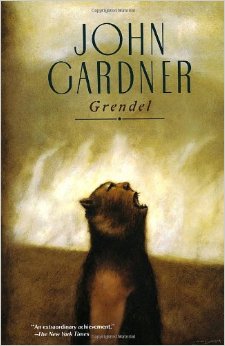
The cover for the 1989 edition of John Gardner's Beowulf-inspired Grendel.

The cover for the 1989 edition of John Gardner’s Grendel. Image from http://amzn.to/2gZcPqK

I first read John Gardner’s novel Grendel while studying for my master’s degree at the University of Victoria. The same copy I read then now sits on my shelf, begging for a reread. And it’s deserving of one, I think. I remember the novel being a complex web of meanings and interpretations, though the meaning that was front and centre was a straightforward critique of human society through the eyes of Grendel.

Yes, as the book’s title suggests, it focuses on Grendel and what he gets up to between bouts of terrorizing Heorot. But it’s not all loping around the moors, scaring animals and feasting on his victims. The humans intrigue him as they build Heorot and celebrate its beauty and light. But he also sees and feels just how different he is from the Danes. And when Grendel first sees Beowulf he has this eerie feeling that his days are numbered.

It’s a good read, and from Gardner’s flipping of the original poem’s focus, to his social commentary through the monster’s eyes, to his use of zodiac symbolism, there’s a lot to its 174 pages. If you have the chance you should check it out!

But what brought Gardner’s book to mind today was my discovery of this extract from an article that centres around Gardner’s Grendel.

The extract explains how the pop culture scholars Michael Livingstone and John William Sutton argue that though the 20th century is full of adaptations of Beowulf, Gardner’s Grendel marks a turning point in these works. Whereas those that came before the novel are usually just retellings of Beowulf tailored to suit various genres and audiences, those that came after it share in Gardner’s use of the poem and of Grendel to generate social commentary on specific figures, incidents, or observed traits of the human condition.

If you’re interested in reading their article in full, you can find it here.

Along with Livingston and Sutton’s main thesis, the article is a treasure trove of adaptations that I never even knew existed. So if you’re interested in reading historical fiction based around Beowulf, or tracking down a rock musical in which Grendel’s a punk rocker, check out that article for some extra details.

Why do you think the Beowulf story is so widely adapted? What is it about the story and its characters that make it so flexible?

Struggling against giants: A sword’s story (ll.1687-1699)

Synopsis

Original

Translation

Recordings

Europe and its Giants

A Retelling of the Flood: Poetic Fragment

Closing

The decorative grip and pommel of the Gilling Sword, like Beowulf's ancient giant sword?

The grip and pommel of the Gilling Sword, found in a stream in Yorkshire in 1976. Did the giant’s sword that Beowulf found have a similar hilt? Copyright York Museums Trust http://bit.ly/2gh8HXJ. Image from http://bit.ly/2gpntKw.

Back To Top

Synopsis

Hrothgar hefts the sword hilt that Beowulf hands him and then marvels at the wondrous story told on it.

Back To Top

Original

“Hroðgar maðelode, hylt sceawode,
ealde lafe, on ðæm wæs or writen
fyrngewinnes, syðþan flod ofsloh,
gifen geotende, giganta cyn
(frecne geferdon); þæt wæs fremde þeod
ecean dryhtne; him þæs endelean
þurh wæteres wylm waldend sealde.
Swa wæs on ðæm scennum sciran goldes
þurh runstafas rihte gemearcod,
geseted ond gesæd hwam þæt sweord geworht,
irena cyst, ærest wære,
wreoþenhilt ond wyrmfah. ða se wisa spræc
sunu Healfdenes (swigedon ealle):”
(Beowulf ll.1687-1699)

Back To Top

Translation

“Hrothgar spoke, as he was shown the hilt,
that old treasure. On it was written the origins
of a great struggle, after the flood had slain many,
sloshed through in torrents, a struggle with giant-kind;
peril was brought to all; that was a people
estranged from the eternal Lord; from the Almighty
came the final retribution of rising waters.
Thus was the pommel work written upon in gold
with runes properly inscribed,
inset and incarved, by the one who worked that sword,
the best of blades, first among weapons,
with wire-wound hilt and edge damescened like snakes. Then
the wise one spoke, the son of Healfdane — the hall hushed:”
(Beowulf ll.1687-1699)

Back To Top

Recordings

Old English:

{Forthcoming}

Modern English:

{Forthcoming}

Back To Top

Europe and its Giants

I’m glad that the poet gives us this description. It’s all too easy to imagine a sword hilt as just a piece of metal used to hold a sword, and depending on the design, maybe to help catch or parry incoming blows. But here we’re told that there’s a full blown story printed across what I imagine is the crossbar of the sword. In the picture at the top of this entry, the Gilling sword’s crossbar is just outside of the lower right corner of the frame.

The how of this story on a sword isn’t quite my strong suit. There’re runes describing the events, and they’re inlaid with gold. But what the poet means when they say that these runes are “properly inscribed” (“rihte gemearcod” (l.1695)) is quite a mystery to me. Maybe they were neatly made, unlike the chicken scratch of the poet’s day.

What I do know about is just how prevalent wars against giants are in the European imagination.

There are the Greek myths that detail the fight between the Olympian gods and the Titans.

In the Brut, an epic poem about people travelling to Britain to settle there, the travellers must first defeat a giant or two to make the land safe for themselves.

Even much much later, there are still stories of giants in things like fairy tales (“Jack and the Beanstalk”) and Jonathan Swift’s Gulliver’s Travels.

I think that the Beowulf poet is referring specifically to a race of giants called the Nephilim here. These were the offspring of fallen angels and human women, which fits since the mention of the flood seems to circle around it being a destructive force that god sent out. And the note that the sword this hilt came from was one of the first weapons (“ærest wære” (l.1697)) gels with the idea that the fallen angels who fathered those giants taught humanity about things like smithing and warfare.

What’s unclear about this story, though is if the flood came after or before the great struggle with the giants. It seems like a torrential flood would be a pretty good way to deal with oversized earth dwellers, so my guess is before, but it’s left a little ambiguous.

Why do you think this story was written on the sword’s hilt?

Back To Top

A Retelling of the Flood: Poetic Fragment

Before the “primeval struggle”1, when the world was yet young,
God on high inscribed a “rune”2 in the sky, a letter of unbinding,
That tore a hole between the clouds, as that word was sung
By angels standing all around, with ancient garment winding

around their firm frames, robes “adorned with figures of snakes”3,
Suiting costume for the “final retribution”4‘s sake.


1fyrn-gewin: primeval struggle. fyrn (former, ancient, formerly, of old, long ago, once) + winn (toil, labour, trouble, hardship, profit, gain, conflict, strife, war) [A word that is exclusive to Beowulf.]

Back Up

2run-stæf: runic letter, rune. run (mystery, secrecy, secret, counsel, consultation, council, runic character, letter, writing) + stæf (staff, stick, rod, pastoral staff, letter, character, writing, document, letters, literature, learning)

Back Up

3wyrm-fah: adorned with figures of snakes, damescened. wyrm (reptile, serpent, snake, dragon, work, inset, mite, poor creature) + fag (variegated, spotted, dappled, stained, dyed, shining, gleaming) [A word that is exclusive to Beowulf.]

Back Up

4ende-lean: final retribution. ende (end, conclusion, boundary, border, limit) + lean (reward, gift, loan, compensation, remuneration, retribution)

Back Up


Back To Top

Closing

Next week, Hrothgar speaks his mind about Beowulf.

You can find the next part of Beowulf here.

Back To Top
A Connection between The Odyssey and Beowulf? (ll.1677-1686)

Synopsis
Original
Translation
Recordings
Really Zooming in on Gift-Giving
The Value of a Skilled Smith
Closing

The decorative grip and pommel of the Gilling Sword, like Beowulf's ancient giant sword?

The grip and pommel of the Gilling Sword, found in a stream in Yorkshire in 1976. Did the giant’s sword that Beowulf found have a similar hilt? Copyright York Museums Trust http://bit.ly/2gh8HXJ. Image from http://bit.ly/2gpntKw.


Back To Top
Synopsis

The poet describes Beowulf’s gifting the hilt of his found giant sword to Hrothgar, and reiterates the Grendels’ defeat.


Back To Top
Original

Ða wæs gylden hilt gamelum rince,
harum hildfruman, on hand gyfen,
enta ærgeweorc; hit on æht gehwearf
æfter deofla hryre Denigea frean,
wundorsmiþa geweorc, ond þa þas worold ofgeaf
gromheort guma, godes ondsaca,
morðres scyldig, ond his modor eac,
on geweald gehwearf woroldcyninga
ðæm selestan be sæm tweonum
ðara þe on Scedenigge sceattas dælde.

(Beowulf ll.1677-1686)


Back To Top
Translation

“Then was the golden hilt given into the hand
of the old battle-chief, an ancient work of giants
for the aged ruler. It became the possession
of the Danish prince after those devils perished,
the craft of a skilled smith; when the hostile-hearted,
the enemies of god, gave up this world,
guilty of murder, he and and his mother as well.
Thus the hilt came into the power of the worldly king
judged to be the best between the two seas,
a treasure freely given to the Danes.”
(Beowulf ll.1677-1686)


Back To Top
Recordings

Old English:

{Forthcoming}

Modern English:

{Forthcoming}


Back To Top
Really Zooming in on Gift-Giving

This passage is weird. I mean, why spend so many words on the simple act of Beowulf giving Hrothgar the hilt of the sword that Grendel’s mother’s blood melted? It’s a strange thing to dwell on, and I can’t help but feel like it might have been a late addition.

Or, maybe like Homer’s asides and flashbacks in the Odyssey, this is meant to be a moment outside of and within time simultaneously. I’m thinking particularly of when Odysseus gets back to Ithaca and the nurse who raised him recognizes him because of a scar on his thigh. Homer uses her seeing the scar as an in to explain its origin in a brief aside.

But, maybe because the Beowulf poet’s story is about people who see themselves as a little rougher around the edges than the ancient Greeks saw themselves, scars don’t matter. And so this aside comes from an act of giving. After all, the act of giving in early British cultures was huge. It was through giving that wealth was distributed and people were meant to feel that things were given fairly. So, perhaps, along with defeating the monsters terrorizing Heorot, this hilt is meant as a tangible gift that Beowulf gives in return for all that Hrothgar gives him.

Which is kind of suiting since, although the poet calls Hrothgar a “battle-chief” (“hild-fruma” (l.1678)), he is also called “old” twice in close succession (“gamelum” on line 1677, and “harum” on line 1678). These mentions make it clear that Hrothgar’s fighting days are over.

With that in mind, how better to mark the ending of the need for such a strong leader to fight than with the hilt of an ancient sword? It too can no longer be used to fight effectively, but it also has much to say and old stories to share — as we’ll see in next week’s post.

What do you think the poet meant by going on for so long about Beowulf giving Hrothgar the hilt of the sword he found in the Grendels’ hall?


Back To Top
The Value of a Skilled Smith

It is the wish of every leader, every “battle-chief”1,
who finds themselves standing tall as an “earthly king”2,
that they have a “skilled smith”3 in their midst,
one familiar with the methods and means of “ancient works”4.
If such a smith is truly skilled and willing, then that ruler
May wield power and style against the “hostile minded”5.

1hild-fruma: battle-chief, prince, emperor. hild (war, combat) + frum (prince, king, chief, ruler)

Back Up

2woruld-cyning: earthly king. woruld (world, age) + cyning (king, ruler, God, Christ, Satan)

Back Up

3wundor-smiþ: skilled smith. wundor (wonder, miracle, marvel, portent, horror, wondrous thing, monster) + smiþ (handicraftsman, smith, blacksmith, armourer, carpenter)

Back Up

4aer-geweorc: work of olden times. aer (before that, soon, formerly, beforehand, previously, already, lately, till) + geweorc (work, workmanship, labour, construction, structure, edifice, military work, fortification)

Back Up

5gram-heort: hostile-minded. gram (angry, cruel, fierce, oppressive, hostile, enemy) + heorte (heart, breast, soul, spirit, will, desire, courage, mind, intellect, affections)

Back Up


Back To Top
Closing

Next week, Hrothgar handles the hilt and reveals its meaning.

You can find the next part of Beowulf here.

Back To Top

Beowulf meets Hollywood in Beowulf: The Blockbuster

Bryan Burroughs in Beowulf: The Blockbuster, a one man show pop culture-infused retelling of the epic.

A still from Bryan Burroughs’ one man show Beowulf: The Blockbuster. Looks like a great show! (Image from http://www.beowulftheblockbuster.com/)

I had always figured that Seamus Heaney would be the only prominent Irish figure to take on Beowulf. But. I was wrong.

The actor Bryan Burroughs has tackled the story in his one man show Beowulf: The Blockbuster. You can check out the show’s website here.

The premise for the play is that Burroughs’ character is a terminally ill father telling his son the final bed time story that he will get to tell him. But, rather than just being a straight retelling of Beowulf, it is an improvised retelling full of elements that Burroughs’ character’s son adds in.

So, instead of Beowulf just being about a lone warrior taking on demons there are things from Jaws or Nightmare on Elm Street thrown in. Or, more specifically, as Burroughs mentioned in an interview with Shelley Marsden of The Irish World, the son suggests that Grendel sounds like Chewbacca, and so Burroughs’ character obliges.

It sounds like an awesome sight to behold. Especially because, as Burroughs plays all of these different parts, he also attempts various impressions to keep them separate. I may not be able to read Beowulf‘s dialogue without slipping into a bit of Sean Connery’s accent after reading that it’s what Burroughs uses for the Geat.

Though what makes this performance interesting to me is that it wasn’t initially going to be about Beowulf.

As he explains in that interview, Burroughs wanted to explore the question of what a parent who knew they had one hour left with their child would say to them. Beowulf only came into play because it has a tight three act structure (whether he covers the whole poem or just the Grendel bit is unclear, but either way there are three acts involved), and was a way for him to tell a story about how wonderful it is to be mortal. Plus, I think that as such an archetypal story Beowulf lends itself to having other characters and stories attached to it.

As always with performances like this, the only thing I don’t really like is that it’s not likely I’ll see the whole thing. Thankfully, though, there is this excerpt. Enjoy!

A balanced Beowulf translation: J.B. Kirtlan

The cover for J.B. Kirtlan's 1913 translation of Beowulf.

Cover of J.B. Kirtlan’s 1913 Beowulf translation. Image from: http://www.gutenberg.org/ebooks/50742

This is another busy week for me, so I want to take this opportunity to bring your attention to a different kind of Beowulf adaptation: translations!

In particular, I want to share the translation that the Legends Myths and Whiskey podcast used for their Beowulf: A Mythosymphony (a reading of the story with original music and some commentary in between). This is J.B. Kirtlan’s 1913 translation.

The most notable thing about this translation is that it’s in prose rather than poetry. Though this might seem to ruin the effect of the original a bit, I think that Kirtlan’s prose makes the story pop for an audience who might not be comfortable with reading line after line of alliterative verse.

At the same time, though, since it was written over 100 years ago, the language is somewhat dated as Kirtlan throws words like “byrnie” and “banesman” around without any kind of explanation. A quick internet search will reveal the meanings of these words, but that might detract from the story for some. Likewise, he’s written with a bit of an “Olde Englyshe” affectation as he changes word order and spelling to look more archaic than the English of 1913.

Luckily, however, Kirtlan keeps the story’s pace going strong and even with the quirks of the language used, manages to tell an entrancing rendition.

All in all, Kirtlan’s is a pretty balanced translation in that its prose format keeps the story moving (even through asides), while its free use of older words maintains the flavour of the original.

Here’s a link to several formats of the complete J.B. Kirtlan translation online (via project Gutenberg). You can judge for yourself, but I think this is a translation that brings Beowulf into the modern age while also retaining some of the original’s old-ness and mixing in some turn of the century philology as well.

When it comes to a story as old and foreign-seeming as Beowulf, what do you think makes an ideal translation?

Assurances to end a story, or just an act? (ll.1665-1676)

Introduction
Synopsis
The Original Old English
My Translation
A Quick Question
Closing

Beowulf and his band of Geats carrying Grendel's head.

J. R. Skelton – Marshall, Henrietta Elizabeth (1908) Stories of Beowulf, T.C. & E.C. Jack.
Image found at: http://bit.ly/2frmbiU


Back To Top
Introduction

This is another busy week for me, but I still want to post something here. So, since I wrote up a new news piece for last week, here is a new translation post. However, this is just a translation. To make it more interesting I’ll first post the original Old English from lines 1665 – 1676. My translation is underneath that.


Back To Top
Synopsis

Beowulf completes the story of how he defeated Grendel’s mother, and he assures Hrothgar that Heorot is now safe.


Back To Top
The Original Old English

“‘Ofsloh ða æt þære sæcce, þa me sæl ageald,
huses hyrdas. þa þæt hildebil
forbarn brogdenmæl, swa þæt blod gesprang,
hatost heaþoswata. Ic þæt hilt þanan
feondum ætferede, fyrendæda wræc,
deaðcwealm Denigea, swa hit gedefe wæs.
Ic hit þe þonne gehate, þæt þu on Heorote most
sorhleas swefan mid þinra secga gedryht
ond þegna gehwylc þinra leoda,
duguðe ond iogoþe, þæt þu him ondrædan ne þearft,
þeoden Scyldinga, on þa healfe,
aldorbealu eorlum, swa þu ær dydest.'”

(Beowulf ll.1665-1676)


Back To Top
My Translation

“‘Then I slew her in that fight, as the hall began to glow around me,
a strangely fortified house. than that battle blade
burned, the damascened sword, as the creature’s blood struck it,
hottest of battle bloods. I took the hilt out
from the fiend’s remains, the wicked deed avenged,
the death by violence of Danes, as was befitting.
Thence I swear this to thee, that you may now
sleep without sorrow in Heorot hall with all your company,
and each thane of your people,
old nobles and youths, that they all now have no need to fear,
lord of the Scyldings, for your own portion,
the lives of your folk, as you did before.'”

(Beowulf ll.1665-1676)


Back To Top
A Quick Question

Beowulf has confirmed that the threat to Heorot is over, and he assures Hrothgar of that pretty thoroughly here. Does this part of the story leave you feeling a strong sense of closure? Or, knowing that there’s still a dragon out there somewhere, do you feel like Beowulf’s words are just leading to an act break in the story?


Back To Top
Closing

Next week, Beowulf gives Hrothgar another gift.

You can find the next part of Beowulf here.

Back To Top
Prog rock makes Grendel good in Beowulf

An Anglo-Saxon helmet with face mask of the style associated with Beowulf.

A helmet, complete with face mask, from the Sutton-Hoo treasure hoard. Image from https://commons.wikimedia.org/wiki/File:Sutton_Hoo_replica_(face).jpg

I’m a big fan of a particular flavour of prog rock. It started in high school, when I got into Rush, and each song I downloaded (via Kazaa or Limewire one song at a time (yep, when downloading music was still controversial)) was a new discovery in a style of music.

And this music was unlike anything I’d ever heard. It had the hardness of everything my older brother would blast over the stereo when we were home alone but was tempered with a variety of emotions (rather than just anger or angst) and the sort of sprawling stories that I love. Thus, a taste for concept albums and story songs was born, and after Rush I started to thirst for more prog.

Throughout my teens I managed to slake that thirst with a little bit of The Who and Pink Floyd, but my wanderings largely ended with Genesis. However, a close friend of mine went deep into prog and showed me a band called Marillion. Among this band’s oeuvre is a song called “Grendel.”

Here’s a recording of the song’s live performance at London’s Hammersmith Odeon in 1983:

And, you can find the lyrics here.

Now, a song about a marauding monster seems like an obvious choice for a band working in a genre heavily influenced by fantasy, D&D, and general medieval romance. But Marillion didn’t just string together a 17 minute song about a creature that rampages against a bunch of vikings. Instead they took a different tack. They made Grendel the hero of their adaptation.

If I had to place Marillion’s “Grendel” within the timeline of Beowulf, I’d put it near the beginning of Grendel’s terrorizing Heorot. Beowulf hasn’t been called yet, and the Danes are still pleading with their pagan gods for salvation. This is where the twist comes in.

As Marillion spins it, Grendel isn’t some hell creature that can be swept away by pagan gods.

As Grendel himself says “God’s on my side sure as hell, I’m gonna take no blame.” In other words, Marillion’s Grendel, though still an outsider, is not a tool of Satan or of the forces that fight God after Creation, but of God itself. After this point in the song, Grendel is described as some sort of avenger of God who is attacking the Danes because of their heathenish worship of pagan gods and their indifferent killing of each other, which, according to Grendel, makes them the true monsters.

As an English major, it’s my instinct to tear into this wildly different interpretation of a poem so thoroughly established as good (Beowulf) versus evil (the monsters). So, let’s go!

Since they’re a prog rock band, a genre that’s pretty under-represented and I think safe to say associated with the kind of teenage nerds who follow fantasy and sci fi and spend their weekends playing video games or D&D in friends’ basements, it’s not too surprising that they’d make Grendel the hero of the song.

After all, Grendel is the epitome of an outsider. He’s not apparently human though bipedal. He’s living in what is basically an inversion of Heorot, a dank and cold hall with only his immediate family rather than a crowd of broader society. Grendel is as strange as can be, relative to the Danes.

Because of this outsider quality and the outsider quality of a lot of their listeners, I think it makes sense that Marillion would come up with a song that has this take.

What’s really odd to me, though, is that Grendel isn’t just some lone wolf fighting against the “normals” but is, instead, an instrument of God. This sends my English major senses reeling since I see this pairing representing the perspective that many outsiders take on those who are so deeply embedded in the mainstream system that they can’t see where they’re going wrong.

Putting Grendel on God’s side despite his outsider status and utter strangeness also ties nicely to the lives of so many mystics throughout history. For mystics of all faiths, people of incredible religious devotion, are generally kept at arms length by the official body of their declared religion. Why keep such thoroughly devoted people out of the spotlight? Because mystics’ ideas and practices tend to be more or less aligned with doctrine in theory but take a meandering and unorthodox path to reach that alignment, sometimes coming up with radical ideas along the way. Despite this difference, they often receive some form of recognition after their deaths. Many Christian mystics, for example, were made saints (like Saint Catherine of Siena) after the Church heard enough examples of their remains causing miracles.

But even with all of that information about how organizations like the Catholic Church treat such outsiders, that anyone would give such a role to Grendel is incredible.

Even more incredible is how the band presented the song during their stage shows.

Fish (a.k.a. Derek Williams Dick), Marillion’s lead singer when the song was played live, would wear a tattered cloak and the Anglo-Saxon helmet with face mask that’s most evocative of Beowulf himself. Crossing Grendel with the usual hero of the story like this forces you to think about a lot of parallels between the two that I think are definitely valid.

In particular, though, I think that Marillion’s Grendel has a lot to say about religion.

If Grendel is God’s wrath, and Beowulf is also a tool of God’s will, then Beowulf’s saving the Danes from Grendel says a lot about Christianity, and maybe even about organized religions in general.

I mean, if God controls all the pieces, it’s as if there is no devil and God is simply using the classic sales tactic of distressing his target audience and then presenting them with a solution of his own making. Which, if you think about it, is pretty much how it goes if the Christian God has a monopoly on creation, even if you lay bad things happening at Satan’s feet. After all, Satan was an angel who was cast out of heaven for pride and arrogance. Who made the angels? Who could decide to cast them out or keep them in?

Wow. I admit I’m a pretty big fan of Marillion’s brand of prog rock but never thought it would say so much with a simple twist on who’s really the hero in a classic story.

But that’s the power of adaptation. Artists can take old stories and old ideas — things that seem to anchor the world into the status quo — make a few changes, and thereby force people to see that status quo in a totally different way.

What do you think of Marillion’s adaptation of Grendel?

Is Beowulf an introvert? (ll.1651-1664)

Synopsis
Translation
Recordings
Beowulf’s Struggle with Story
It’s Just a Simple Ancient Sword
Closing

Beowulf and his band of Geats carrying Grendel's head.

J. R. Skelton – Marshall, Henrietta Elizabeth (1908) Stories of Beowulf, T.C. & E.C. Jack.
Image found at: http://bit.ly/2frmbiU


Back To Top
Synopsis

Beowulf tells the story of his fight against Grendel’s mother. This is his rough draft performance.


Back To Top
Translation

“Beowulf spoke, son of Ecgtheow:
‘Harken unto me, son of Halfdane,
lord of the Scyldings, we who have been to the sea-lake
have brought back booty, a mark of fame, for all here to look upon.
I escaped that choppy conflict,
the war beneath the waters, ventured through
the risky deed; the fight was nearly taken from me,
but God shielded me.
In that struggle I could not bring Hrunting
to bear, though it is a noble weapon;
but the lord of men allowed
that I might see hanging on the cave wall
a shining magnificent sword of elder-craft — often
will the wise aid the friendless — that I seized and brandished as my own.'”
(Beowulf ll.1651-1664)


Back To Top
Recordings

Old English:

{Forthcoming}

Modern English:

{Forthcoming}


Back To Top
Beowulf’s Struggle with Story

Beowulf has told many stories before. And he’s been called a boaster. That’s a label that fits quite well since his stories of fighting off sea monsters to protect Breca, or of taking out groups of monsters definitely seem embellished. But now he’s telling a story about an event that we witnessed. Well, witnessed the original telling of, anyway.

So what?

Well, one of the things that I’ve noticed on rereading this passage is that Beowulf’s telling of the fight with Grendel’s mother is that it’s very straightforward. It’s almost as if he’s shrinking away from the center of attention, as an introvert might.

Beowulf says that it was a close fight, that Hrunting wasn’t living up to its quality, and that he found a giant’s weapon to finish the job. All of that checks out, since that’s a pretty accurate summary of the fight with Grendel’s mother. Though it’s interesting to note that Beowulf doesn’t go into any details. He doesn’t admit that Grendel’s mother pinned him to the ground, or stabbed at him with a knife. If “specificity is the soul of narrative,” as John Hodgman is so fond of saying on his internet court show, Judge John Hodgman, then it seems like Beowulf is mangling the soul of his story.

Why?

Maybe because it’s so fresh in Beowulf’s mind. Coming so close to death, facing such terrifying enemies and circumstances, it’s fair to say that it’ll take more than a few hours to fully process what he’s been through. If that’s the case, then perhaps Beowulf is scanty on the details in this retelling because so little time has past and he’s still reeling.

Or maybe it has nothing to do with processing the events.

Instead, maybe Beowulf just needs more time to come up with embellishments that will hang together and keep the story coherent while elevating it to the tale of a grand heroic deed. Beowulf is a warrior and not a poet after all.

Thus, it might take some time for him to come up with the best way to phrase things like “she mounted me” or “I was almost stabbed to death but my mail saved my life.” Both details are important for the story’s full impact, but could come off as a little less than all-conquering. And, if you think about it, any story about a close call needs to maintain a sense that the hero isn’t really doomed, despite the circumstances. But being pinned by a woman and nearly stabbed to death are a little too dire to be brushed off as events on the way to a heroic close.

In other words, without embellishing those parts of the fight, Beowulf’s victory could be seen as less a victory from skill and more one from luck.

Why do you think Beowulf’s retelling of his fight is so general when it comes to the actual events of the fight? Why doesn’t he just give the play-by-play?


Back To Top
It’s Just a Simple Ancient Sword

Normally, descriptions of battles and speeches are full of compound words. This is something I noted back in October 2015, while working through lines 1043 to 1049. Beowulf’s speech in this week’s passage is both, but there is only one compound word: “eald-sweord”1.

This lack of compound words is strange, but I think it links back to the events being so fresh in Beowulf’s mind. His use of simpler language reflects either his raw impressions of events or his need for more time to really embellish things as much as he might like to.

But what I wonder is why “eald-sweord”1 is the compound in this passage.

It stumped Clark Hall and Meritt since it doesn’t even appear in the edition of their dictionary that I’m using. Even C.L. Wrenn glosses the word simply as “ancient sword,” though there’s a dagger beside it, indicating that such interpretation is uncertain.

Wrenn’s definition is intuitive, since that’s exactly what the two words mean when combined, but “eald-sweord”1 doesn’t seem to be attested to anywhere other than this instance in Beowulf. So, it must have been a word that was made up especially for the occasion.

Which makes it all the more interesting to me since it’s such an intuitive combination of words for “ancient sword”. There are no strange, culture-specific senses of the words combining together, it’s just “old” and “sword” smashed together. The spontaneity of which, leaves me even more convinced that Beowulf, as much of a storyteller as he is, is struggling to improvise one about his fight with Grendel’s mother.

1eald-sweord: ancient sword (?). eald (old, aged, ancient, antique, primeval, elder, experienced, tried, honoured, eminent, great) + sweord (sword)

Back Up


Back To Top
Closing

Next week, Beowulf assures Hrothgar that he’s finally taken care of his monster problem.

You can find the next part of Beowulf here.

Back To Top

An old find of coins highlights the importance of history

This week, an article by Tom Holland’s from January 3, 2015 proves to be as philosophical as I expected from the title: “Why Buried Treasure Never Loses its Lustre.” The nice thing about this piece is that despite its timing and mention of Christmas, it isn’t overbearing or syrupy in any way.

In the article, Holland uses the then recent discovery of a hoard of coins in a Buckinghamshire field to illustrate that the English (and humanity as a whole, really) have gone through tough times before and pulled through. In particular, since the coins date back to the early 11th century, Holland focuses on the transition from the reign of Aethelred II (famously “The Unready”), and Cnut, the Viking turned Christian king.

By Holland’s brief account this period was a terrible transition, as Aethelred II’s death brought a crumby reign to an end only to see a greedy despot take his place: in the first year of his reign, Cnut basically demanded a 100% tax. Holland doesn’t go into the details, but at some point Cnut had a change of heart and took up the idea that the greater and more powerful the person, the more penitent they must be.

What ties this story so neatly to the time when it was written though, is that the metal detectorist who found the hoard of coins (valued at a cool £1 million) was unemployed and nearly broke at the time. A strange confluence of circumstances that reinforces the lesson that Holland takes from the history contained in the coins that come from a transitional period in English history.

Like these coins and the lesson of perseverance they teach, I think that the same can be said of Beowulf.

Though, just as if you found coins with an unfamiliar face or language on them, they’d be meaningless to you (except maybe for the money they could sell for). After all, as is the case with those coins, so much of what makes Beowulf relevant to modern times is hidden behind historical and cultural differences.

Which raises the question of “why bother?”

After all, we live in a time when several answers to just about any one question are always at our finger tips. So why bother learning about the history lived or literature written and read by people who are now long dead?

Which is a valid question.

At least until you realize that because the culture and the history from which Beowulf (or those coins) came no longer exists, we can find an alternate perspective on modern issues (PTSD, distribution of wealth, heroism). These alternatives might not always be the quick solution that we’re looking for (letting all wealth flow to one person who is then trusted to redistribute it evenly would definitely not work today), but they can offer insight into how another person from another time would deal with a similar problem.

Which makes things like those coins or Beowulf into a kind of mirror in which we can see ourselves and our problems. Looking into such a mirror we stand a better chance of finding something even more meaningful or helpful, since the mind doesn’t always work in a straight, logical line. Instead, it sometimes needs the shock of an idea that is utterly radical or strange to come to reach the desired conclusion.

How do you think that Beowulf is useful to modern people? Do you think it’s still useful beyond just being a really cool story?

Beowulf hauls Grendel’s head in, spectacles of the war-fierce (ll.1644-1650)

Synopsis
Translation
Recordings
The Wondrous Beowulf and His Spectacle of a Head
Spectacles of the Bold in Deed
Closing

Beowulf and his band of Geats carrying Grendel's head.

J. R. Skelton – Marshall, Henrietta Elizabeth (1908) Stories of Beowulf, T.C. & E.C. Jack.
Image found at: http://bit.ly/2frmbiU


Back To Top
Synopsis

Beowulf and the Geats stride into Heorot, heaving Grendel’s head.


Back To Top
Translation

“Then that weathered warrior strode in,
the man bold in deeds had grown authoritative,
a war-fierce man, he greeted Hrothgar.
By the hair was Grendel’s head then borne
into the middle of the floor, where the warriors drank,
the terror dropped amidst the men and their queen;
a wondrous spectacle in the sight of men.”
(Beowulf ll.1644-1650)


Back To Top
Recordings

Old English:

{Forthcoming}

Modern English:

{Forthcoming}


Back To Top
The Wondrous Beowulf and His Spectacle of a Head

I wonder what the people assembled in Heorot are more shocked by: Grendel’s head or the return of Beowulf?

The Danes had lost hope for the young Geat, after all (ll.1601-1602). So it must be a wonder that he’s back.

Even more so that he’s back with the head of Grendel.

But why should hauling the head into the hall matter?

I think it’s because the head is an important symbol of the seat of power in early medieval minds. That the head is drug in by the hair might also have some symbolic significance since the people that the Anglo-Saxons encountered when they first came to Britain grew their hair long – both men and women. In this sense, Grendel’s monstrosity doesn’t just come from being cursed by god, but by being the other, the thing that needed to be purged from the land to make it pure and good.

Actually, if Grendel is seen as a reference to the Celtic peoples that the Anglo-Saxons encountered, then maybe there was a sense that they were cursed by god. After all, the Irish retained an earlier variety of Christianity even after the second wave of missions came in. No doubt there would have been differences in doctrine, however, leading the British locals’ ideas of Christianity being considered heretical, a people whom god had turned its back on.

Whatever it might have meant to early audiences, the fact that Beowulf managed to separate Grendel’s head from his vile body shows that, with line 1645, he has indeed “grown authoritative” (“dóme gewurþad”). His deeds now match his words. After all, he had promised Hrothgar to rid Heorot of Grendel, and up until this moment it was a promise unfulfilled.

Yes, Beowulf killed Grendel when they fought in Heorot, but then Grendel’s mother came raging in. And who knows what Grendel’s body was doing on that altar in her hall. Perhaps he was just being prepared for burial, perhaps that’s where their tribe laid people out for a set number of days after death.

Or, maybe Grendel was such an angry creature because he had died and been revived before on that altar, the catch being that with each revival, he lost a bit of whatever humanity he had in him. In this case, maybe her mourning wasn’t for Grendel’s death but for the fact that with each revival she lost a little bit of the sweet, playful son whom she had raised years ago.

Why do you think Beowulf plonks Grendel’s head down in the middle of Heorot? Is it just done for dramatic effect? Or is there something more to it?


Back To Top
Spectacles of the Bold in Deed


At medieval festivals you could go see the “bold in deed”1. Yes, there would be all manner of performers, competitions, and carousing, but there would also be games for the “war fierce”2. Things like one-on-one tournament sword and shield fights, jousts, wrestling. Activities which would have been the “spectacle”3 of the day.


1daed-cene: bold in deed. daed (deed, action, transaction, event) + cene (bold, brave, fierce, powerful, learned, clever) [A word that is exclusive to Beowulf.]

Back Up

2hilde-deor: war fierce, brave. hilde (war, combat) + deor (animal, beast, deer, reindeer; brave, bold, ferocious, grievous, severe, violent)

Back Up

3wlite-seon: sight, spectacle. wlite (brightness, appearance, form, aspect, look, countenance, beauty, splendour, adornment) + seon (look, behold, observe, perceive, understand, know, inspect, visit, experience, suffer, appear, seem, provide) [A word that is exclusive to Beowulf.]

Back Up


Back To Top
Closing

Next week, Beowulf speaks!

You can find the next part of Beowulf here.

Back To Top